
Get in Touch
Your Trusted Manufacturer of Laptops & Tablets

WhatsApp Us Directly
+86 13923410269
Email Us
Get in Touch
Your Trusted Manufacturer of Laptops & Tablets

In March of last year, our company decided to undertake a major project: to custom-manufacture a batch of dedicated teaching tablets for our chain of training institutions. Our idea was compelling: devices with unified branding, pre-installed with our proprietary teaching system, and locked down to block all games and entertainment applications. We assumed the process would be straightforward, similar to ordering custom-configured computers—select the specifications, negotiate the price, and then wait for delivery.
Reality delivered a harsh lesson. The first vendor we approached quoted an extremely low price. After we paid the initial deposit, we discovered they were merely a reseller without any engineering capabilities. The second vendor was a legitimate factory, but the engineering prototypes they produced had screens that drifted in low temperatures and suffered from intermittent Wi-Fi signals. Their project manager simply shrugged and said, The reference design is like this; modifications are very troublesome.
The process dragged on for five months, wasting $67,000 in research and development fees, and the project was nearly cancelled. Finally, through a referral from an industry contact, we found the right partner and succeeded. Today, I am sharing this complete account of our experience, filled with pitfalls, combined with the established process of working with a mature tablet computer OEM manufacturer. This is not a theoretical compilation from the internet, but a genuine, detailed record of a custom project with all its challenges and resolutions.
This is the first stumbling block for most people. We initially approached suppliers with a two-page Word document stating requirements like 10-inch screen, must run our app, must be durable. The resulting quotes varied wildly, and no one could clearly explain why.
The correct way to begin is to create a Product Requirements Document written in clear, plain language. This document is not for engineers initially; its primary purpose is to help you clarify your own ideas. It must answer at least the following questions concretely:

When you have thoroughly thought through these points, what you hold is no longer a vague idea but a clear partner specification. Only with this document can you effectively find the right match.
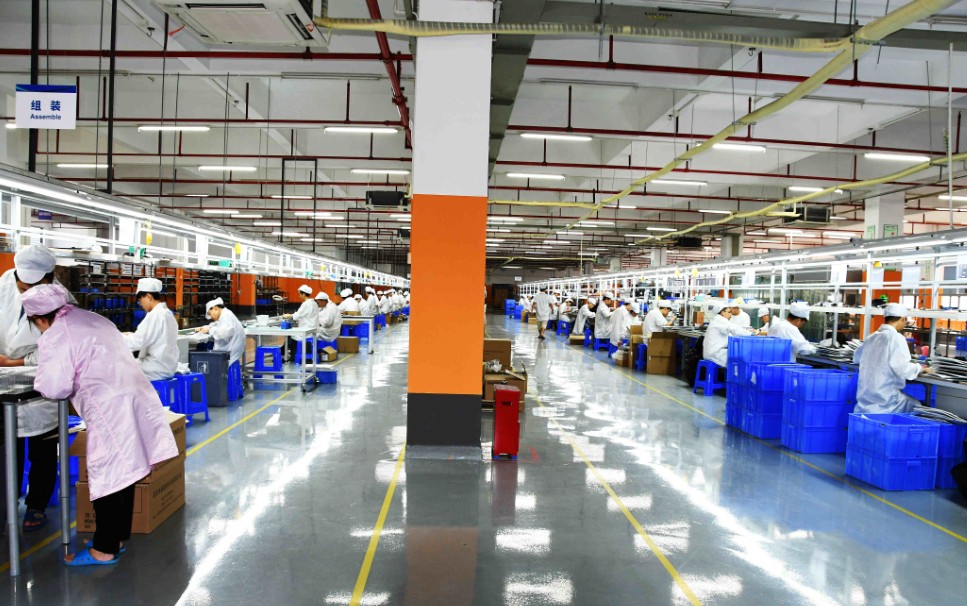
We have encountered manufacturers whose product samples are exquisitely made and whose presentations are impressive, but who become evasive when discussing production details and quality control processes. How do you see through to a manufacturer's true strength?
This is the most core and agonizing part of customization, proceeding in three steps. None can be skipped.
The First Examination: Engineering Verification Test —Can the basic functionality work?
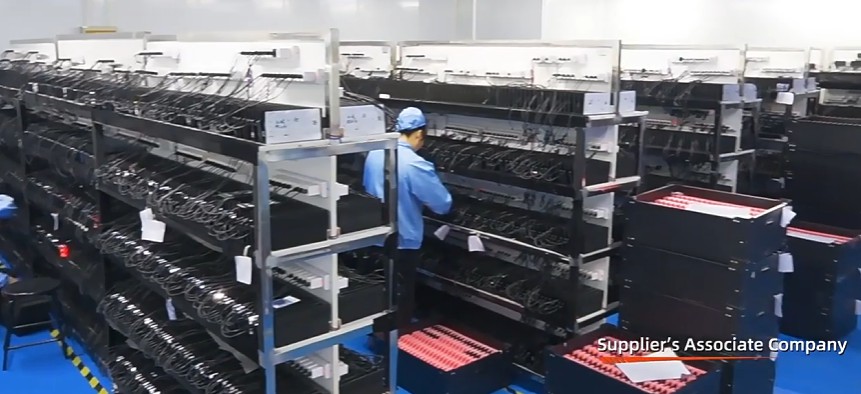
The factory will produce several dozen engineering prototype units. These units are often ugly; the casing might be 3D-printed, and the motherboard hand-soldered. The purpose is testing the hardware design.
The Second Examination: Design Verification Test —Does it meet all our design requirements?
Based on feedback from the EVT phase, the factory uses正式 tooling and supply chain components to produce a small batch one to two hundred units of prototypes that are very close to the final production version.
The Third Examination: Production Verification Test —Can the factory stably produce thousands of products?
This is the final rehearsal before mass production. The factory produces a small batch e.g., 200-500 units pulled directly from the formal production line. Every component and every process for these units must be identical to those used in future large-scale production.
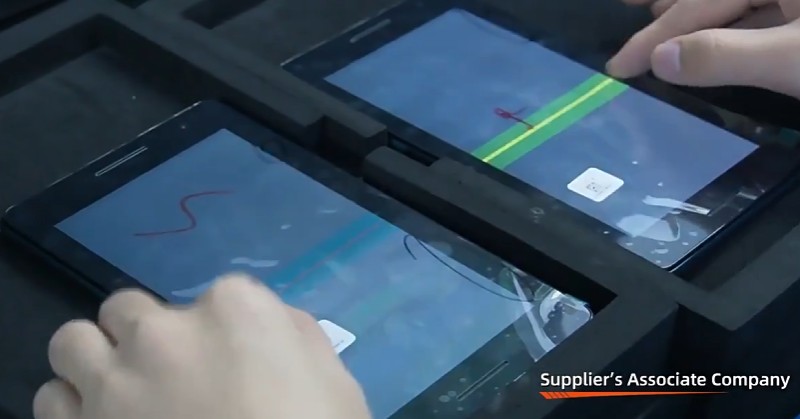
Only after the PVT phase is fully passed and jointly approved with signatures does the custom tablet truly receive its manufacturing permit and can proceed to large-scale production.
Signing the mass production order and making payment does not mean you can step back entirely. We agreed that during the first production run and other key batches, our quality inspection personnel could conduct on-site sampling inspections at the factory. We did not intervene in the production process but supervised to ensure the factory strictly executed the quality standards we had jointly established.
Simultaneously, a clear after-sales process must be agreed upon in advance:
Reflecting on this entire journey, from initial confusion to final product launch, our greatest realization is this: Partnering with an OEM factory for customization is not a simple procurement transaction. It is the act of using capital to purchase the factory's complete set of capabilities to realize your idea and manufacture it at scale.
You are buying their engineering and R&D capability to transform abstract requirements into technical blueprints.
You are buying their supply chain management capability to source appropriate components globally and control costs.
You are buying their quality control system to ensure stable quality from the first unit to the ten-thousandth.
Most importantly, you are buying their sense of responsibility—to tackle problems together without evasion when issues arise.
Finding the right partner is akin to finding a reliable life partner. Processes, contracts, and standards are the techniques. However, the principle of mutual integrity, professional respect, and striving toward a common goal is the fundamental reason such a can bear fruit and succeed.
If you are also standing at the crossroads of customizing tablet computers, I hope this experience, purchased with real financial resources and countless hours, can help you avoid some detours and more smoothly bring that unique product in your mind into the world.
Industry-Specific Solutions
Latest Blog

Edge AI Box vs Cloud Server:Which Is Cheaper Long-Term?
A detailed TCO comparison of edge AI boxes and cloud servers. Covers hardware, bandwidth, power, and O&M costs, with break-even analysis and a decision checklist.
What AI Mini PC Do You Need for Private Local LLM Deployment?
Learn what AI mini PC specs you need for private deployment of local LLMs: memory, NPU, storage, offline capability, and configuration recommendations for 7B–70B models.

How to Choose an Edge Computing Box Manufacturer: ODM/OEM Guide
Learn how to evaluate edge computing box manufacturers. Compare source factories, ODM/OEM models, MOQ, certifications, and customization to find the right partner.
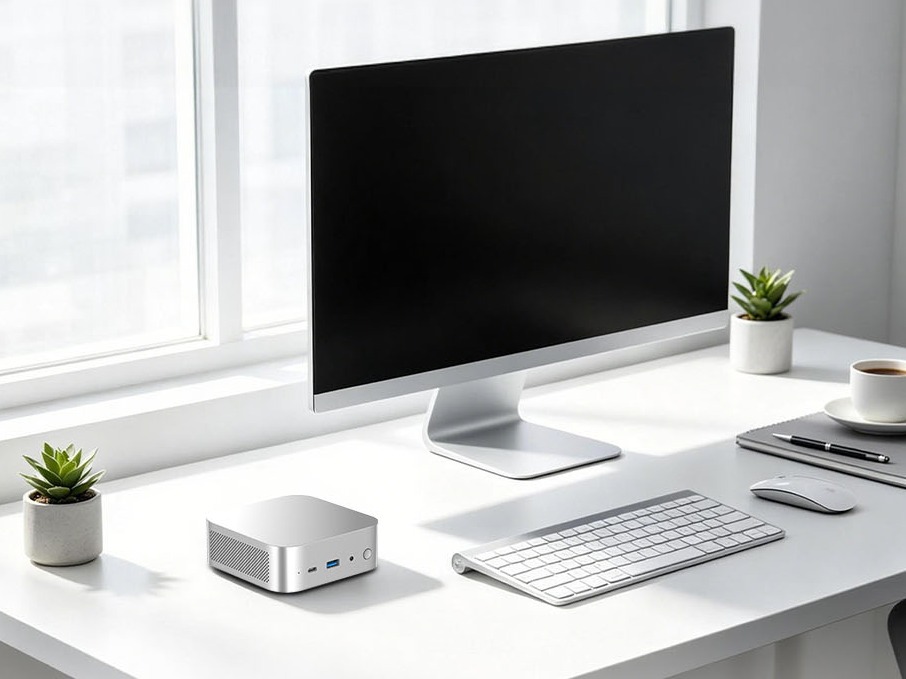
How to Choose an AI Mini PC in 2026: NPU & Memory Buying Guide
A practical guide to choosing an AI mini PC in 2026. Learn how to match NPU TOPS, memory capacity, and bandwidth to your workload, avoid common pitfalls, and pick the right configuration.
Adreamer

© 2012-2025 Copyright Shenzhen Adreamer Technology Co., Ltd.粤ICP备18115621号-2
Contact Adreamer Today for Your Custom Solution & Quote!
© 2012-2025 Copyright Shenzhen Adreamer Technology Co., Ltd.粤ICP备18115621号-2