
Get in Touch
Your Trusted Manufacturer of Laptops & Tablets

WhatsApp Us Directly
+86 13923410269
Email Us
Get in Touch
Your Trusted Manufacturer of Laptops & Tablets

What role does a laptop play in today's enterprise? It has long surpassed being a simple office tool to become the core of employee mobility, a terminal for corporate data flow, and even a representation of the company's technological image. When a single device must simultaneously meet the finance department's data security needs, a designer's color accuracy requirements, a salesperson's demand for all-day battery life, and the IT department's need for unified management, choosing the provider of these devices becomes a strategic decision requiring deep consideration.
Heading into 2025, new challenges in enterprise procurement include faster technology iteration, more diverse employee needs, and more complex security threats. The simplistic approach of bulk-ordering generic models from e-commerce platforms is increasingly inadequate for actual business needs. More and more companies are realizing that selecting a suitable long-term supplier partner is far more important than simply buying a batch of devices.
Consider these real-world scenarios:
These needs reflect a clear trend: enterprise procurement is shifting from buying a product to buying a solution. Suppliers need to understand technology, but more importantly, they must understand business.
When evaluating a potential partner, what dimensions should we examine in depth? The following five areas are crucial:
Truly capable suppliers must have continuous investment in R&D. This isn't just about stacking specifications, but a deep understanding of user scenarios.
For example, with the prevalence of hybrid work models, excellent suppliers consider: How can a device quickly connect to high-speed networks and docking stations in the office while remaining thin and light for home use? How to ensure VPN connection stability across different network environments? Optimizing these details requires solid technical accumulation.
Almost all suppliers claim they can customize, but the extent varies drastically. Low-level customization means adding a logo or changing a color; high-level customization involves deep adaptation starting from the hardware level.
A truly professional customization service involves a process where the supplier's engineers first deeply understand your workflows by consulting with your IT and key departments. They then propose hardware configurations—which may include special port requirements, specific screen ratios, or custom cooling solutions. At the software level, they can provide unified image pre-installation, specific BIOS settings, and even driver optimization. Finally, ergonomic adjustments to keyboard feel and port placement can be made.
What do enterprise-grade devices fear most? Not insufficient performance, but failure at critical moments. A blue screen during an important presentation or a malfunctioning microphone during an urgent remote meeting—the loss from these low-probability events can far exceed the value of the device itself.
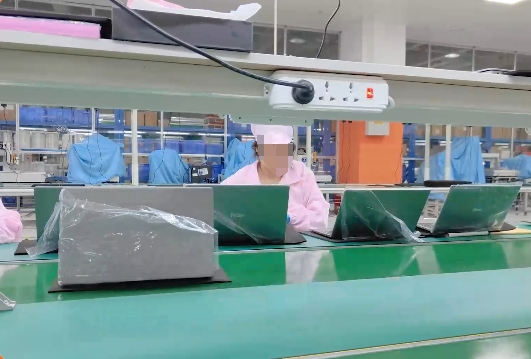
Excellent suppliers integrate quality control throughout every stage. They select industrial-grade, not consumer-grade, components from the procurement stage. On the production line, multiple manual inspection steps complement automated detection. Before shipping, devices undergo stress tests simulating various harsh environments.
Service capability has two layers: pre-sale and mid-sale support, and post-sale response speed.
During the pre-sale phase, suppliers should provide detailed technical consultation and solution design, not just send a salesperson to discuss price. During implementation, they should cooperate with the enterprise's IT deployment plan, offering services like batch system pre-installation and asset tagging.
For post-sale support, the most practical questions are: How fast is the response when a device has a problem? Where are their service locations? For companies operating globally, having local service teams in key markets is essential. If a European client's device has an issue and must be shipped back to Asia for repair each time, the time cost is unacceptable for the business.
Savvy enterprise procurement doesn't calculate unit price but the Total Cost of Ownership. This includes: procurement cost, maintenance cost during use, upgrade costs, final residual value, and the most important yet often overlooked factor—the time cost employees lose due to device problems.
The brand controls the product design, feature definition, and technical specifications. The supplier is solely responsible for manufacturing according to these requirements.
Ideal For: Companies with strong in-house R&D capabilities and strict control needs over product details, such as high-end business laptops or highly customized products.
Pros:
Cons:
The supplier handles both the production and provides the complete machine design. The brand essentially adds its logo and sells the product.
Ideal For: Entry-level or standardized products, common in markets like education or e-commerce exclusive models.
Pros:
Cons:
A deep collaborative partnership where the brand and supplier jointly participate in product definition, hardware design, and even software tuning.
Ideal For: High-performance or professional-grade products like gaming laptops, mobile workstations, or AI PCs, where deep hardware-software integration is key.
Pros:
Cons:
The supplier provides end-to-end manufacturing services, from PCB assembly and final product assembly to logistics and after-sales support, sometimes including limited engineering support. This model focuses on Manufacturing + Service.
Ideal For: Brands looking to fully outsource the production. Major players include Foxconn, Flex, and Adreamer.

Pros:
Cons:
The brand forms a long-term, tightly bound relationship with a core supplier, involving co-investment in R&D, data sharing, and even building integrated digital collaboration platforms.
Pros:
Cons:
The best model ultimately depends on your company's strategic goals: whether you prioritize rapid scaling and cost control, or product uniqueness and technological leadership. Many companies use a hybrid approach—for example, employing ODM for volume-driven entry-level models while using JDM or OEM for flagship products that define the brand.
The key is to define your objectives clearly before engaging a partner and to explicitly outline responsibilities, intellectual property rights, and exit mechanisms in the contract.

Choosing a laptop supplier is, in essence, selecting the technological foundation that will support your enterprise's daily operations for the next three to five years. The impact of this decision permeates every employee's productivity, every department's collaboration methods, and the entire company's data security.
A good supplier should function like a professional external support team: they understand technology, but more importantly, how to use it to solve business problems; they provide products, but more importantly, complete services around those products; they value the immediate order, but prioritize the long-term partnership.
When evaluating potential partners, ask yourself: In three years, when our business has doubled, can they still keep up with our needs? When new technologies emerge, do they have the capability to help us transition smoothly? When a device fails, can they provide timely support no matter where in the world our employee is located? The answers to these questions will guide you to the right partner.
Industry-Specific Solutions
Latest Blog
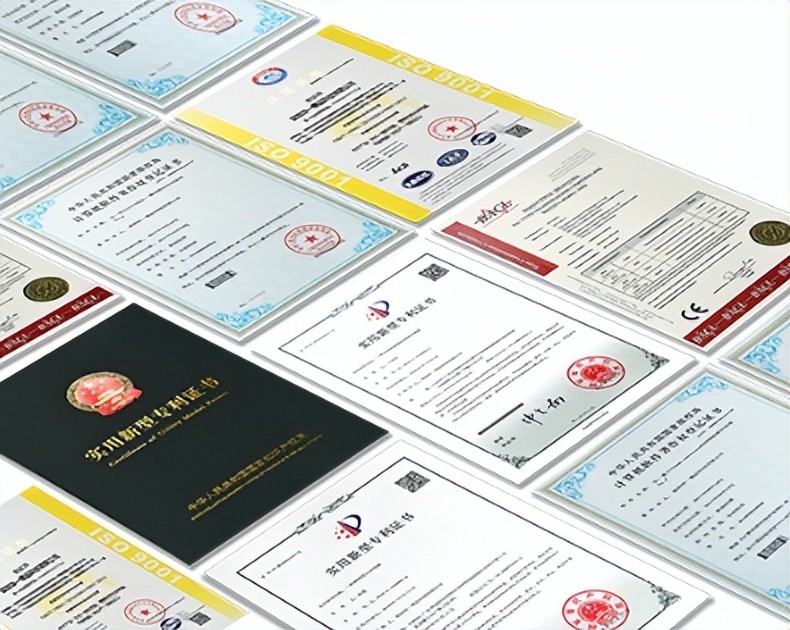
AI Compute Box Bulk Procurement: 3C, CE, FCC Certification Guide
Learn the key certification requirements for bulk buying AI compute boxes. Covers 3C, CE, FCC compliance, common pitfalls, and how to verify certificates to avoid legal risks.

RK3588 vs N100: Which Is Better for Local LLM Deployment?
Compare RK3588 and N100 for running local LLMs. See real-world token speeds, power, memory, software support, and which chip fits your AI workload.

Edge AI Box vs Cloud Server:Which Is Cheaper Long-Term?
A detailed TCO comparison of edge AI boxes and cloud servers. Covers hardware, bandwidth, power, and O&M costs, with break-even analysis and a decision checklist.
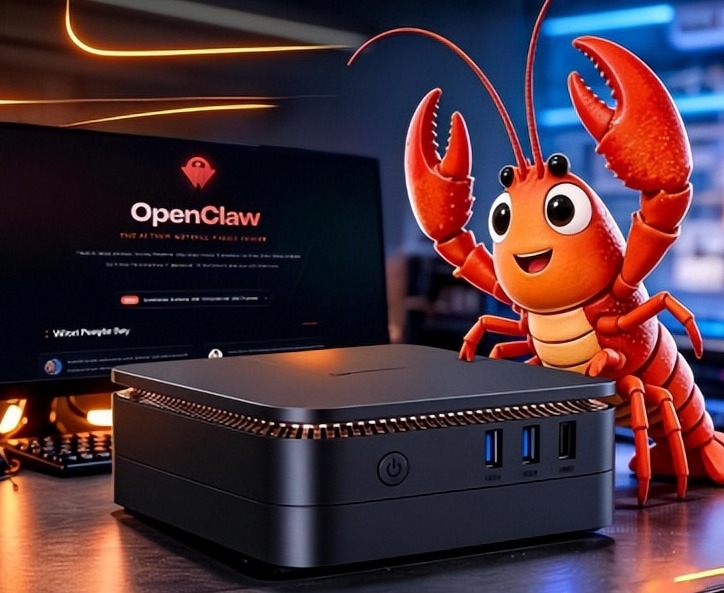
What AI Mini PC Do You Need for Private Local LLM Deployment?
Learn what AI mini PC specs you need for private deployment of local LLMs: memory, NPU, storage, offline capability, and configuration recommendations for 7B–70B models.
Adreamer

© 2012-2025 Copyright Shenzhen Adreamer Technology Co., Ltd.粤ICP备18115621号-2
Contact Adreamer Today for Your Custom Solution & Quote!
© 2012-2025 Copyright Shenzhen Adreamer Technology Co., Ltd.粤ICP备18115621号-2