
Get in Touch
Your Trusted Manufacturer of Laptops & Tablets

WhatsApp Us Directly
+86 13923410269
Email Us
Get in Touch
Your Trusted Manufacturer of Laptops & Tablets

For an emerging brand or a company developing a custom laptop for a specific industry, choosing the right OEM/ODM manufacturer is a foundational decision. Is it simply a contract manufacturing job? In reality, this choice, made at the project's inception, determines roughly 50% of the product's ultimate fate. It impacts not just hardware assembly but also shapes the product's core identity, optimizes cost structures, controls launch timelines, and ultimately influences market reputation. Faced with a long list of potential manufacturers, how can a brand cut through the noise and find a true strategic manufacturing partner?
Before contacting any manufacturer, resist the urge to immediately compare proposals and prices. Invest time internally to clarify your needs. Answer these five crucial questions thoroughly.
They may seem simple, but they directly dictate your direction in selecting a factory, the efficiency of communication, and even the product's success. Only by thinking through these points first can you accurately identify the partner truly suited for you among many manufacturers.
Are you creating a cost-competitive online bestseller, a design-driven mid-to-high-end premium device, a performance beast for gamers, or a ruggedized machine for enterprise clients? This determines your priority ranking for a manufacturer's design capability, material standards, and cost control.
Is the first order a tentative 1,000 units or a confident 50,000 units? A manufacturer's production flexibility MOQ, and the importance they assign to your order vary dramatically. A small order at a large factory may be ignored; a large order at a small factory may be crippled by capacity limitations.

Is cost the supreme sensitivity, or are you willing to pay a premium for quality and fast response? For the complete cycle from EVT , DVT to PVT , do you expect 6 months or 9 months? This directly filters manufacturers of different efficiency tiers.
Will the product sell in China, Europe/North America, or globally? This dictates the manufacturer must have relevant certification experience and capabilities—CCC for China, FCC/UL for the USA, CE/RoHS for the EU, UN38.3 for batteries, etc. For specialized industries like defense or finance, requirements for the manufacturer's security and controllability are higher.
When you approach manufacturers with clear self-awareness, focus on these six areas. They are far more telling than glossy factory brochures.
ID/MD Teams: Don't just look at renderings. Request to visit the design center, speak with lead designers, and review their portfolio of successfully launched products. Excellent design balances aesthetics with thermal management, structural strength, repairability, and user experience.
Core Hardware R&D Capability: Inquire about their history in motherboard layout design, especially tuning experience for new platforms like Intel Ultra or AMD Ryzen 8000 series chipsets. Can they design high-density boards to enable slimmer form factors?
BIOS/EC Firmware Development: This is the foundation of system stability. Understand their team size and their ability to perform deep customizations per your needs boot logo, power management policies, performance modes and their track record in solving complex compatibility issues.
New Technology Integration: In 2025, assess their preparedness and application experience with AI PC features NPU integration, local AI app adaptation, new materials magnesium-lithium alloys, eco-composites, and new processes CNC unibody, micro-arc oxidation.
Control Over Key Components: Does the manufacturer have strategic partnerships or long-term agreements with upstream suppliers for core components like CPUs Intel/AMD, panels BOE, LG, memory/storage Samsung, SK Hynix? This directly affects your material cost, supply priority, and risk resistance during shortages.
In-House Production Ratio: Top-tier manufacturers often have high in-house capabilities for molds, metal/plastic casings, thermal modules, and battery packs. A manufacturer like Adreamer, with its own sizable industrial park, exemplifies vertical integration from molding and injection to SMT and final assembly. This integration significantly shortens internal coordination cycles, enhances cost control and quality consistency, and allows more flexible adjustments during demand fluctuations.
Supply Chain Resilience: Ask how they have managed events like the recent chip shortage or geopolitically-induced disruptions. Do they have contingency plans and alternative component lists?
On-Site Factory Audit is Crucial! You must visit personally. Observe production line automation, ESD protection measures, and 5S management. Focus on:

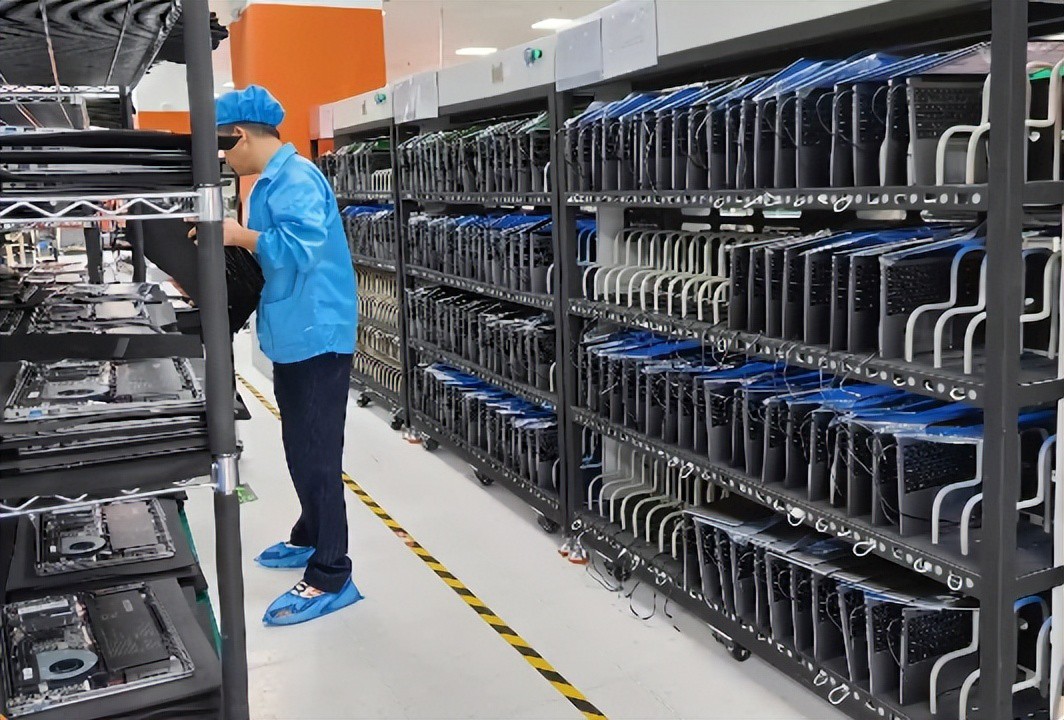
Quality Certifications: ISO 9001 is basic; ISO 14001 reflects environmental responsibility. For export, understanding their history of passing strict audits from major brand clients is more valuable.
AQL Standards: Clearly agree on and contractually define Acceptable Quality Level standards for shipment e.g., Major defects 0.4%, Minor defects 1.0%. This sets the baseline for .
RMA & Failure Analysis Process: Understand their warranty policy, defect analysis capability, spare parts inventory strategy, and repair turnaround time. An excellent partner can quickly identify root causes and feed lessons back into design improvements, creating a closed-loop system.
IP Protection: Sign a strict NDA and evaluate their information security management processes to ensure the safety of your product designs and business information.
Responsiveness & Dedicated Team: From initial contact to technical, is their response professional and timely? Have they assigned a dedicated project manager, technical lead, and quality liaison for you?
Flexibility & Collaborative Mindset: When facing technical challenges or market changes, does the partner proactively collaborate on solutions, or mechanically adhere to contract terms? A great ODM partner thinks from your perspective to jointly optimize the product.
Case Studies & Reputation: Request anonymized case studies similar to your brand positioning and seek unbiased feedback through industry channels. Recognitions like National High-Tech Enterprise or Specialized, Sophisticated, Innovative SME status indicate R&D investment and government endorsement but should be validated by client word-of-mouth.
Global Certification Experience: If your primary market is a specific region, the manufacturer must have rich experience with its certifications and can lead or efficiently assist in completing them, preventing launch delays.
Localized Support & Logistics: For international brands, can the manufacturer provide localized after-sales support or set up Vendor Managed Inventory in bonded warehouses in your key markets for rapid replenishment?
Create a Long List: Based on your needs scale, product type, region, preliminarily 5-8 potential partners via trade shows, B2B platforms, and industry media.
Technical Dialogue & RFQ: Provide a preliminary Product Requirements Document . Evaluate their technical comprehension depth, proposal quality, and responsiveness. Shortlist to 3-5.
Factory Visits & Senior Management Meetings: Conduct on-site audits of shortlisted candidates. Have in-depth discussions with their management and technical leads to gauge corporate culture and sincerity. This is key to filtering out PPT factories.
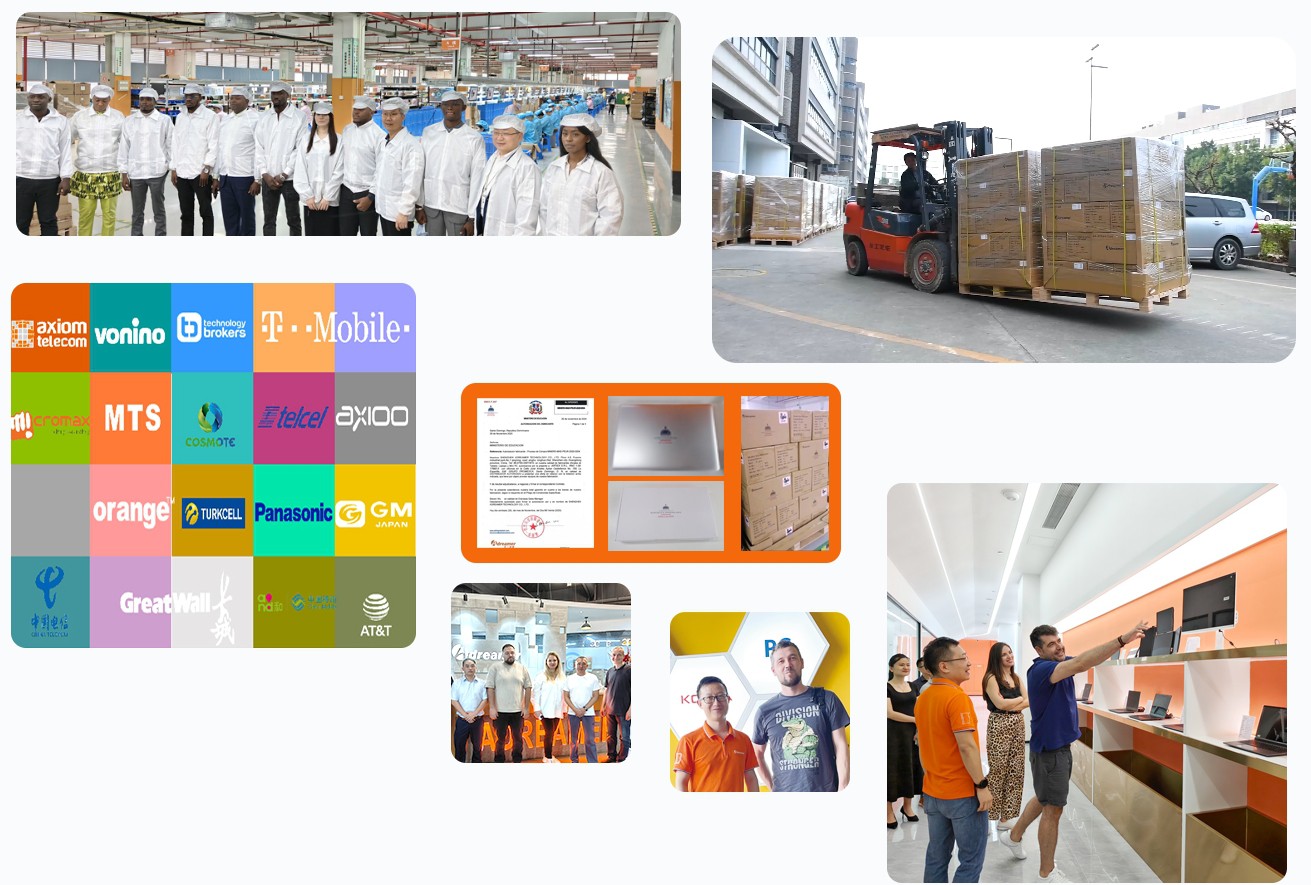
Trial Production & Comprehensive Evaluation: Select 1-2 for a small-scale New Product Introduction run. This live exercise tests their engineering, quality control, and communication. Evaluate sample quality, problem-solving speed, and documentation completeness.
Final Negotiation & Contracting: Based on the trial production assessment, finalize commercial terms, IP, quality agreements, and after-sales clauses. The contract must be exhaustive, clearly defining rights and responsibilities.
In 2025, selecting an OEM/ODM laptop manufacturer for your brand transcends mere outsourcing. It is a journey to find a co-innovator in technology, a co-guardian of quality, and a co-bearer of risk. There is no absolute best,only the partner most aligned with your brand's stage, product ambition, and values. Investing substantial time in deep due diligence and mutual validation upfront will pay back a hundredfold in the form of stable post-launch and sustained growth.
Industry-Specific Solutions
Latest Blog

Edge AI Box vs Cloud Server:Which Is Cheaper Long-Term?
A detailed TCO comparison of edge AI boxes and cloud servers. Covers hardware, bandwidth, power, and O&M costs, with break-even analysis and a decision checklist.
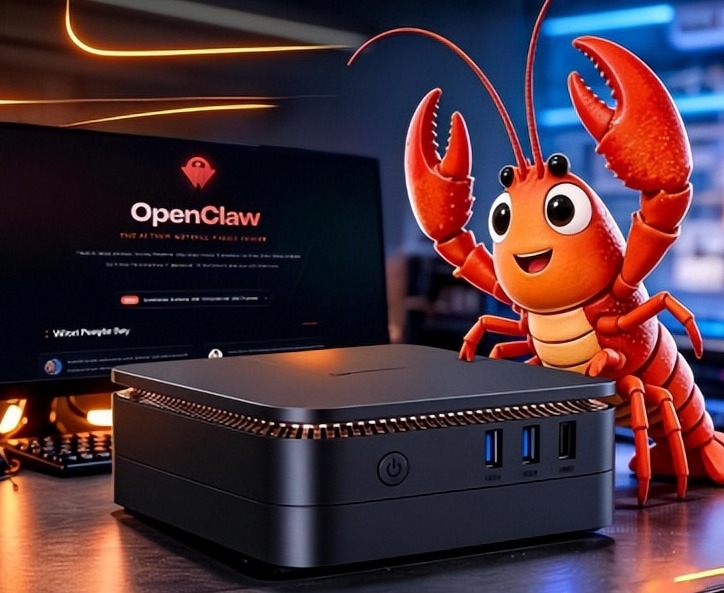
What AI Mini PC Do You Need for Private Local LLM Deployment?
Learn what AI mini PC specs you need for private deployment of local LLMs: memory, NPU, storage, offline capability, and configuration recommendations for 7B–70B models.

How to Choose an Edge Computing Box Manufacturer: ODM/OEM Guide
Learn how to evaluate edge computing box manufacturers. Compare source factories, ODM/OEM models, MOQ, certifications, and customization to find the right partner.

How to Choose an AI Mini PC in 2026: NPU & Memory Buying Guide
A practical guide to choosing an AI mini PC in 2026. Learn how to match NPU TOPS, memory capacity, and bandwidth to your workload, avoid common pitfalls, and pick the right configuration.
Adreamer

© 2012-2025 Copyright Shenzhen Adreamer Technology Co., Ltd.粤ICP备18115621号-2
Contact Adreamer Today for Your Custom Solution & Quote!
© 2012-2025 Copyright Shenzhen Adreamer Technology Co., Ltd.粤ICP备18115621号-2