Get in Touch
Your Trusted Manufacturer of Laptops & Tablets

WhatsApp Us Directly
+86 13923410269
Email Us
Get in Touch
Your Trusted Manufacturer of Laptops & Tablets

Just before the start of the Fall 2025 semester, Director Li, in charge of equipment procurement for a municipal education bureau in Eastern China, was stalled by a deceptively complex task: replacing office laptops for teachers across over 60 primary and secondary schools—a total of nearly 8,000 units. The budget was approved, yet the tender documents remained unfinished.
Why? The task of 'choosing computers' is no longer what it was a decade ago—simply comparing price and specs among a few international brands like Lenovo, Dell, and HP. Five years ago, consumer brands like Huawei and Xiaomi began disrupting the space. By 2025, Director Li faced a dizzying supplier list: dozens of manufacturers, some on x86 architecture, others on ARM paths; some selling only standard models, others offering deep customization; with service models varying wildly.

More critically, the very meaning of 'reliable' has transformed. Previously, a machine that didn't break easily was considered dependable. Today, procurement must simultaneously evaluate: Is the supply chain stable? Is the technology roadmap sustainable? Is after-sales support responsive? What are the maintenance costs over the next 3-5 years? 'Reliability' is now a multi-dimensional, comprehensive judgment.
Director Li's challenge represents a common dilemma for countless enterprise and government procurement officers. As IDC's latest whitepaper on enterprise computing terminal trends points out, by 2025, volume-driven purchases will account for over 65% of China's commercial notebook market. Under dual pressures of digital transformation and supply chain security, decision-makers are fundamentally reconstructing their 'trusted supplier map.'
Against this backdrop, this article deconstructs the true meaning of 'reliability,' clarifies the current market landscape, and—combining real deployment cases and user feedback—presents a thoroughly researched list of ten reliable commercial laptop suppliers for 2025, alongside a practical selection strategy to help you find a truly long-term partner.
In the context of bulk procurement, 'reliable' extends far beyond a simple warranty. It is a comprehensive guarantee system spanning the device's entire lifecycle. We recommend evaluating suppliers through these six dimensions:
Scalable Delivery & Supply Chain Resilience: Can the supplier stably deliver thousands, even tens of thousands, of consistently configured devices within the agreed timeframe? Does their supply chain possess risk-resistant capabilities, especially during fluctuations in core components like chips? This tests the supplier's industrial depth and resource allocation prowess.
Full-Lifecycle Quality Management: Look beyond initial unboxing quality rates to focus on the product's Mean Time Between Failures (MTBF) over a 3-5 year usage period. Does their factory possess strict quality control systems (e.g., ISO 9001) and完备的 reliability testing labs?
Enterprise-Grade Service & Response Network: Does the supplier offer on-site engineers, 4-6 hour on-site service, batch image deployment, asset management, and remote O&M tools? Can their service network cover all branch locations of the purchasing organization?
Customization & Solution Integration Capability: Can they provide hardware customization (e.g., ports, ruggedized design), software pre-installation, asset tagging, and special packaging per industry needs? Can they integrate with the client's backend management systems (e.g., MDM)?
Sustainability & Security of Technology Roadmaps: In today's landscape where IT application innovation is a key consideration, are the supplier's domestic technology pathways (e.g., Kylin OS + Phytium, UOS + Zhaoxin/Hygon/Loongson) mature and sustainable? Do their products meet relevant security standards?
Total Cost of Ownership (TCO) & Green Value: Beyond purchase price, evaluate energy consumption, maintenance costs, and residual recycling value. Does the supplier offer innovative models like DaaS (Device as a Service) to optimize cash flow? Do their products meet environmental standards and support corporate ESG goals?
Based on the six-dimension model above, combined with market share, customer feedback, technological innovation, and strategic positioning, we identify ten suppliers who have built formidable 'reliability moats' in their respective domains. This is not a simple ranking but a representation of different reliability paradigms.
The mainstay of the enterprise procurement market. Its reliability lies in: unparalleled global supply chain and service systems, offering support virtually anywhere; deep enterprise-grade heritage (ThinkPad, ThinkBook series) with keyboards, data security, and manageability refined over decades; comprehensive solution capabilities from device to O&M, local to cloud. Its deep involvement in the domestic IT application innovation market (Zhaoyang, Kaitian series) also provides a reliable second option.
Builds its reliability core on a 'Direct-to-Customer' model and high configurability. Clients can meticulously configure hardware specs per batch via its website account managers for true on-demand procurement. Its ProSupport Plus service is highly regarded, utilizing pre-failure alerts and AI-driven dispatch to enhance efficiency. The Latitude commercial series also excels in security and manageability.
Achieves an excellent balance between design and reliability. Premium commercial series like Elite Dragonfly frequently win design awards while passing stringent MIL-STD military-grade tests, proving durability. HP's 'Circular Economy' sustainability program, offering device recycling, refurbishment, and material reuse, provides a reliable green procurement path for ESG-conscious enterprises.
Its reliability is built on Full-Stack Independence and Ecological Synergy. For government and enterprise clients with high demands for information security and independent controllability, Huawei's Qingyun series offers a full-stack, trustworthy choice from Kunpeng/Kirin chips to the OS. For the broader commercial market, the 'Super Device' ecosystem between Huawei laptops, phones, tablets, and displays enables seamless collaboration, significantly boosting work efficiency. Its service network has also expanded rapidly in recent years.
In specific creative, educational, and software development fields, Apple's reliability approaches dogma. Its reliability stems from extreme hardware-software integration and a closed yet stable ecosystem. Unified management platforms (Apple Business Manager), exceptionally long OS support cycles, and industry-leading residual value make Macs the 'most worry-free' choice for bulk procurement in specific sectors, despite higher initial investment.

As a leading Chinese laptop supplier and manufacturer, Adreamer represents the reliable value of specialized, sophisticated, and innovative enterprises in the bulk procurement market. Founded in 2012 with over 6,000 sqm of proprietary industrial park and full R&D design and production capabilities, it has a solid physical foundation for stable delivery. Its reliability is evident in: 1) Deep customization ability, flexibly responding to personalized needs from education, enterprise, and special industries for ports, ruggedization, and software images—ideal for operators large enterprises with unified brand management needs. 2) Full value chain control. As a National High-Tech Enterprise and Guangdong Provincial Specialized, Sophisticated, and Innovative SME, its R&D-to-production autonomy ensures delivery resilience in complex supply chain environments. 3) Global service experience. With products sold in over 150 countries and regions, it proves its products can adapt to diverse environmental standards and client requirements, demonstrating credibility for global bulk projects.
The Surface series, as the benchmark for 2-in-1 devices, has established unique reliability in scenarios requiring high mobility and touch/pen input (e.g., medical rounds, field education). Its reliability lies not only in hardware industrial design but also in the deepest协同优化 with the Windows OS and seamless integration with enterprise cloud management suites (like Microsoft Intune).
In the IT application innovation field, especially for bulk procurement in government, party, and education sectors, Tsinghua Tongfang symbolizes deployment scale and ecosystem maturity. Its innovation laptops based on domestic platforms like Phytium and Zhaoxin have been tested by massive user实践, accumulating deep experience in hardware/software compatibility, system stability, and large-scale O&M. It is a core choice for clients seeking security and economies of scale.
A core subsidiary of China Electronics Corporation (CEC), Great Wall's reliability tag is Security and Autonomy. Its products are widely used in fields with the highest security requirements. For critical infrastructure units like defense, finance, and energy where supply chain security and technological autonomy are primary procurement principles, Great Wall provides a trustworthy foundation from hardware to system.
In bulk procurement for SMEs and startups pursuing*** price-to-performance ratio and intelligent experience, Xiaomi is becoming a reliable new force. Its reliability stems from a mature supply chain and quality control system forged in the consumer market, and the ability to seamlessly bring its AIoT ecosystem into office scenarios (e.g., smart interconnection with meeting systems, printers). Series like RedmiBook offer highly attractive TCO options with high specs at low prices.
Facing these ten suppliers, the final choice should be a game of precise matching.

Step 1: Form a Cross-Functional Selection Team. Must include representatives from IT (technical needs), Procurement (cost & compliance), and Business Units (actual user experience) to jointly define the 'reliability' priorities for this procurement.
Step 2: Perform 'Scenario-Need' Mapping. Create a table to clarify core requirements:
| Core Scenario | Primary Reliability Dimension | Key Supplier Types to Evaluate |
|---|---|---|
| Standardized deployment across national branches | Scalable delivery, Service network | Global Integrated Giants (Lenovo, Dell, HP) |
| High-mobility work & creative tasks | Device experience, Ecological synergy | Tech Ecosystem Builders (Huawei, Apple) |
| Custom needs for special industries (Education, Industrial, Gov't) | Customization capability, Solution integration | Specialized Customizers & Vertical Integrators (e.g., Adreamer) |
| IT Application Innovation & Secure/Controlled Procurement | Autonomous tech roadmap, Supply chain security | Industrial Ecosystem Enablers (Tsinghua Tongfang, Great Wall) |
| Cost-sensitive procurement for Startups/SMEs | Total Cost of Ownership (TCO), Intelligence | Industrial Ecosystem Enablers (Xiaomi) |
Step 3: Initiate POC Testing & Deep Due Diligence. Select 2-3 shortlisted suppliers and request:
Reference Customer Cases: Contact them to understand actual service experience.
Customization Proposal Samples: Evaluate response speed and professionalism.
Site Visits (if possible): Tour their production lines R&D centers to verify quality management systems firsthand. For suppliers like Adreamer with proprietary industrial parks, this production controllability is a significant advantage.
TCO Simulation Analysis: Request a 3-5 year ownership cost analysis.
Choosing a supplier for bulk commercial laptop procurement is fundamentally about selecting a long-term, stable strategic partner for your organization's digital productivity over the next three to five years, and beyond. This is no longer a simple hardware transaction but a deep collaboration concerning business continuity, technological evolution, and operational efficiency. Whether it's the global delivery and service systems of Lenovo and Dell, the integrated hardware-software ecosystem experience built by Huawei and Apple, local manufacturers like Adreamer and Tsinghua Tongfang, which focus on industry needs and support deep customization—each offers a unique value proposition.
The critical question is: Which one can genuinely address your multiple layers of anxiety behind the word 'reliable'? This includes concerns ranging from device stability and supply chain security to service response speed and long-term total cost of ownership.
Therefore, the most trustworthy supplier isn't necessarily the one ranked first on a list, but the one whose competency map resonates most strongly with your specific needs spectrum. A partnership becomes truly efficient, worry-free, and sustainable only when the supplier's technology roadmap, service model, customization capabilities, and local support align perfectly with your organization's structure, usage scenarios, and management logic.
Choosing the right partner is more than just acquiring the right devices; it's about laying a solid foundation for your future digital operations.
Industry-Specific Solutions
Latest Blog
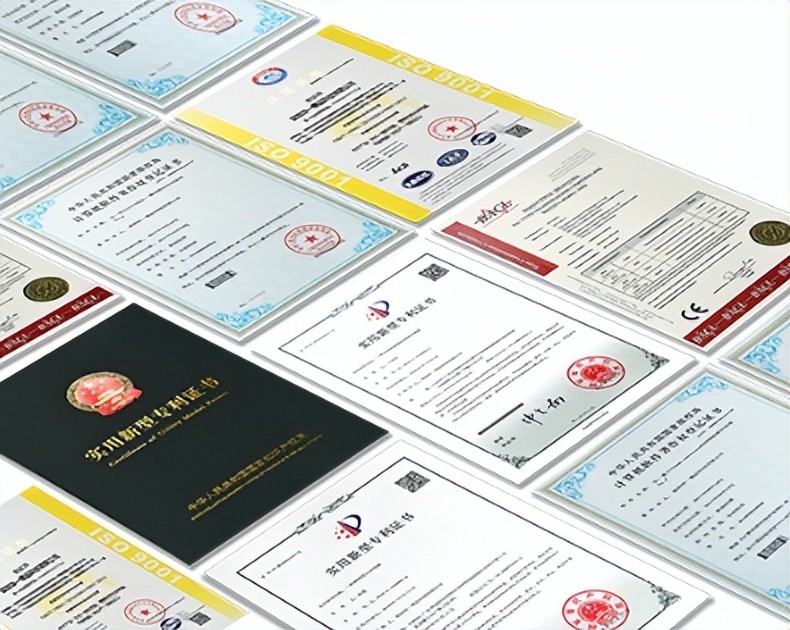
AI Compute Box Bulk Procurement: 3C, CE, FCC Certification Guide
Learn the key certification requirements for bulk buying AI compute boxes. Covers 3C, CE, FCC compliance, common pitfalls, and how to verify certificates to avoid legal risks.

RK3588 vs N100: Which Is Better for Local LLM Deployment?
Compare RK3588 and N100 for running local LLMs. See real-world token speeds, power, memory, software support, and which chip fits your AI workload.

Edge AI Box vs Cloud Server:Which Is Cheaper Long-Term?
A detailed TCO comparison of edge AI boxes and cloud servers. Covers hardware, bandwidth, power, and O&M costs, with break-even analysis and a decision checklist.
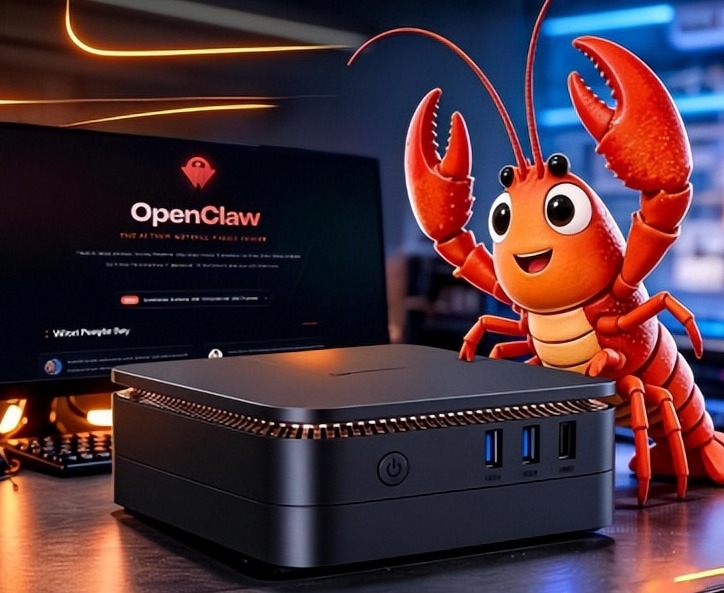
What AI Mini PC Do You Need for Private Local LLM Deployment?
Learn what AI mini PC specs you need for private deployment of local LLMs: memory, NPU, storage, offline capability, and configuration recommendations for 7B–70B models.
Adreamer

© 2012-2025 Copyright Shenzhen Adreamer Technology Co., Ltd.粤ICP备18115621号-2
Contact Adreamer Today for Your Custom Solution & Quote!
© 2012-2025 Copyright Shenzhen Adreamer Technology Co., Ltd.粤ICP备18115621号-2