
Get in Touch
Your Trusted Manufacturer of Laptops & Tablets
WhatsApp Us Directly
+86 13923410269
Email Us
Get in Touch
Your Trusted Manufacturer of Laptops & Tablets

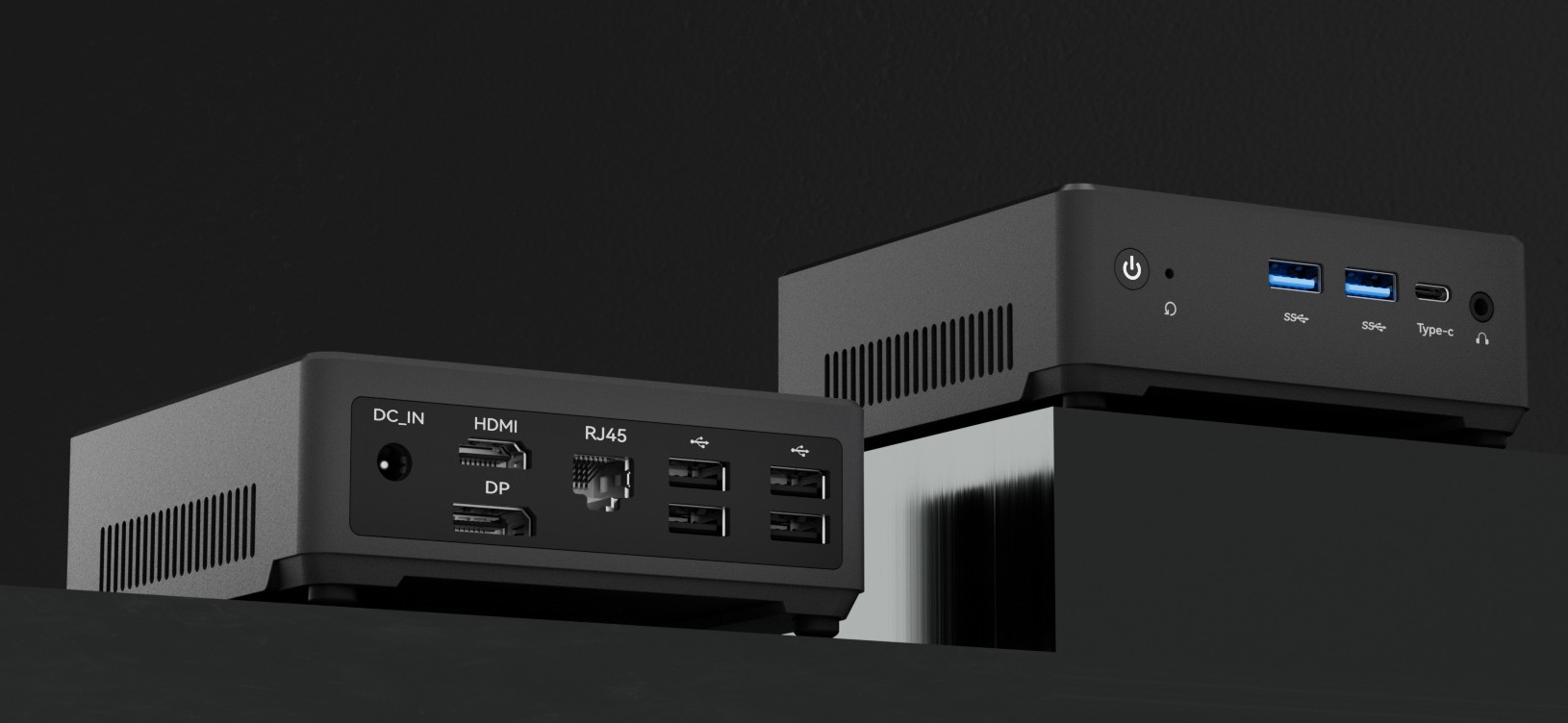
If you are considering customizing mini PCs for your brand, or planning to enter cross‑border e‑commerce or industry applications (digital signage, edge computing, home servers), finding a reliable OEM/ODM factory is only the first step. You also need to understand how to meet target country certifications, control international logistics costs, and ensure multilingual software support.
Over the past two years, I have helped several cross‑border e‑commerce sellers and startup brands complete mini PC ODM projects – from Shenzhen factories to Amazon FBA – and learned many lessons. This guide is written specifically for brands, detailing the mini PC manufacturing ecosystem, cooperation models, delivery processes, and key points for export certifications, BOM optimization, and logistics. My goal is to help you launch your custom mini PC project efficiently.
Mini PC manufacturing also distinguishes between OEM and ODM, and your choice affects product certification and software adaptation for markets.
OEM (Original Equipment Manufacturer): You provide the complete design, BOM, and specifications; the factory only manufactures. Suitable for brands with in‑house hardware R&D. Pros: unique product, full IP ownership. Cons: high upfront investment (molds, R&D, certifications), long lead time.
ODM (Original Design Manufacturer): The factory provides existing reference designs; you select configurations, customize appearance (logo, color), and pre‑load software. Suitable for brands without hardware teams that want to go to market quickly. Cons: product similarity, and certifications are usually held by the factory – you need to apply for a derivative or re‑certify.
For most small‑to‑medium brands, I recommend starting with ODM reference designs with minor modifications. Many Chinese factories already have CE, FCC, RoHS certifications for their mini PCs. You only need to pay a derivative fee (usually a few hundred to a thousand dollars) to change the manufacturer name on the certificate to your brand. This is the fastest and most cost‑effective way.
The Pearl River Delta region hosts hundreds of mini PC contract manufacturers. Based on size and export experience, they fall into three categories:
Category 1: Large ODM/OEM integrated manufacturers (e.g., Foxconn, Pegatron, Elite)
These typically do not serve small‑to‑medium brands. MOQ is 10,000‑50,000 units, and the cooperation process is complex. Avoid unless you have very large orders.
Category 2: Mid‑sized professional mini PC / industrial PC ODM manufacturers (e.g., Adreamer, Giada, JWIPC, Norco)
These are the first choice for brands. They have rich export experience, product lines covering Intel N100 to Core Ultra, AMD Ryzen, and ARM platforms (RK3588, etc.). They can provide:
MOQ is typically 1,000‑2,000 units, supporting minor modifications on reference designs. Among them, Adreamer has high shipment volumes for low‑power office models, Giada specializes in digital signage and self‑service terminals, and Norco focuses on industrial‑grade wide‑temperature designs.
Category 3: Small custom workshops
They mainly work on ARM platforms (RK3566, RK3588) or low‑end x86, with MOQ as low as 500 units. However, they lack export experience, have incomplete certifications, and long‑term supply stability is poor. Only suitable for very small‑batch market testing.
The following process uses “reference design ODM + light customization + export” as an example. Each stage requires special attention to requirements.
Besides normal CPU, RAM, storage, and port selection, brands must clarify:
The factory provides 2‑5 engineering prototypes (may use 3D‑printed enclosures). During testing, in addition to normal functions, perform voltage adaptability tests for target country grids (e.g., 110V for US, 230V for Europe). Request high‑low temperature operation test reports from the factory (especially if selling to Nordic or Middle Eastern countries). Also test whether Wi‑Fi channels comply with local regulations (e.g., Japan has special channel requirements).
This is the most time‑consuming and expensive step. Three common approaches:
Important: If the product has Wi‑Fi/Bluetooth, the EU requires RED (Radio Equipment Directive); the US requires FCC ID (not SDOC). These certifications have longer lead times – plan ahead.
Small‑batch pilot run (typically 200‑500 units) validates production line stability and certification consistency. After passing, proceed to mass production. For orders, factories typically quote FOB Shenzhen (including export packaging, excluding sea freight and insurance). You will need a freight forwarder to arrange booking, customs clearance, and shipping.
After production, the factory applies stickers as required (model number, certification marks, warnings, country of origin “Made in China”). Shipping cartons must have transport marks (consignee address, case number, gross weight, etc.). Typically choose sea freight (40 days to US/EU) or air freight (5‑7 days but expensive). For first order, use air freight to list quickly; for replenishment, use sea freight.

To reduce export costs while maintaining quality, consider these optimizations:
CPU: Choose lower‑power models (e.g., Intel N100, N305, AMD 5425U). This reduces heatsink size and adapter cost, and makes energy certifications easier.
RAM & storage: If the target market is price‑sensitive, offer “barebone” (without RAM/SSD) for users to buy separately, or a minimal version with 4GB RAM + 64GB eMMC for thin client scenarios.
Power adapter: Use universal adapters with interchangeable plugs (input 100‑240V) to reduce country‑specific inventory. However, adapters need separate certifications (UL, CE, PSE). It’s best to certify the adapter together with the host.
Enclosure: Public plastic molds are cheapest but look less premium; metal (aluminum extrusion) looks more upscale and is better for consumer brands. For hot climates, metal enclosures dissipate heat better.
Packaging: Use recyclable materials (meeting EU requirements) and reduce package size (lowers sea freight cost). Provide electronic manuals (QR code download) to save paper and weight.
For markets, incomplete certifications can lead to cargo detention, delisting, or fines. Here is a checklist:
| Target Market | Mandatory Certifications | Voluntary | Notes |
|---|---|---|---|
| European Union | CE (LVD+EMC+RED+ErP), RoHS | REACH, WEEE | Requires DoC declaration |
| United States | FCC (Part 15B), UL/ETL (safety) | Energy Star | FCC ID requires listing |
| Canada | ICES-003, CSA | – | Can apply together with FCC |
| Japan | PSE (circle or diamond), TELEC | VCCI | Diamond PSE requires factory audit |
| United Kingdom | UKCA (CE still accepted during transition) | – | UKCA required after end 2024 |
| Australia | RCM (C‑Tick + safety) | GEMS (energy) | – |
Common mistakes:
Example: most common Intel N100 mini PC (barebone, no RAM/SSD/OS)
| Customization Level | MOQ | Unit Price (FOB Shenzhen) | NRE Fee | Certification Derivative Fee |
|---|---|---|---|---|
| Pure reference design, no custom | 100 | $85‑95 | 0 | 0 |
| Reference + silkscreen logo + neutral packaging | 300 | $80‑90 | $300 | $200 (FCC derivative) |
| Reference + change case color + preload software | 500 | $75‑85 | $1,000 | $500 (CE+FCC derivative) |
| Exclusive new mold | 3,000 | $65‑75 (first order) | $8,000‑20,000 (tooling) | $3,000‑6,000 (full certification) |
Note: Prices exclude RAM/SSD (barebone) and OS licenses. Windows license costs ~$30‑50 per unit (depending on version).
Sea freight to US West Coast: ~15‑20 days, East Coast 25‑30 days, Europe 30‑40 days. Allow 1‑2 weeks for customs clearance. For FBA first‑leg, Amazon labels must be affixed; the factory can do this for a small fee ($0.5‑1 per box).
Don’t focus only on price. Cheap factories may use non‑original Wi‑Fi modules or poor capacitors, causing FCC test failures. The cost of rework far exceeds the few dollars saved.
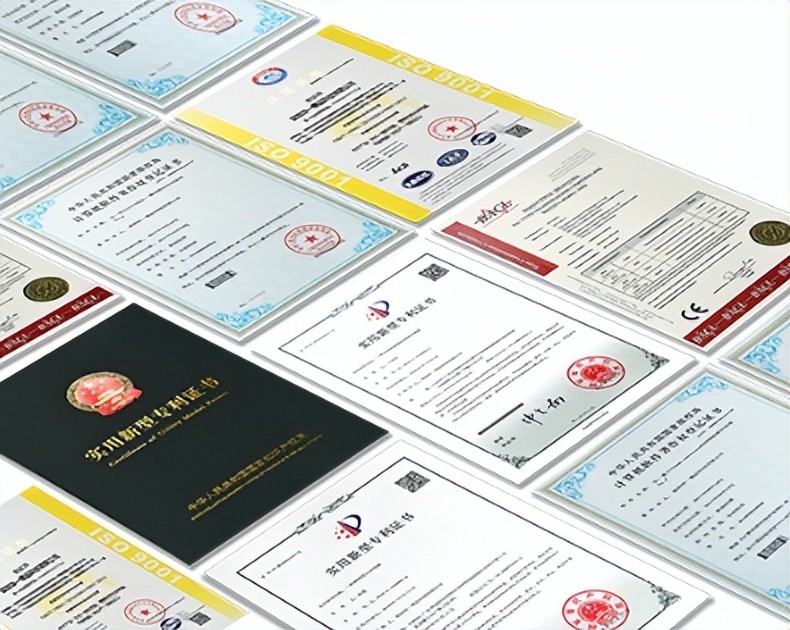
Check certification validity in advance. Some certificates (e.g., CCC) require annual factory audits. CE does not require annual renewal, but any product changes require re‑evaluation. Agree with the factory that if they change components without authorization leading to certification failure, they bear responsibility.
Plan for after‑sales spares. repair costs are high. Order an extra 2‑3% of complete units as spares and 5% of consumables (power adapters, fans). Agree on a return/repair process with the factory (usually shipping back to Shenzhen, but shipping is expensive).
Keep software multilingual. Even if you only sell to English‑speaking countries, build other language options into BIOS and OS for future market expansion.
Start with a small trial batch, iterate quickly. For a first cooperation, order 1,000 units. Test market response via Amazon or your own website. Based on customer feedback (e.g., add COM ports, improve cooling), optimize for the second batch.
Start with “reference design + derivative certification + small sea‑freight shipment” to quickly validate whether your product meets user needs. Once sales stabilize, consider exclusive molds and deeper customization. Remember, the factory is your partner, not your subordinate. Maintain good communication and jointly solve market requirements – that is the path to long‑term success.
Industry-Specific Solutions
Latest Blog
AI Compute Box Bulk Procurement: 3C, CE, FCC Certification Guide
Learn the key certification requirements for bulk buying AI compute boxes. Covers 3C, CE, FCC compliance, common pitfalls, and how to verify certificates to avoid legal risks.

RK3588 vs N100: Which Is Better for Local LLM Deployment?
Compare RK3588 and N100 for running local LLMs. See real-world token speeds, power, memory, software support, and which chip fits your AI workload.

Edge AI Box vs Cloud Server:Which Is Cheaper Long-Term?
A detailed TCO comparison of edge AI boxes and cloud servers. Covers hardware, bandwidth, power, and O&M costs, with break-even analysis and a decision checklist.
What AI Mini PC Do You Need for Private Local LLM Deployment?
Learn what AI mini PC specs you need for private deployment of local LLMs: memory, NPU, storage, offline capability, and configuration recommendations for 7B–70B models.
Adreamer

© 2012-2025 Copyright Shenzhen Adreamer Technology Co., Ltd.粤ICP备18115621号-2
Contact Adreamer Today for Your Custom Solution & Quote!
© 2012-2025 Copyright Shenzhen Adreamer Technology Co., Ltd.粤ICP备18115621号-2