Get in Touch
Your Trusted Manufacturer of Laptops & Tablets
WhatsApp Us Directly
+86 13923410269
Email Us
Get in Touch
Your Trusted Manufacturer of Laptops & Tablets

You are working on an edge computing project—maybe visual quality inspection for a smart factory, foot traffic analytics for retail stores, or intelligent recognition for outdoor security. You need a batch of edge computing boxes—not one or two, but hundreds or thousands—with your own branding, pre-installed software, and even customized ports and enclosures.
So you start searching for 'best edge computing box manufacturers' and contact five or six suppliers. Quotes range from $250 to $600, and they all claim to 'support customization,' 'direct factory,' and 'CE/FCC certified.' The more you look, the more confused you get: Who is a real factory and who is a trader? What's the difference between ODM and OEM? Can the cheap ones work? Are the expensive ones worth it?
Gives you a practical manufacturer evaluation framework. Whether you are a system integrator, an enterprise IT manager, or an AI hardware entrepreneur, take this guide to negotiate with suppliers—you'll filter out 90% of the noise and find a reliable partner.
Edge computing boxes differ fundamentally from consumer electronics: they are not standard products but deeply customized industry devices.
A retail mini PC works right out of the box. But an edge computing box often requires:
These requirements cannot be met by traders or small workshops. Only source factories with R&D and manufacturing capabilities can deliver.
Trader vs. Source Factory: Key Differences
| Dimension | Trader/Solution Provider | Source Factory |
|---|---|---|
| R&D capability | None, relies on upstream | Has hardware/software R&D team |
| Manufacturing | Outsourced | Own SMT lines and assembly lines |
| BSP/Driver support | Cannot modify | Can deeply customize |
| Certifications | Borrows upstream certificates | Applies for system-level certification under own name |
| MOQ flexibility | Low (constrained by upstream) | Higher (negotiable) |
| Price | 20%-50% markup | Factory price |
| After-sales support | Pass-through, slow response | Direct FAE support |
| Long-term supply | Uncertain | Controllable (own material planning) |
The cost of choosing the wrong manufacturer: project delays, certification failures, batch crashes, and no after-sales support. The savings on procurement price are far outweighed by these losses.
Suppliers on the market fall into four categories, each with pros and cons.
Type 1: International Brands (e.g., Advantech, Dell Edge, HPE)
| Advantages | Disadvantages |
|---|---|
| Stable quality, global warranty | Extremely high price (50%-100% brand premium) |
| Complete certifications, thorough documentation | Low customization—usually only fixed configurations |
| Long-term supply commitment | High MOQ, long lead times |
Best for: Large enterprises, multinational projects, tenders with mandatory brand requirements.
Type 2: Taiwan ODM Giants (e.g., Quanta, Compal, Wistron, Inventec)
| Advantages | Disadvantages |
|---|---|
| Strong R&D, large manufacturing scale | Extremely high MOQ (typically 10,000+ units) |
| Top-tier quality control, high yield | Does not accept small-to-medium batch orders |
| Deep ODM capability | Long communication chain, slow response |
Best for: Large brands with annual shipments over 100,000 units.
Type 3: Chinese Source Factories (e.g., Adreamer, Advantech, Kontron, Weibu)
| Advantages | Disadvantages |
|---|---|
| Integrated R&D and manufacturing, controllable cost | Varying scale—need careful screening |
| Flexible MOQ (500-5,000 units negotiable) | Some factories lack complete certifications |
| Strong customization, fast response | International support capabilities vary |
Best for: Small-to-medium batches, high customization, cost-performance-focused industry clients.
Type 4: Small Solution Providers/Traders
| Advantages | Disadvantages |
|---|---|
| Low barrier, flexible communication | No R&D, no production lines |
| Can do simple white-labeling | Cannot solve underlying technical issues |
Best for: Minimal projects requiring only logo silkscreen, no customization. High risk—not recommended for core projects.
Many buyers confuse ODM and OEM, leading to inefficient communication. Here's the clarity.
ODM (Original Design Manufacturer)
The factory designs the product independently (motherboard, structure, cooling). The customer selects an existing solution or modifies it, then sells under their own brand.
OEM (Original Equipment Manufacturer)
The customer provides the complete design (drawings, BOM, software); the factory only handles contract manufacturing.
ODM vs. OEM Decision Table
| Your Situation | Recommended Model |
|---|---|
| Have hardware R&D team, want full design control | OEM |
| No hardware R&D, but need deep customization | ODM (modify factory solution) |
| Only need white-labeling, no customization | ODM (existing solution) |
| Limited budget, want fast time-to-market | ODM |
| Have special technical barriers, need exclusive protection | OEM or ODM + exclusive agreement |
Reality: Most small-to-medium edge computing box projects use the ODM model—the factory provides a mature motherboard solution, and the customer customizes the enclosure, ports, software, and brand. This is the most cost-effective and lowest-risk path.
Dimension 1: R&D and Customization Capability
| Check Item | Specific Questions |
|---|---|
| Hardware design | Can they modify motherboard layout? Add/remove ports? |
| BSP/Drivers | Can they provide kernel source code? Adapt non-standard peripherals? |
| AI frameworks | Do they support TensorRT, OpenVINO, RKNN, ONNX? |
| Thermal design | Can they redesign cooling based on my enclosure? |
| Certification support | Can they apply for CE/FCC/CCC under my brand? |
Pitfall avoidance: If they say 'we use a board from some solution provider and can't change it,' they are a trader, not a source factory.
Dimension 2: Certifications
| Certification | Importance | How to Verify |
|---|---|---|
| CE | Required for EU export | Request certificate number, verify online |
| FCC | Required for US export | Confirm certificate covers the final system |
| CCC | Required for domestic China sales | Confirm applicant can be your brand |
| RoHS/REACH | Environmental compliance | Request test reports |
| Industry certifications | Medical/explosion-proof/automotive | Check for similar project experience |
Pitfall avoidance: The 'applicant' and 'manufacturer' on the certificate must be able to be written as your company name. Otherwise, you are selling an uncertified product.
Dimension 3: Production Scale and Quality Control
| Check Item | Ideal State |
|---|---|
| SMT lines | Owned (not outsourced) |
| Assembly lines | Owned, with burn-in test area |
| IQC/IPQC/OQC | Complete incoming, in-process, outgoing inspection |
| Yield rate | ≥98% |
| Capacity | 5,000-50,000 units/month (depending on scale) |
| Test equipment | EMC pre-testing, temperature/humidity chambers, vibration tables |
Pitfall avoidance: Request a factory tour or video audit. If they hesitate, they are likely a trader.
Dimension 4: Customization Flexibility and MOQ
| Customization Item | Industry Average | Quality Factory |
|---|---|---|
| Logo silkscreen | MOQ 500 | MOQ 300 |
| Enclosure color change | MOQ 1,000 | MOQ 500 |
| Port customization | MOQ 2,000 | MOQ 1,000 |
| Motherboard modification | MOQ 5,000 | MOQ 2,000 |
| New private mold | MOQ 10,000 | MOQ 3,000 |
Pitfall avoidance: If they say 'we can do anything, MOQ 100 units,' they are almost certainly a scam. Mold costs are fixed; 100 units cannot amortize them.
Dimension 5: FAE Support and After-Sales
| Check Item | Specifics |
|---|---|
| Response time | Remote response within 4 hours? |
| On-site support | Do they provide on-site debugging? |
| Spare parts policy | Do they provide 3%-5% spare units? |
| Long-term maintenance | BSP/driver update commitment for how many years? |
| Repair cycle | How long for faulty unit repair? |
| Training | Do they train the customer's IT team? |
Pitfall avoidance: Manufacturers without local FAE and unwilling to sign an SLA are only suitable for one-off transactions.
| Manufacturer Type | Representative Companies | R&D Capability | MOQ | Customization Depth | Certification Support | Price | Suitable Clients |
|---|---|---|---|---|---|---|---|
| International Brands | Advantech, Dell Edge | Strong | 100+ | Low | Complete | High | Large enterprises, tenders |
| Taiwan ODMs | Quanta, Compal, Wistron | Very strong | 10,000+ | High | Complete | Medium | Brands with 100k+ annual shipments |
| Chinese Source Factories | Adreamer, Advantech, Kontron, Weibu | Medium to strong | 500-5,000 | Medium to high | Can support | Medium-low | Small-to-medium batches, industry customization |
| Small Solution Providers/Traders | Local integrators | None | 100+ | Low (white-label only) | Borrowed | Markup | Minimal white-label needs |
Note: Chinese source factories like Adreamer have excelled in small-to-medium batch ODM in recent years, with MOQ as low as 500 units, supporting full customization of appearance, ports, and software—ideal for system integrators, education/government projects, and industrial equipment matching.
text
What are your project requirements?
│
├─ Annual volume > 100,000 units, standardized product
│   → Look for Taiwan ODMs (Quanta, Compal) or international brands
│
├─ Annual volume 5,000-50,000 units, deep customization needed
│   → Look for Chinese source factories (e.g., Adreamer, Advantech, Kontron)
│
├─ Annual volume 500-5,000 units, small-to-medium batch customization
│   → Look for source factories focused on small-to-medium batches (Adreamer, etc.)
│
├─ Only white-labeling, no customization
│   → Can use traders, but at your own risk
│
└─ Have hardware R&D team, need full independent design
    → Look for OEM contract manufacturers
Q1: How do I tell if an edge computing box manufacturer is a source factory?
Ask three questions:
If they are vague on all three, they are a trader.
Q2: Under the ODM model, who owns the product's intellectual property?
Typically, the motherboard design belongs to the factory, while the appearance ID and software belong to the customer. If you want exclusive ownership of the appearance design, you need to pay the mold fee and sign an exclusive agreement. Software and brand identity always belong to the customer.
Q3: For small-batch customization (500-1,000 units), what if big factories won't take the order?
Look for source factories focused on small-to-medium batches. For example, Adreamer and similar manufacturers have MOQs as low as 500 units, supporting flexible customization of appearance, ports, and software, with lead times of about 4-8 weeks. This is the best choice for small-to-medium integrators and project-based clients.
Q4: For edge computing box certifications, should the factory do it or should I do it myself?
It is recommended to require the factory to apply for certification under your brand. This way, the applicant and manufacturer on the certificate are both your company, making your product legally compliant. If the factory certifies under its own name, you are only 'white-label selling,' which carries significant risk if audited.
Q5: How can I ensure long-term supply from the factory?
Specify in the contract:
Q6: Is FAE support important?
Extremely important. Edge computing boxes are deployed in industrial, retail, and medical sites. When issues arise, rapid diagnosis is needed. Factories without FAE support can only ask you to 'send it back for repair,' which takes at least two weeks—projects cannot afford this delay.
Industry-Specific Solutions
Latest Blog

How to Choose an Edge Computing Box Manufacturer: ODM/OEM Guide
Learn how to evaluate edge computing box manufacturers. Compare source factories, ODM/OEM models, MOQ, certifications, and customization to find the right partner.
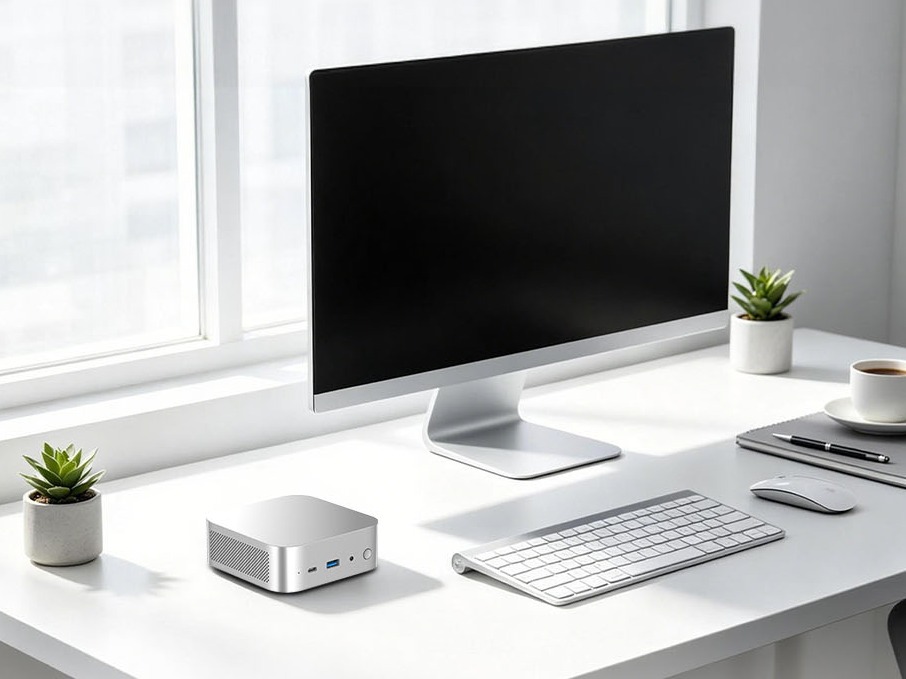
How to Choose an AI Mini PC in 2026: NPU & Memory Buying Guide
A practical guide to choosing an AI mini PC in 2026. Learn how to match NPU TOPS, memory capacity, and bandwidth to your workload, avoid common pitfalls, and pick the right configuration.
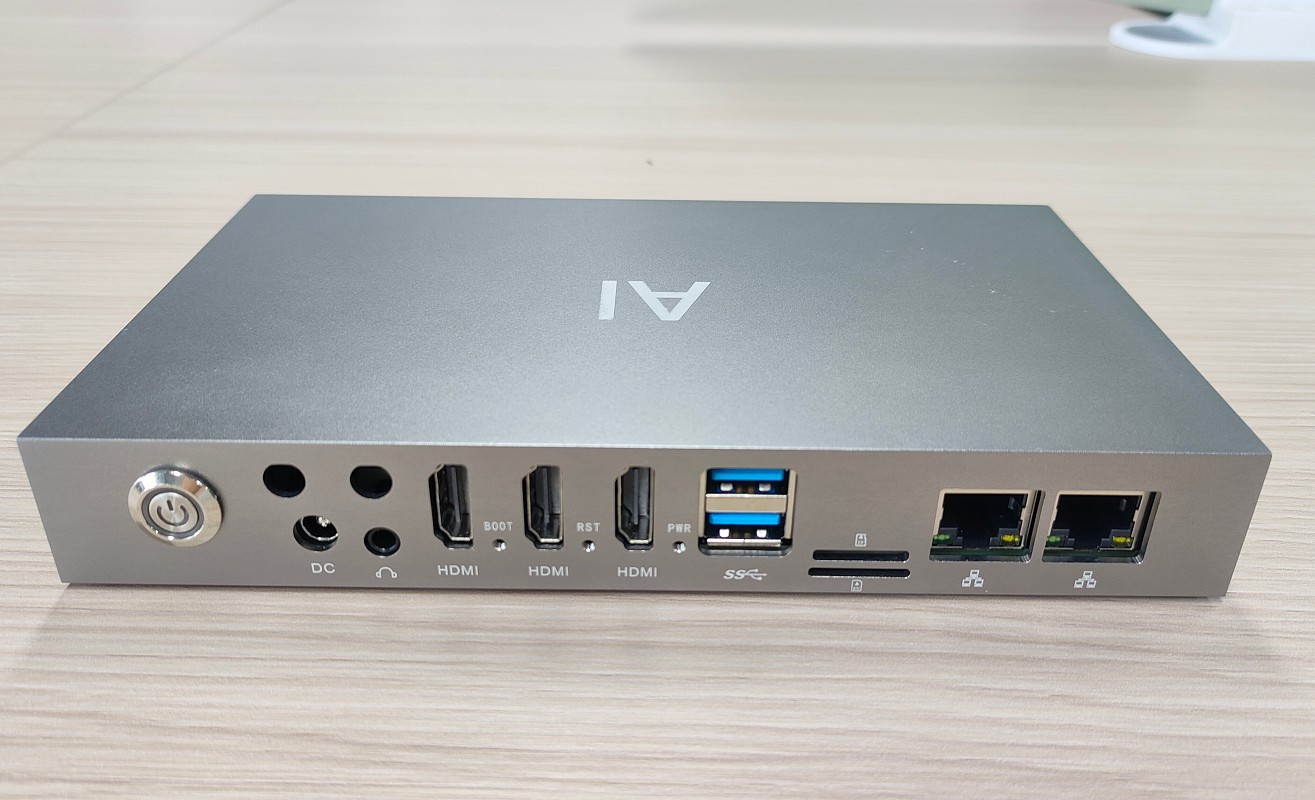
How to Partner with an Edge Box Manufacturer
Complete OEM/ODM process for edge computing boxes – from requirements and factory vetting to sample sign‑off, pilot runs, and bulk delivery. Includes contract tips and IP protection.
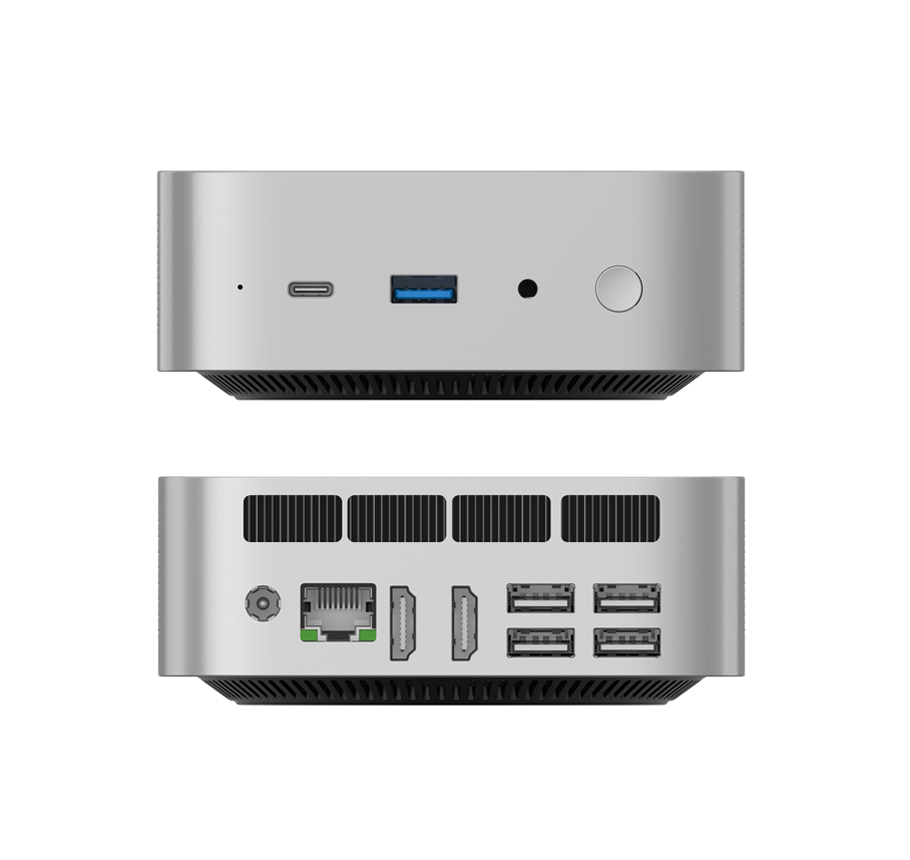
What Is an Edge Box? Compare with PC, AI Mini PC & Edge Server
What is an edge box and how does it differ from a regular PC, AI mini PC, or edge server? This guide explains edge box features, use cases, and selection criteria for AI inference at the edge.
Adreamer

© 2012-2025 Copyright Shenzhen Adreamer Technology Co., Ltd.粤ICP备18115621号-2
Contact Adreamer Today for Your Custom Solution & Quote!
© 2012-2025 Copyright Shenzhen Adreamer Technology Co., Ltd.粤ICP备18115621号-2