
Get in Touch
Your Trusted Manufacturer of Laptops & Tablets
WhatsApp Us Directly
+86 13923410269
Email Us
Get in Touch
Your Trusted Manufacturer of Laptops & Tablets

The AI project has been approved, the budget is allocated, and the edge computing box selection is finalized. But the next, more practical question is: How do you find a reliable manufacturer? How do you ensure on-time delivery? How do you maintain consistent quality across bulk orders that matches the sample?
Many projects stumble at the 'finding a manufacturer' stage—choosing a trader instead of an original factory, receiving perfect samples but failing on mass production, signing contracts without clear delivery standards and getting no compensation for month‑long delays, or losing intellectual property rights when the manufacturer sells your design to competitors.
This guide breaks down the complete cooperation process with edge computing box manufacturers into six phases: requirements definition, manufacturer screening, contract signing, sample development, pilot run, and mass production delivery—helping you avoid the four most common pitfalls.
Before contacting any manufacturer, organize the following information. The clearer your requirements, the more efficient the communication and the more accurate the quotation.
Requirements Checklist Template
| Requirement Category | Details to Specify | Example |
|---|---|---|
| Application Environment | Where will the device be installed? | Factory production line, ambient temp 0‑50°C, dusty environment |
| Compute Requirements | Which models to run? Required TOPS? | 7B LLM, requires 6 TOPS NPU |
| Memory Requirements | Model size? Required RAM? | 7B Q4 ~4.5GB, recommend 6‑8GB |
| Storage Requirements | How many models? Local data storage needed? | 3 models + logs, recommend 128GB |
| Interface Requirements | Which ports are needed? | Dual Ethernet, serial port (for PLC), USB 3.0 |
| Operating System | Which OS? | Linux / UnionTech UOS / Kylin OS |
| Estimated Quantity | First batch? Expected follow‑up orders? | First batch 50 units, 200 units expected annually |
| Budget Range | Target unit cost | $210‑280 |
| Delivery Timeline | When is delivery needed? | First 50 units, deliver within 60 days |
| Customization Requirements | Appearance/Logo/OS customization needed? | Logo silkscreen + pre‑installed OS |
A clear requirements document is the first guarantee of efficient cooperation.
Not every 'edge computing box supplier' is a genuine original manufacturer. Here are five core screening questions:
Question 1: Do you have your own factory?
Question 2: Do you have R&D adaptation experience with AI platforms?
Question 3: How deep can software customization go?
Question 4: What system certifications do you hold?
Question 5: Do you have similar past case studies?
Once a manufacturer can clearly answer all five questions, you can proceed to the cooperation process.
Objective: Translate the requirements list into an actionable Product Specification.
Client provides:
Manufacturer delivers:
Critical milestone: Both parties confirm and sign the Product Specification to avoid future disputes due to misalignment.
Core contract clauses that must be included:
| Clause Category | Must Be Clearly Specified |
|---|---|
| Product Specifications | Detailed technical parameters, BOM, packaging requirements, compliance standards |
| Quality Standards | AQL sampling standards (e.g., critical defects 0, major defects 1.5, minor defects 4.0) |
| Delivery Milestones | Sample → pilot run → mass production → shipment with dates and delay penalties |
| Intellectual Property Ownership | Designs, molds, code, and appearance all belong to the client |
| Exclusivity Clause | Manufacturer shall not produce similar products for third parties (recommended) |
| Confidentiality Agreement | Client information, product information, pricing strictly confidential |
| After‑Sales Terms | Warranty period, return/replacement conditions, spare parts supply duration |
The IP ownership clause is the most critical for brands. It must be clearly stated in writing to prevent your core design from being 'shared' with competitors.
Sample Process:
① Functional Prototype (2‑4 weeks)
② Full‑Unit Sample (1‑2 weeks)
③ Sample Sign‑Off (1 week)
Sample Test Checklist:
| Test Item | Acceptance Criteria |
|---|---|
| Inference Speed | Meets target token/s (e.g., 7B model at 8‑12 token/s) |
| Sustained Operation | 72 hours at full load without throttling |
| Interface Functionality | All ports working correctly |
| Pre‑installed Software | Works out of the box, no manual configuration needed |
| Thermal Performance | Temperatures within spec under full load |
| Noise Level | Meets office/industrial environment requirements |
Critical milestone: Sample sign‑off is the final defense before mass production—no party may unilaterally change specifications after sign‑off.
Objective: Validate assembly line processes and unit consistency—not for sale.
Pilot quantity: Typically 30‑100 units
Validation scope:
Pass criteria: Pilot run pass rate ≥95%
Do not proceed to mass production if the pilot run fails. A sample that works doesn't guarantee stable high‑volume production.
Delivery process:
After‑sales must clearly specify:
Pitfall 1: Sample vs. Mass Production Quality Mismatch
Pitfall 2: Unclear IP Ownership
Pitfall 3: No Compensation for Delivery Delays
Pitfall 4: Spare Parts Supply Stops After Production
Adreamer, founded in 2012, has 14 years of ODM/OEM experience in smart hardware. It is a National High‑Tech Enterprise and a Guangdong Provincial 'Specialized, Refined, Distinctive, and Innovative' SME.
| Cooperation Dimension | Adreamer Service Capability |
|---|---|
| Requirements Response | Product Specification and quotation within 1‑2 weeks |
| Sample Development | Full technical support: functional prototype → full‑unit sample → sign‑off |
| Pilot Run | 30‑unit minimum pilot run to validate line consistency |
| Mass Production Delivery | 100% functional test + 72‑hour burn‑in, with quality inspection report |
| Quality System | ISO9001/ISO14001/BSCI certified, AQL standard outgoing inspection |
| IP Protection | Contract clearly specifies designs, molds, code belong to client + confidentiality agreement |
| After‑Sales Support | 1‑3 year warranty, spare parts supply guarantee |
| MOQ | Projects can start from 50 units – friendly to small and medium brands |
Cooperation process:
Q1: How long does a typical edge computing box ODM project take?
A: From requirements confirmation to first delivery, the cycle is typically 12‑20 weeks, broken down as: sample development 4‑8 weeks → pilot run 2‑4 weeks → mass production delivery 4‑8 weeks.
Q2: Can a 50‑unit order include logo and system customization?
A: Yes. Adreamer supports logo customization, OS pre‑installation, and model pre‑installation from 50 units. If new molds are required, the MOQ and timeline will be adjusted based on specific needs.
Q3: Who owns the IP after customization?
A: The client. Adreamer contractually specifies that all IP—appearance design, structural design, molds, and software code—belongs exclusively to the client. The factory may not use or transfer them to any third party without authorization.
Q4: What certification support can Adreamer provide?
A: Adreamer has its own EMC anechoic chamber and safety lab, and is familiar with CCC, CE, FCC, SRRC, and other certification processes. It can complete 90% of pre‑testing before formal submission, significantly reducing certification risk and cycle time.
Q5: How is quality consistency ensured for bulk edge computing box orders?
A: Through multiple measures:
Q6: What bulk delivery cases has Adreamer completed?
A: Adreamer has extensive ODM experience in AI edge computing boxes and AI mini PCs, covering smart retail, industrial inspection, government/enterprise localization, and other verticals. One notable case is a partnership with a domestic AI model compute company, with annual shipments of 160,000 units—a benchmark of Adreamer's mass production capability. Contact Adreamer for detailed case studies.
Industry-Specific Solutions
Latest Blog
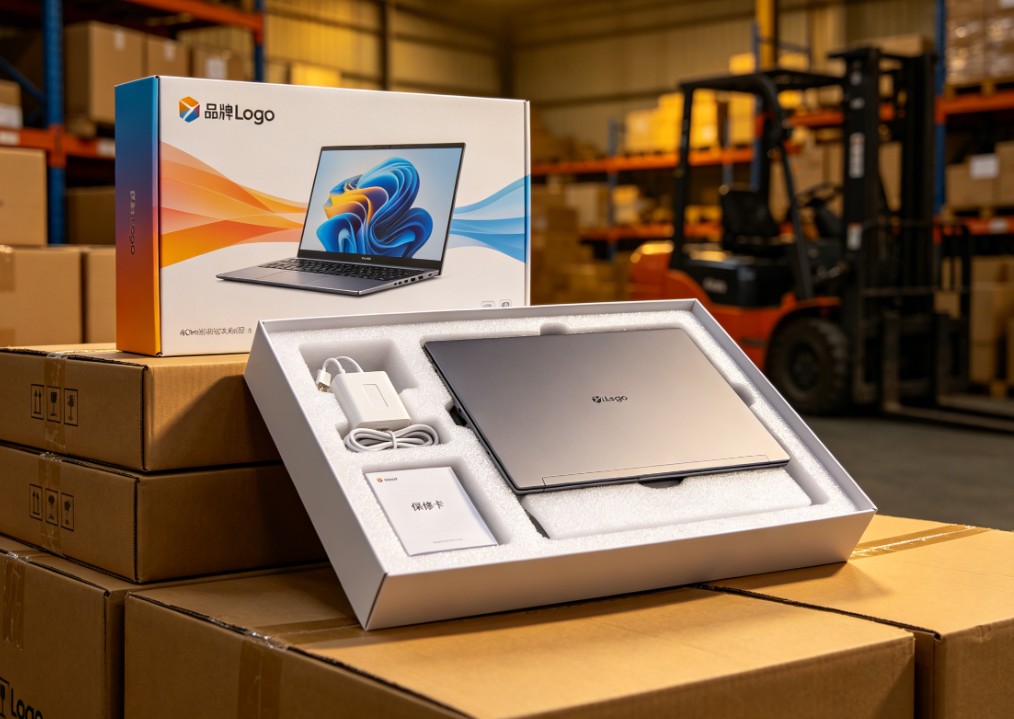
White-Label vs Neutral Laptops: Worth Buying? Pros, Cons & Guide
Should you buy white-label or neutral laptops in bulk? Learn the real pros and cons, quality-control risks, TCO calculation, sample inspection, and after-sales planning.

Celeron N5095 vs N100 vs N305: White-Label Laptop CPU Guide
Celeron N5095 or Intel N100/N305? Compare architecture, iGPU, memory support, power limits, and real-world performance to choose the right white-label laptop.

White-Label Laptops Explained: What They Are & Should You Buy?
Learn what a white-label laptop is, how it differs from knockoffs, barebones, and private-label models. Covers pros, cons, risks, and a practical buying guide for budget buyers.

AMD Ryzen AI Max 395 Mini PC: Worth It? Pros, Cons & Benchmarks
Is the Ryzen AI Max 395 mini PC worth the price? See real-world LLM inference, gaming, power, noise, and pros/cons to decide if this 128GB AI workstation fits your needs.
Adreamer

© 2012-2025 Copyright Shenzhen Adreamer Technology Co., Ltd.粤ICP备18115621号-2
Contact Adreamer Today for Your Custom Solution & Quote!
© 2012-2025 Copyright Shenzhen Adreamer Technology Co., Ltd.粤ICP备18115621号-2