Get in Touch
Your Trusted Manufacturer of Laptops & Tablets
WhatsApp Us Directly
+86 13923410269
Email Us
Get in Touch
Your Trusted Manufacturer of Laptops & Tablets

You want to buy a high-performance AI mini PC and come across models powered by the AMD Ryzen AI Max 395—16 cores, 32 threads, 50 TOPS NPU, 128GB memory, and the ability to run 70B large models. The spec sheet gets your heart racing, but the price makes you hesitate: Is it really worth the money? What are the drawbacks? Is it right for me?
This is a dilemma many high-end AI mini PC buyers are facing. The Ryzen AI Max 395 is currently one of the most powerful x86 chips in the mini PC space, but it is not a magic bullet—it has standout strengths and clear limitations.
The AMD Ryzen AI Max 395 is AMD’s flagship mobile processor launched in 2025, codenamed Strix Halo. Its positioning is not “low-power office” but a high-performance AI workstation.
| Comparison Item | Traditional Mini PC | Ryzen AI Max 395 Mini PC |
|---|---|---|
| Positioning | Office, media, light AI | AI research, large models, creative workstation |
| Typical Power | 15–45W | 55–120W |
| Memory | 16–32GB | Up to 128GB |
| AI Compute | No NPU or 6 TOPS | 50 TOPS (126 TOPS combined) |
| Volume | 0.5–1L | Approx. 4L |
| Item | Specification |
|---|---|
| CPU | AMD Ryzen AI Max 395 (16 cores/32 threads, 3.0–5.1GHz, 80MB cache) |
| GPU | Radeon 8060S (RDNA 3.5, 40CU, 2900MHz) |
| NPU | XDNA 2, 50 TOPS (126 TOPS combined) |
| Memory | Up to 128GB LPDDR5x (onboard) |
| Storage | 2× M.2 NVMe PCIe 4.0 |
| Power | 55W (standard) / 120W (overclocked) |
| Ports | USB4 40Gbps ×2, USB-A 3.2 ×5, HDMI 2.1, 2.5GbE |
| Volume | 198×198×62mm (approx. 4L) |
| Material | Metal + plastic |
Key data interpretation:
This is the core value of the Ryzen AI Max 395. The following data is from real-world tests (Ollama + Q4 quantized models).
| Model Size | Memory Usage | Inference Speed | Experience Rating |
|---|---|---|---|
| 7B | ~4.5GB | 25–35 tokens/s | Very smooth |
| 13B | ~7.5GB | 15–22 tokens/s | Smooth |
| 30B | ~16GB | 8–12 tokens/s | Usable |
| 70B | ~36GB | 5–8 tokens/s | Runs but slow |
Test conclusions:
Key insight: The ability to run 70B models depends on the 128GB of massive memory. Most mini PCs on the market have only 16–32GB, which cannot even load a 70B model.
| Task | CPU Approach | NPU Approach | Improvement |
|---|---|---|---|
| 7B model inference | 8–12 tokens/s | 25–35 tokens/s | ~3x |
| Video conferencing background blur | 25% CPU usage | <5% CPU usage | Significant |
| Real-time speech-to-text | Fast battery drain, high latency | Low power, low latency | Significant |
The Radeon 8060S is another highlight of this chip—with a 40CU iGPU specification, it is top-tier among mini PCs.
| Game | Resolution/Quality | Frame Rate | Experience |
|---|---|---|---|
| League of Legends | 1080p High | 120+ FPS | Extremely smooth |
| CS2 | 1080p Medium | 80–100 FPS | Smooth |
| Genshin Impact | 1080p Medium | 60 FPS | Smooth |
| Cyberpunk 2077 | 1080p Low | 35–45 FPS | Playable |
| Black Myth: Wukong | 1080p Low | 30–40 FPS | Barely playable |
Office and Creation
| Task | Experience |
|---|---|
| Office multitasking | Extremely smooth |
| Video editing (4K) | Smooth, iGPU acceleration |
| 3D rendering | Usable, 16-core advantage is obvious |
| Code compilation | 16 cores/32 threads, fast compilation |
| Multiple VMs | 128GB memory, can run multiple VMs |
Power Consumption and Noise
| Scenario | Power | Noise |
|---|---|---|
| Idle | ~15W | Almost silent |
| Office | ~30W | Slight |
| AI inference | ~80W | Noticeable |
| Full load overclocked | ~120W | Obvious |
Pros
Cons
Who It’s For:
Who It’s Not For:
Q1: What can the Ryzen AI Max 395’s 50 TOPS NPU do?
A: It is mainly used for local large model inference (7B–70B), AI drawing acceleration, video conferencing AI features, and real-time speech-to-text. The core value of the NPU is running AI tasks continuously at low power without occupying CPU resources.
Q2: Is 128GB memory necessary?
A: Depends on model requirements. 16GB is enough for 7B models, 32GB for 13B, and 128GB for 70B. If you want to run 70B models, 128GB is essential; if you only run 7B–13B, 32GB is enough, and there is no need to pay extra for 128GB.
Q3: What is the experience of 5–8 tokens/s on a 70B model?
A: Slow. Normal reading speed is about 10–20 tokens/s; 5–8 tokens/s gives a noticeable “one word at a time” feeling. It is suitable for non-real-time scenarios (such as batch document processing, overnight tasks), not for real-time conversation.
Q4: Compared with a mini PC with RTX 3060, which is better for AI?
A:
Q5: Can the NPU and GPU work simultaneously?
A: Yes. In software that supports heterogeneous computing, the NPU handles AI inference, the GPU handles graphics rendering, and the CPU handles scheduling—all three work together. The exact level of support depends on software optimization.
Q6: Is a mini PC with this chip worth buying?
A: Depends on your needs. If you need to run 13B–70B large models locally, do AI research, and also handle creation and gaming, it is currently the best solution in mini PC form. If you only need office work and 7B models, mid-range models offer better value for money.
Industry-Specific Solutions
Latest Blog

AMD Ryzen AI Max 395 Mini PC: Worth It? Pros, Cons & Benchmarks
Is the Ryzen AI Max 395 mini PC worth the price? See real-world LLM inference, gaming, power, noise, and pros/cons to decide if this 128GB AI workstation fits your needs.
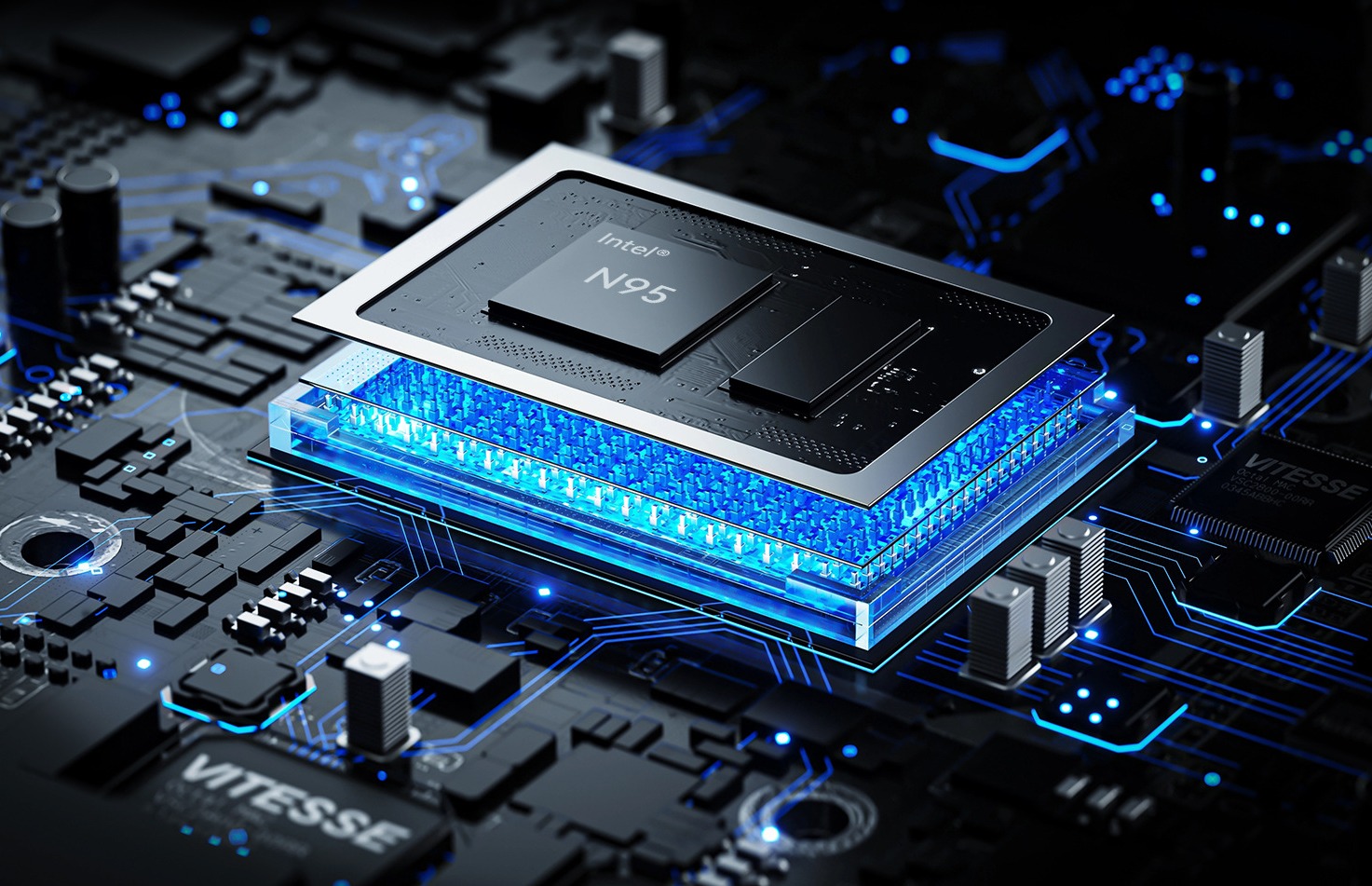
N100 vs N95 Mini PC Performance Comparison
Compare Intel N100 vs N95 mini PCs. See CPU, iGPU, TDP, power draw, gaming, and NAS performance—plus clear buying advice for office, soft router, and light gaming.
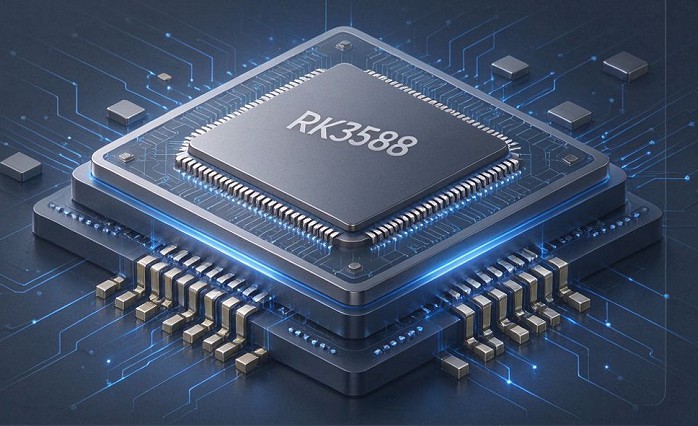
RK3588 vs RK3588S: Key Differences for Edge Computing Boards
Compare RK3588 and RK3588S for edge computing. Learn PCIe, SATA, Ethernet, and MIPI interface differences to choose the right board for your project’s expansion needs.
AI Compute Box Bulk Procurement: 3C, CE, FCC Certification Guide
Learn the key certification requirements for bulk buying AI compute boxes. Covers 3C, CE, FCC compliance, common pitfalls, and how to verify certificates to avoid legal risks.
Adreamer

© 2012-2025 Copyright Shenzhen Adreamer Technology Co., Ltd.粤ICP备18115621号-2
Contact Adreamer Today for Your Custom Solution & Quote!
© 2012-2025 Copyright Shenzhen Adreamer Technology Co., Ltd.粤ICP备18115621号-2