
Get in Touch
Your Trusted Manufacturer of Laptops & Tablets

WhatsApp Us Directly
+86 13923410269
Email Us
Get in Touch
Your Trusted Manufacturer of Laptops & Tablets

When shopping for an AI host, AI mini PC, or edge computing box, the spec sheet always lists “CPU xxx, GPU xxx, NPU xxx.” You probably know they are all “chips,” but what exactly does each one do? Why do AI PCs need all three? And which one matters most when buying?
Many assume “running AI” is handled by a single chip. In reality, in an AI PC, the CPU, GPU, and NPU each handle completely different tasks. Choose the wrong configuration, and you’ll either overpay for compute you don’t need, or end up with a system that chokes on AI workloads.
Imagine a restaurant kitchen:
How they work together: The CPU receives a task (“run an AI model”), assigns the compute work to the GPU or NPU, gets the result back, and outputs it to the user.
What does the CPU do in an AI PC?
The CPU (Central Processing Unit) is the general‑purpose compute core, responsible for:
What does the CPU NOT do?
How to evaluate CPU when choosing an AI PC:
| Use Case | Recommendation |
|---|---|
| Pure AI inference (model already loaded) | CPU not a bottleneck – 4–8 cores enough |
| Heavy data preprocessing (video decode, image resize) | Needs stronger CPU (6+ cores) |
| Concurrent multi‑model workloads | Needs multi‑core CPU (8+ cores) |
The CPU determines your AI PC’s “management efficiency” – not its “AI compute power.”
What does the GPU do in an AI PC?
The GPU (Graphics Processing Unit) was originally designed for graphics rendering, but its massively parallel architecture also makes it ideal for AI compute:
Why is the GPU good for AI?
A CPU has 8–16 strong cores; a GPU has thousands of weaker cores. AI computations (matrix multiplication) consist of “many identical simple operations” – thousands of weak cores working in parallel are far more efficient than a dozen strong cores.
| Comparison | CPU | GPU |
|---|---|---|
| Core count | 8–16 strong cores | Thousands of weak cores |
| Best for | Complex logic, branching | Simple repetitive large‑scale computation |
| AI matrix multiplication | Slow | Hundreds of times faster |
In an AI PC, the GPU also handles:
The GPU determines your AI PC’s “compute speed” – but it’s not just for AI; it also handles display and daily graphics tasks.
What is an NPU?
An NPU (Neural Processing Unit) is a chip purpose‑built for AI inference:
What does the NPU handle in an AI PC?
| Task Type | Handled by NPU? |
|---|---|
| Large model inference (7B–13B) | Primary responsibility |
| AI image generation (Stable Diffusion) | Some NPUs support (check compatibility) |
| Speech recognition / speech synthesis | Suitable |
| Image classification / object detection | Suitable |
| Graphics rendering / gaming | Not responsible (that’s GPU) |
| Video decode / encode | Not responsible (that’s GPU) |
What’s the difference between NPU and GPU?
| Comparison | GPU | NPU |
|---|---|---|
| Design goal | Graphics rendering + general‑purpose parallel compute | AI inference dedicated |
| Compute density | High (but high power too) | Higher (per‑watt compute far exceeds GPU) |
| Flexibility | High (runs various algorithms) | Medium (optimized for neural networks) |
| Power consumption | High (discrete GPU 100W+) | Low (NPU typically 5–15W) |
| Best for | Training / high‑precision inference / graphics | Low‑power inference / edge AI |
The NPU determines your AI PC’s “inference efficiency” – for the same compute, NPU uses less power; for the same power, NPU runs faster.
| Dimension | CPU | GPU | NPU |
|---|---|---|---|
| Core role | General‑purpose computing | Parallel computing | AI inference dedicated |
| Best at | Scheduling, logic, I/O | Matrix multiplication, graphics | Neural network inference |
| Core count | Few (4–16 strong cores) | Many (hundreds to thousands) | Many (dedicated AI cores) |
| Power | 15–65W | 15–300W | 5–30W |
| AI inference speed | Slow | Fast | Fastest (at same power) |
| Graphics | Requires iGPU or dGPU | Core function | Not responsible |
| Typical example | AMD R5‑6600H | Radeon 660M iGPU | AMD XDNA NPU |
| Selection priority | Sufficient is enough | Depends on scenario | Must‑check for AI inference |
Take the Adreamer PB1202 (AMD R5‑6600H + Radeon 660M iGPU, no dedicated NPU) as an example:
Why can PB1202 run AI without an NPU? Because it uses the GPU for AI inference – the iGPU does the work an NPU would do. Less efficient than a dedicated NPU, but lower cost.
If you want an NPU, choose a Ryzen AI platform model with XDNA NPU (also available from Adreamer).
Q1: For running large models, which matters most – CPU, GPU, or NPU?
A: It depends on the stage. During model loading, CPU and memory bandwidth determine load speed. During inference, GPU or NPU determine generation speed. For multi‑task scenarios, CPU core count matters for concurrency.
Priority: Ensure enough RAM + have GPU or NPU acceleration. CPU is often less critical.
Q2: Can an NPU replace a GPU?
A: No. NPU only handles AI inference – not graphics rendering, video decode, or gaming. A PC still needs a GPU to display the screen. NPU is an addition, not a replacement.
Q3: Can a computer without an NPU run large models?
A: Yes. Use the GPU (e.g., PB1202 runs 7B at 8–12 tokens/sec via Radeon 660M). Or use the CPU (very slow – not recommended).
Q4: When buying an AI PC, which spec should I prioritize?
A:
Q5: How do NPU TOPS compare to GPU TFLOPS?
A: They measure different types of operations. TOPS (INT8) measures integer operations; TFLOPS (FP16/FP32) measures floating‑point operations. NPUs typically use INT8 for inference (accurate enough, faster), while GPUs use FP16/FP32 for training or high‑precision inference. You can’t directly compare numerical values – a 30 TOPS NPU running INT8 inference can be faster than a 50 TFLOPS GPU running FP16 inference.
Q6: Will all chips eventually integrate NPUs?
A: It’s already happening. AMD Ryzen AI, Intel Core Ultra, Apple M‑series, and Qualcomm Snapdragon all integrate NPUs. In 3–5 years, NPUs will be standard on all AI PCs.
CPU is the “commander” – handles scheduling and coordination, not AI compute.
GPU is the “compute engine” – handles parallel computing, both AI and graphics.
NPU is the “AI accelerator” – dedicated to AI inference, highest efficiency, lowest power.
Buying priority recommendations:
①Confirm RAM capacity – minimum 16GB for large models, 32GB better.
②Confirm compute source – NPU preferred if available, then GPU.
③CPU only needs to be sufficient – 4–8 cores enough, unless heavy data preprocessing.
④Check ports and expandability – ensure it meets your peripheral needs.
Industry-Specific Solutions
Latest Blog

How to Choose an Edge Computing Box Manufacturer: ODM/OEM Guide
Learn how to evaluate edge computing box manufacturers. Compare source factories, ODM/OEM models, MOQ, certifications, and customization to find the right partner.
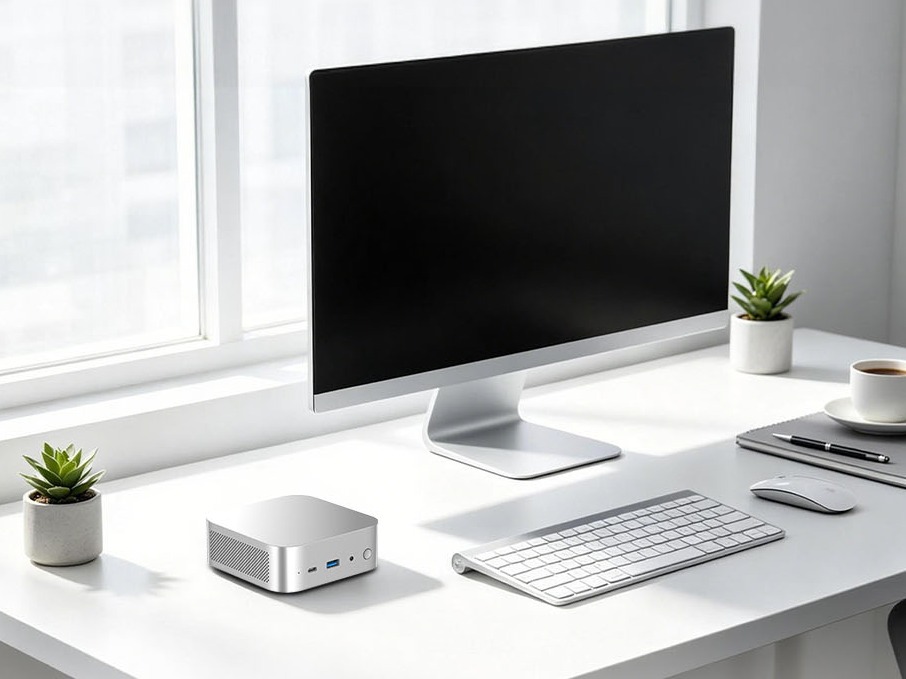
How to Choose an AI Mini PC in 2026: NPU & Memory Buying Guide
A practical guide to choosing an AI mini PC in 2026. Learn how to match NPU TOPS, memory capacity, and bandwidth to your workload, avoid common pitfalls, and pick the right configuration.
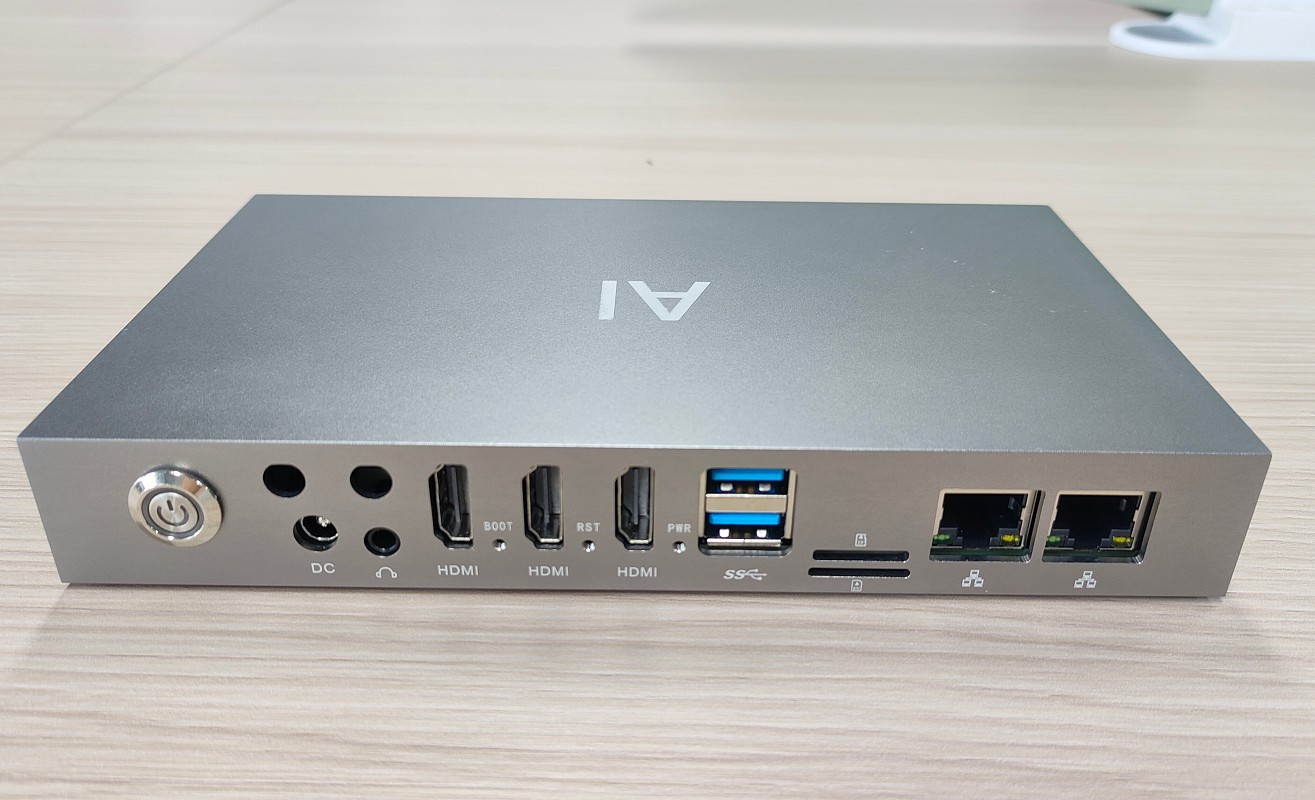
How to Partner with an Edge Box Manufacturer
Complete OEM/ODM process for edge computing boxes – from requirements and factory vetting to sample sign‑off, pilot runs, and bulk delivery. Includes contract tips and IP protection.
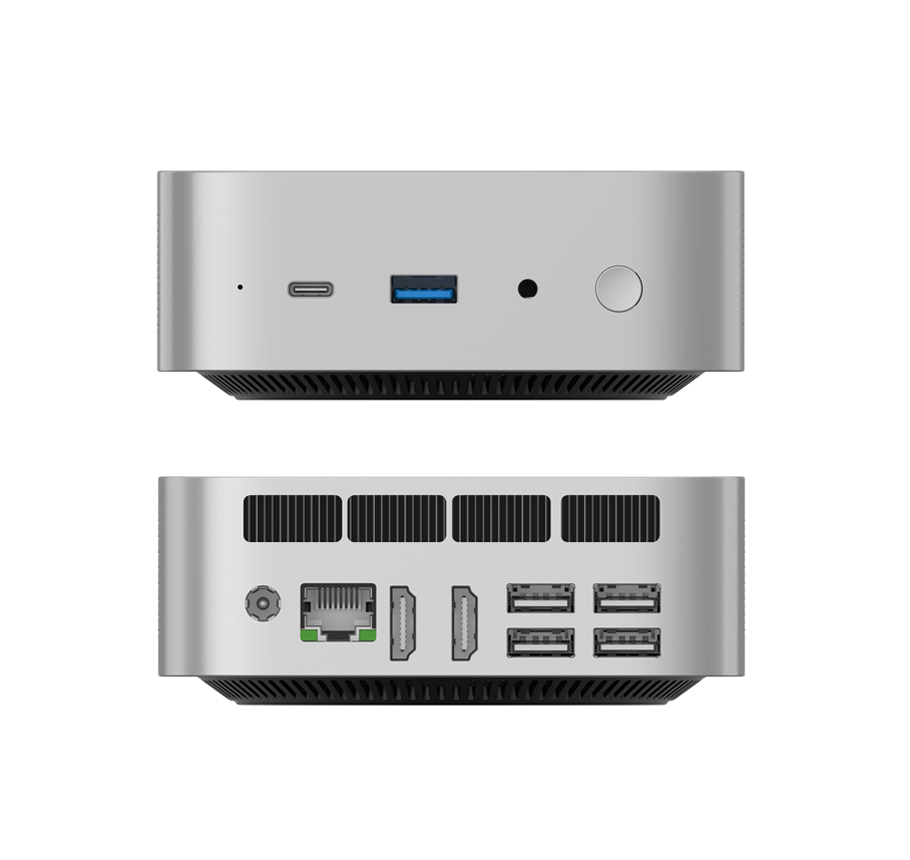
What Is an Edge Box? Compare with PC, AI Mini PC & Edge Server
What is an edge box and how does it differ from a regular PC, AI mini PC, or edge server? This guide explains edge box features, use cases, and selection criteria for AI inference at the edge.
Adreamer

© 2012-2025 Copyright Shenzhen Adreamer Technology Co., Ltd.粤ICP备18115621号-2
Contact Adreamer Today for Your Custom Solution & Quote!
© 2012-2025 Copyright Shenzhen Adreamer Technology Co., Ltd.粤ICP备18115621号-2