
Get in Touch
Your Trusted Manufacturer of Laptops & Tablets

WhatsApp Us Directly
+86 13923410269
Email Us
Get in Touch
Your Trusted Manufacturer of Laptops & Tablets

Many first‑time portable monitor users encounter the same confusion: why do some portable monitors work with just a single USB‑C cable, while others need two? And even more puzzling – the screen lights up, but your laptop battery keeps draining.
Behind all these scenarios lies “single‑cable connection.” This article explains what it is, how it works, when it works, and why it sometimes fails.
“Single‑cable connection” is not an official technical standard – it’s a common term for using one USB‑C cable to simultaneously carry video signal, power, and data.
Traditional external monitors for laptops require two cables – one video cable (HDMI or DisplayPort) for the display, and one power cable for the monitor. For portable monitors, you might also need extra power for the laptop. A single‑cable solution consolidates all of these into one USB‑C cable: the laptop sends video to the portable monitor, and at the same time, powers the monitor – or, if the monitor has its own power source, it can charge the laptop in reverse.
In short: single‑cable connection = video signal + power delivery + data, all over a single USB‑C cable.
Single‑cable operation depends on two underlying protocols supported by the USB‑C interface.
This is a special operating mode of the USB‑C port. In normal mode, USB‑C carries USB data. When DP Alt Mode is enabled, some pins of the USB‑C connector are “borrowed” to carry DisplayPort signals, enabling video output.
Think of it like a highway with a dedicated lane – normally used for general traffic, but switched to video traffic when needed.
Important: Not every USB‑C port supports single‑cable connection. Only ports that support DP Alt Mode can output video signals. This is hardware‑dependent and cannot be changed by software.
This is the foundation for “power and video on the same cable.” The USB PD protocol allows devices to negotiate voltage and current, enabling higher power transfer than traditional USB – from 5V/2A up to 20V/5A (100W).
In a single‑cable setup, the laptop and portable monitor “talk” via PD to decide who supplies power to whom and how much. If the portable monitor is connected to its own power adapter, it can supply power back to the laptop through the same cable. This is how reverse charging works.
In practice, the single‑cable workflow looks like this:
The entire process completes automatically within seconds of plugging in – no manual setup required.
The behavior of single‑cable connection varies depending on the setup:
This is the most common usage. The laptop connects to the portable monitor via a single USB‑C cable. Video is transmitted to the monitor, and the laptop simultaneously powers the monitor through the same cable. No additional power adapter is needed for the monitor – keeping the desk clean.
Prerequisite: The laptop’s USB‑C port must supply sufficient power to drive the monitor (usually 5V/1.5A to 5V/2A).
The portable monitor is plugged into its own power adapter, and then connected to the laptop via USB‑C. In this case, the monitor powers itself and can also supply power to the laptop through the same cable – topping up the laptop’s battery.
Benefit: The laptop only needs one cable to the monitor, eliminating the need for its own power adapter – great for travel, reducing the number of chargers to carry.
The laptop connects to a docking station, which connects to the portable monitor, while the docking station is powered by its own adapter to charge the laptop. Although the “single cable” now becomes “a cable to the dock,” the underlying principles – DP Alt Mode + PD – remain the same.
Some portable monitors come with two USB‑C ports and require both to be plugged into the laptop – one for video, one for power. This usually happens because the laptop’s USB‑C port does not provide enough power to both transmit video and power the monitor simultaneously.
How to tell: Check the labeling of the two USB‑C ports. If one is labeled “Video Input” and the other “Power Input,” you’ll need two cables. If there’s only one “Full‑Function” USB‑C port, it supports single‑cable connection.
Not all USB‑C cables support video transmission or PD fast charging. Many phone charging cables only support USB 2.0 data rates – they can charge the monitor but won’t transmit video. When buying cables, choose models clearly marked “supports video” or “4K 60Hz.”
Different laptops have different USB‑C power output capabilities. Some thin‑and‑light models can only output 5V/1.5A (7.5W), which may be insufficient to drive a 15.6‑inch portable monitor. Even with a single‑cable monitor, the screen may flicker or fail to light up. Check your laptop’s specs to confirm its USB‑C output power.
If the portable monitor has its own internal battery, the laptop only needs to transmit video – not power the screen. This greatly reduces the strain on the laptop’s USB‑C port.
Single‑cable advantages: Simplicity – one cable does everything, keeping your desk tidy and making it easy to carry. Drawbacks: your laptop must have a USB‑C port that supports DP Alt Mode, and cable quality requirements are higher.
HDMI advantages: Broad compatibility – almost every laptop has HDMI. Cables are cheap and widely available. Drawbacks: the monitor needs separate power (either via its own adapter or a second USB‑C cable for power).
If your laptop has a video‑capable USB‑C port, single‑cable is the cleaner choice. If your laptop only has HDMI, or if you need to connect multiple devices, HDMI remains a reliable fallback.
Industry-Specific Solutions
Latest Blog

How to Choose an Edge Computing Box Manufacturer: ODM/OEM Guide
Learn how to evaluate edge computing box manufacturers. Compare source factories, ODM/OEM models, MOQ, certifications, and customization to find the right partner.
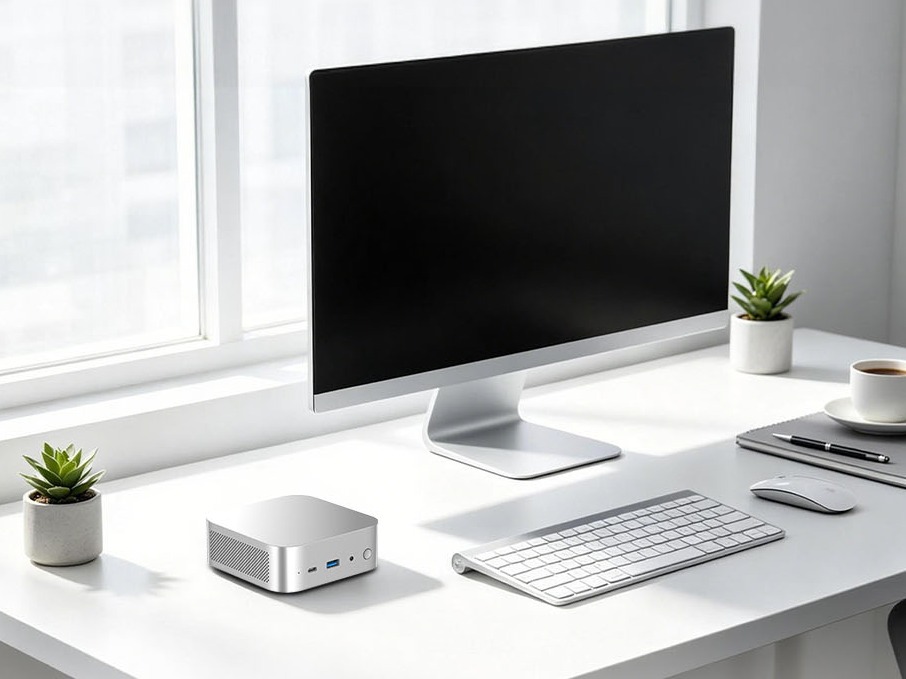
How to Choose an AI Mini PC in 2026: NPU & Memory Buying Guide
A practical guide to choosing an AI mini PC in 2026. Learn how to match NPU TOPS, memory capacity, and bandwidth to your workload, avoid common pitfalls, and pick the right configuration.
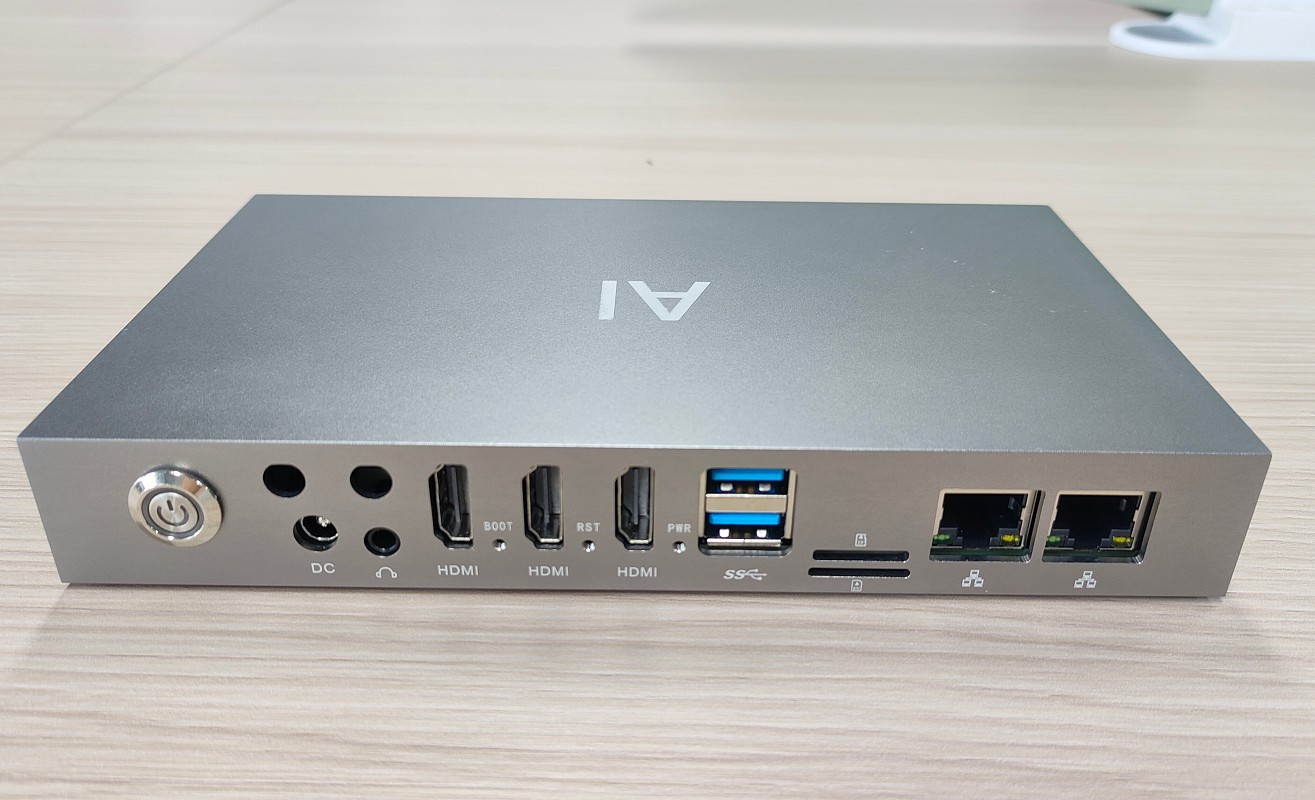
How to Partner with an Edge Box Manufacturer
Complete OEM/ODM process for edge computing boxes – from requirements and factory vetting to sample sign‑off, pilot runs, and bulk delivery. Includes contract tips and IP protection.
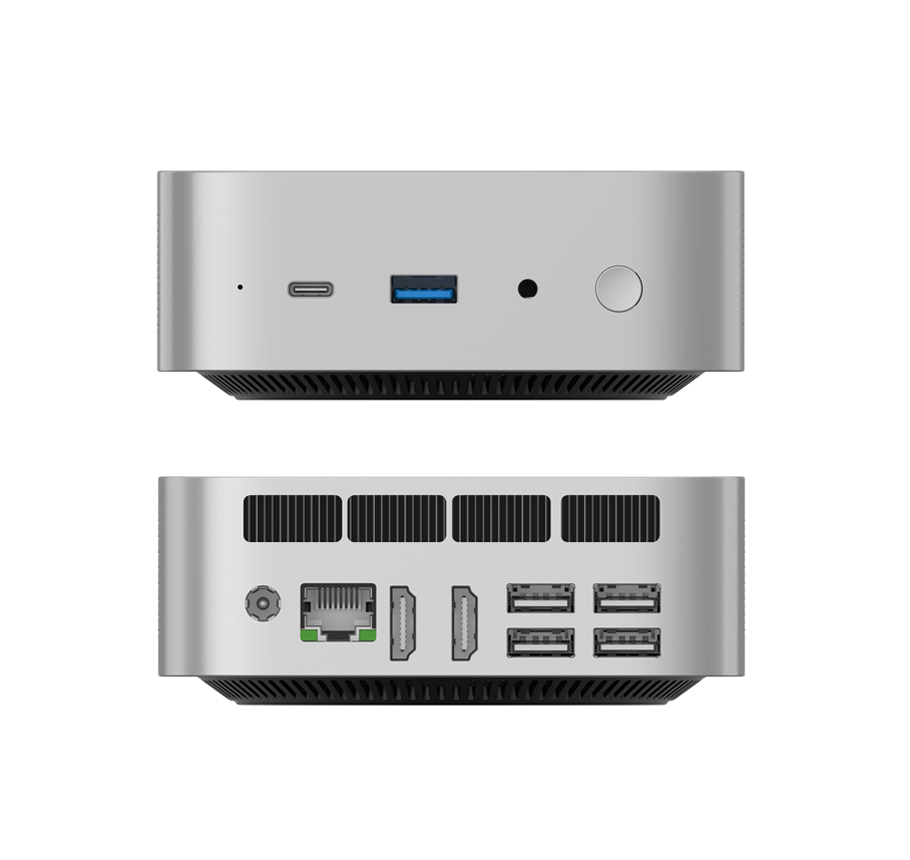
What Is an Edge Box? Compare with PC, AI Mini PC & Edge Server
What is an edge box and how does it differ from a regular PC, AI mini PC, or edge server? This guide explains edge box features, use cases, and selection criteria for AI inference at the edge.
Adreamer

© 2012-2025 Copyright Shenzhen Adreamer Technology Co., Ltd.粤ICP备18115621号-2
Contact Adreamer Today for Your Custom Solution & Quote!
© 2012-2025 Copyright Shenzhen Adreamer Technology Co., Ltd.粤ICP备18115621号-2