In the electronics industrial parks of Shenzhen's Huaqiangbei or Dongguan, new tablet brands emerge daily, while many others quietly fade away. The crucial factor deciding their fate is often not glamorous front-end marketing, but the silent manufacturing partner behind the scenes—the OEM or ODM manufacturer you choose. Choose right, and your product launch sails smoothly with a rock-solid supply chain. Choose wrong, and it can be the start of a nightmare: delayed deliveries, quality fluctuations, soaring communication costs, or even complete project failure.
This is not a theoretical list but a deep-dive guide combining hard-won lessons and proven practices from industry veterans. If you are searching for the right tablet manufacturer for your brand, the following might save you hundreds of thousands in tuition fees.

1. Finding the Right Tablet Manufacturer Based on Your Needs
Startup Brand (0 to 1): Your core need is low-barrier entry. You likely lack a mature tech team and have a limited budget but need to bring a product concept to market quickly. An ODM manufacturer offering a complete 'turnkey solution' may be your best fit. Their existing mature solutions (public molds) allow you to test the market with minimal risk and investment.
Growth Brand (1 to 10): You have a few products, and sales are climbing. Your core needs now are differentiation and control. You need to customize or modify public ODM designs or start leading some design aspects. Look for manufacturers with solid R&D depth and flexibility. The cooperation model often becomes a hybrid of ODM and OEM.
Mature/Specialist Brand (10 to N): You have a clear product roadmap and strong technical definition capabilities. You need high quality, on-time delivery, and deep collaboration. You need a true strategic partner who understands your brand vision and possesses top-tier engineering capabilities. Here, deep-custom OEM or JDM (Joint Design Manufacturing) is the common model.
Before meeting manufacturers, prepare a 'Product Definition Document' that goes beyond hardware specs:
- Who is the target user? (Students in education? Inspectors on a factory floor?)
- What is the core usage scenario? (Long outdoor reading? Connecting to various professional peripherals?)
- What are the product's key selling points/advantages? (Ultra-long battery? Top-tier display? Rugged durability?)
- What are the cost targets and price anchors? (Not a single number, but a range, clarifying where costs absolutely cannot be cut).
- How strict is the launch window? (Missing the holiday season vs. a regular weekend carries different urgency).
Only when you have clarity on these questions do you have the foundation for an equal and efficient dialogue with a tablet manufacturer.
2. Deconstructing the Six Core Dimensions for Evaluating a Manufacturer
2.1 R&D Capability
This is the easiest to gloss over. Don't just admire the pretty products in their showroom.
- Look at the team, especially key individuals. Ask who will be the technical lead for your project. Discuss a technical challenge in depth (e.g., 'solving touchscreen failure in low temperatures' or 'optimizing Android background processes for battery life'). A truly experienced engineer's eyes will light up, offering specific technical paths and past cases, not vague talk.
- Visit the lab, not the showroom. Request to see their R&D lab and testing center. Check for real reliability testing equipment (drop testers, thermal/humidity chambers, EM shielded rooms), not just display samples. Ask for a standard test case report.
- Ask about 'failure' cases.Boldly inquire about the biggest challenges or failures in past projects and how they were resolved. A team that is candid and has review skills is far more reliable than one claiming a 'flawless record.'
2.2 Manufacturing & Quality Control
Manufacturing capability sets the product's floor; QC sets your brand reputation's floor.
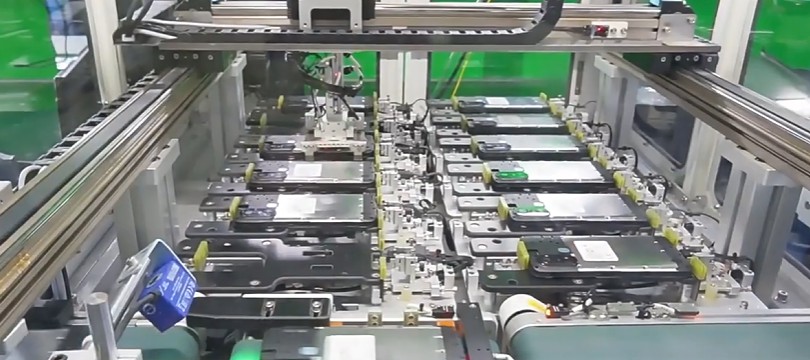
- The 'know-how' of production line visits: Arrange a minimally prepared line walk-through. Observe:
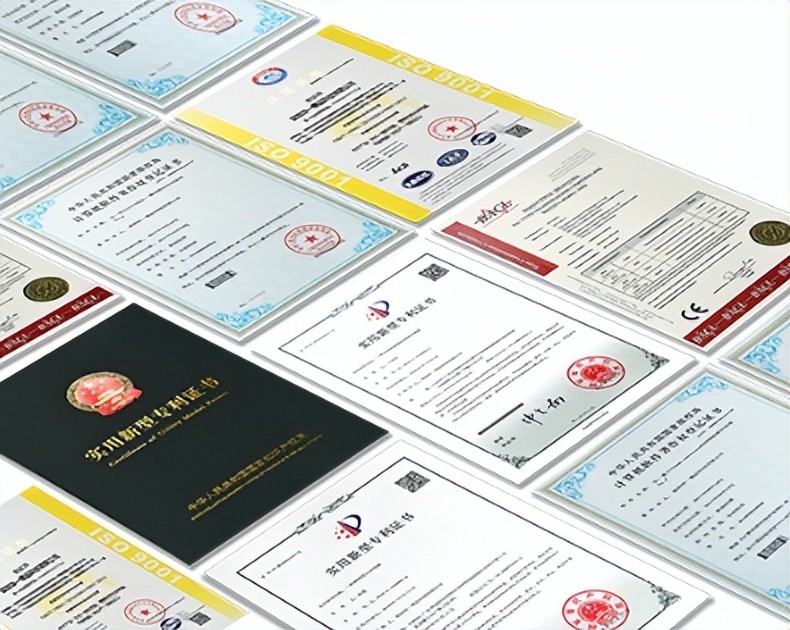
- Request their Quality Inspection Standard Manual (QC handbook). Compare it against international (e.g., ISO) and industry benchmark standards (e.g., Apple, Huawei supply chain). See if their standards are loose or strict. Ask for Defective Parts Per Million (DPPM) data and historical trends.
2.3 Supply Chain Strength
The post-2020 chip shortage taught everyone about supply chain value.
- What is their relationship level with core suppliers (e.g., chipset platforms like MediaTek, Qualcomm, Rockchip; screens from BOE, Tianma; battery makers)? Is it a strategic partnership or long-term agreement? This affects supply stability, pricing, and capacity priority directly.
- Does the manufacturer maintain regular safety stock? For parts at risk of shortage, do they have early warning systems and backup plans?
2.4 Cost Transparency
Beware of quotes that are suspiciously low or vague.
- Request detailed BOM cost analysis. Total Price = Material Cost + R&D Apportionment (NRE) + Production Cost + Profit. Clarify how NRE is calculated and amortized—is it a fixed fee or per-unit? Negotiate Minimum Order
- Understand cost structure: Total Price = Material Cost + R&D Apportionment (NRE) + Production Cost + Profit. Clarify how NRE is calculated and amortized—is it a fixed fee or per-unit? Negotiate Minimum Order Quantity (MOQ). Good manufacturers are willing to grow with promising brands and may offer tiered MOQ options.
2.5 Case Studies & Reputation
- Seek relevant experience. If you make rugged tablets, focus on their industrial product experience. For premium media tablets, check their screen calibration cases.
- Find unprompted references. Try to contact their past clients (not the ones they provide) to learn about the collaborative experience privately. The industry circle is small; ask around, and the real word of mouth will surface. One client working with them for three years on five consecutive projects is more convincing than ten one-off clients.
2.6 Communication & Cultural Fit
This is the most intuitive yet critical part.
- Assess the assigned Project Manager. Are they professional, accountable, and empowered? Are you communicating on the same wavelength?
- Gauge responsiveness and problem-solving attitude. During evaluation, try asking a technical question outside regular hours. Observe their response speed and willingness to solve it.
- Feel for shared values. Do you both prioritize quality, punctuality, and integrity? You can sense a company's 'temperament' during visits and conversations.
3. Decision-Making Process for Choosing a Tablet Manufacturer
Phase 1: Broad Search & Initial Screening (1-2 weeks)
Create a longlist (15-20) via trade shows, B2B platforms, peer referrals. Screen via websites/industry reports to shortlist 8-10.
Phase 2: Technical Exchange & Proposal Request (2-3 weeks)
Send your 'Product Definition Document' to these vendors, requesting a preliminary technical proposal and quote within a week. The quality, speed, and professionalism of their replies can eliminate half who lack sincerity or capability.
Phase 3: Deep-Dive Discussions & On-Site Visits (3-4 weeks)
This is critical. For the remaining 3-4 top candidates:
- Hold 2-3 rounds of technical and commercial meetings.
- Must conduct on-site visits. Use the points from Part 2 to delve into R&D, production, and QC.
- Meet with their management (at least the business unit head) to understand their philosophy.
Phase 4: Final Evaluation & Pilot Project
- Create a scoring sheet. Quantify scores for the six dimensions, combined with qualitative judgment.
- Consider a 'pilot project.'For your preferred option, which you still have doubts about, it is recommended to conduct a small-scale, moderately complex pilot project. Use it as a real-world test to examine its true capabilities.
4. Contract Negotiation Tips with a Tablet Manufacturer
The contract is your safety net, not a formality. Focus on:
- Intellectual Property (IP): Clearly define ownership of background IP (brought by each party) and foreground IP (created jointly). Your designs and modifications must belong to you.
- Non-Disclosure Agreement (NDA): Ensure broad scope, long duration, and clear liability for breaches.
- Quality & Acceptance Standards: Put inspection standards, acceptance procedures, and handling of non-conforming goods (return, rework, deduction) in writing.
- Delivery & Liability for Breach: Specify delivery timelines and penalty calculations for delays.
- Price Adjustment Mechanism: Agree on thresholds for raw material price fluctuations that trigger price reviews to avoid future disputes.
- Termination Clauses: Include terms for an amicable 'break-up' and the transfer of molds/technical documents.
Choosing a tablet OEM/ODM manufacturer is, in essence, selecting the cornerstone for your brand's product competitiveness for the next 2-3 years. It is not a simple procurement act but a strategic bet.
Don't be swayed solely by scale or low prices. The most suitable partners are often those 'potential stocks' who understand you, meet your current needs, and are willing to grow with you. Once a relationship is established, maintain it as a partnership, not a customer-supplier relationship. Communicate regularly, share information, and jointly address market challenges.