
Get in Touch
Your Trusted Manufacturer of Laptops & Tablets
WhatsApp Us Directly
+86 13923410269
Email Us
Get in Touch
Your Trusted Manufacturer of Laptops & Tablets

'We need to customize a batch of tablets. What services are typically involved?'
When decision-makers from businesses, educational institutions, or startup brands ask this question, they often picture simply printing a logo on a finished product. However, in the modern smart hardware industry chain, true tablet customization has long evolved beyond the basic stage of 'white-labeling.' It has become a full-chain, deeply collaborative solution spanning from product definition to long-term operation and maintenance.
Think of it like building a house: white-labeling is buying a rough shell and putting your name on the door. Deep customization, however, starts with architectural drawings, crafting a unique, fully-functional home tailored to your plot of land (usage scenario), living habits (user needs), and budget.
This guide will detail the specific, deliverable stages involved in 'tablet customization' when you partner with a professional solution provider or manufacturer, helping you build a clear framework of understanding.

Off-the-Shelf (OEM/White-Label): Choose a look from the manufacturer's existing mold library, pre-install a generic OS, and add your logo. You only select color and memory configuration. This offers the fewest services, lowest cost, and shortest timeline (weeks), but results in a product with no differentiation, severe homogeneity, and no reflection of your brand or business identity.
Medium Customization (ODM Modification): Limited modifications to existing mature solutions. This includes adjusting ID appearance details, hardware specifications, and deep customization of the software UI. This is the most common model, achieving a good balance between cost, timeline, and uniqueness, significantly enhancing brand image and adapting to different scenarios.
Deep/Full Customization (JDM Joint Development): Defining the product from scratch according to your needs. This involves entirely new appearance/structural designs, motherboard redesign, deep development of the underlying system, and building a dedicated application ecosystem. This model has the longest service chain, the highest development cost, and the longest lead time, but ultimately produces the most differentiated product.
The services described below primarily apply to 'Moderate' and 'Deep Customization,' which is where the true value of professional customization lies.
This is the starting point, ensuring the product is on the right track from day one. A professional provider's team conducts in-depth interviews to clarify target users, core usage scenarios (e.g., classroom interaction, field inspections, restaurant ordering), feature priorities, and budget constraints.
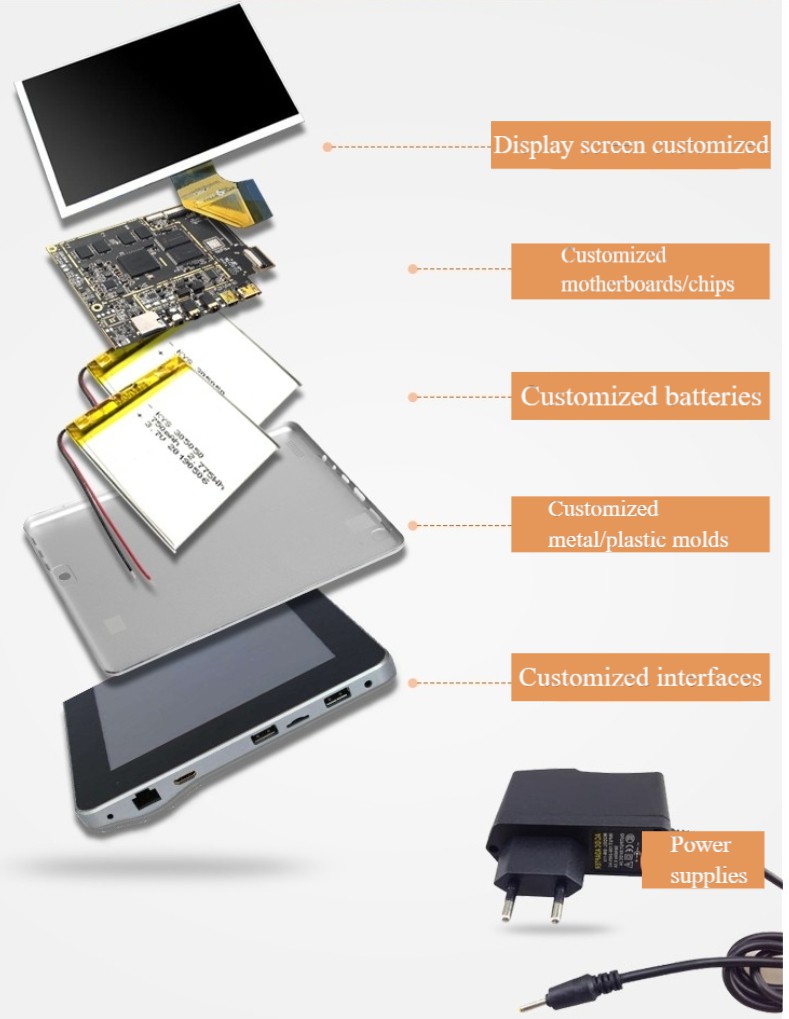
Together, you produce a detailed Product Requirements Document (PRD), specifying hardware configuration (chipset, RAM, storage, screen, battery, cameras, sensors, etc.), software features, performance metrics, reliability standards, and certification requirements.
The provider's hardware and software engineers step in early to assess technical feasibility, offer expert component selection advice, and optimize the solution to balance performance, cost, and manufacturability.
This shapes the product's physical form and core capabilities.
Industrial Design (ID): Based on brand identity, provide new appearance design solutions (shape, material, color, finish) or modify an existing mold. Deliverables include 2D renders and 3D model files.
Structural Design (MD): Based on the ID, design internal component stacking, layout, thermal management, and reliability (drop/shock resistance). Deliverables include complete structural drawings and prototype models.
Key Component Sourcing & Motherboard Customization: Select the main chipset platform (e.g., Rockchip, Amlogic, Qualcomm) based on performance needs. Re-layout or redesign the motherboard to fit the custom form factor, battery, interfaces (e.g., custom industrial ports, barcode scanners, RFID modules), and sensor requirements.
Accessory Customization: Design matching protective cases, keyboard folios, styluses, charging docks, vehicle mounts, etc., ensuring perfect fit with the host device.
This is the core that gives the product its 'soul' and differentiation, representing the technical high ground of the service.
Deep OS Customization:
Exclusive Application Development & Pre-installation:

Device Management Platform (MDM/EMM) Development: A critical need for enterprise/education customization. Provides a cloud or local admin console for bulk device management: remote configuration, silent app install/uninstall, screen locking, firmware updates, device location, usage analytics. For example, a teacher can lock all classroom tablets with one click.
For education tablets, integrate licensed synchronous teaching materials, question banks, and video courses to form an integrated hardware and software solution.
For enterprise tablets, pre-install corporate VPN, email, internal comms software, and ensure secure integration with existing OA/CRM systems.
Security & Compliance: Ensure the system meets target market regulations (e.g., China's Level 2.0), pre-install security encryption chips, implement app whitelisting, network filtering, etc.

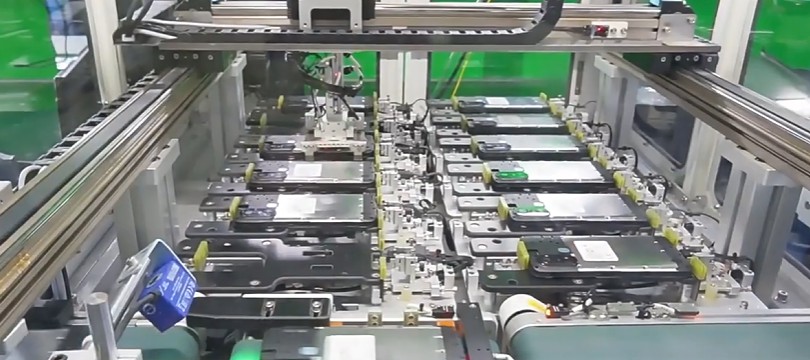
Molding & Pilot Run: Create molds for plastic/metal parts based on finalized designs and conduct multiple pilot production runs to resolve manufacturing process issues.
Supply Chain Management: Leverage the provider's scale to source quality-stable components, ensuring supply chain security and cost control.
Comprehensive QC & Testing: Provide full QC reports from incoming material inspection, in-process monitoring, to final product audit. Execute rigorous reliability tests (drop, high and low temperature, aging tests).
Packaging & Logistics: Design product packaging for a branded unboxing experience. Handle logistics from factory to designated warehouse or distribution points.
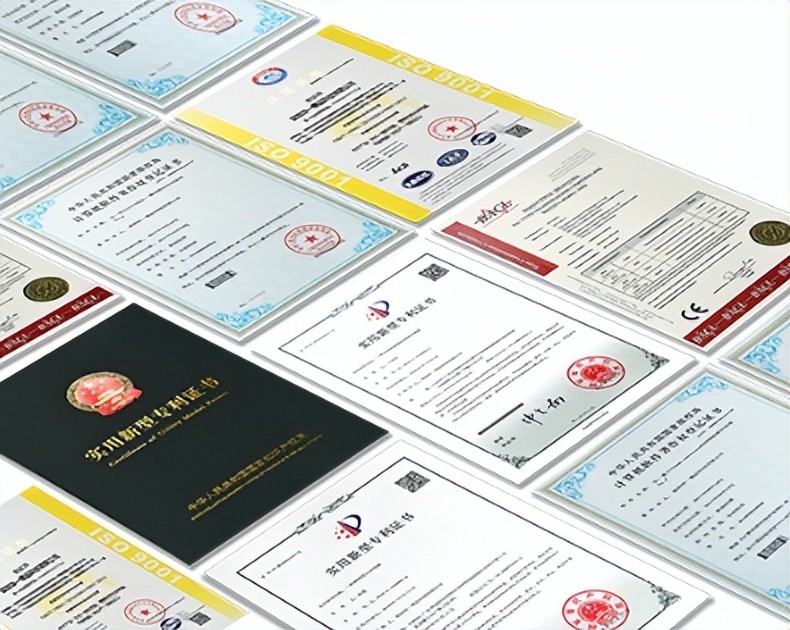
Certification Assistance: Help with or act as an agent for necessary certifications like CCC, SRRC (China), FCC (USA), CE (EU), etc.
Repair & Warranty: Provide repair and spare parts support within and beyond the warranty period. Can customize after-sales policies (e.g., replacement only).
Long-Term Software Support: Provide system security patches and feature updates for several years, ensuring product security and stability throughout its lifecycle.
Marketing Support (Optional): Some providers offer product marketing material creation, co-marketing activities, etc.
End-to-End Control: Do they have full-process control capabilities over 'Design-R&D-Production-Delivery'? This significantly reduces communication and coordination risks.
Proven Experience & Tech Depth: Do they have successful cases similar to your needs? How strong is their software team, especially in underlying optimization and management platform development?
Industry Understanding: Do they comprehend the specific needs and pain points of your industry (education, enterprise, retail, etc.)? Can they offer constructive advice?
Project Management & Transparency: Do they assign a dedicated project manager? Are their processes transparent?
Pricing Clarity: Is the quote a simple machine price, or does it clearly break down costs for various services (design, molding, R&D fees)?

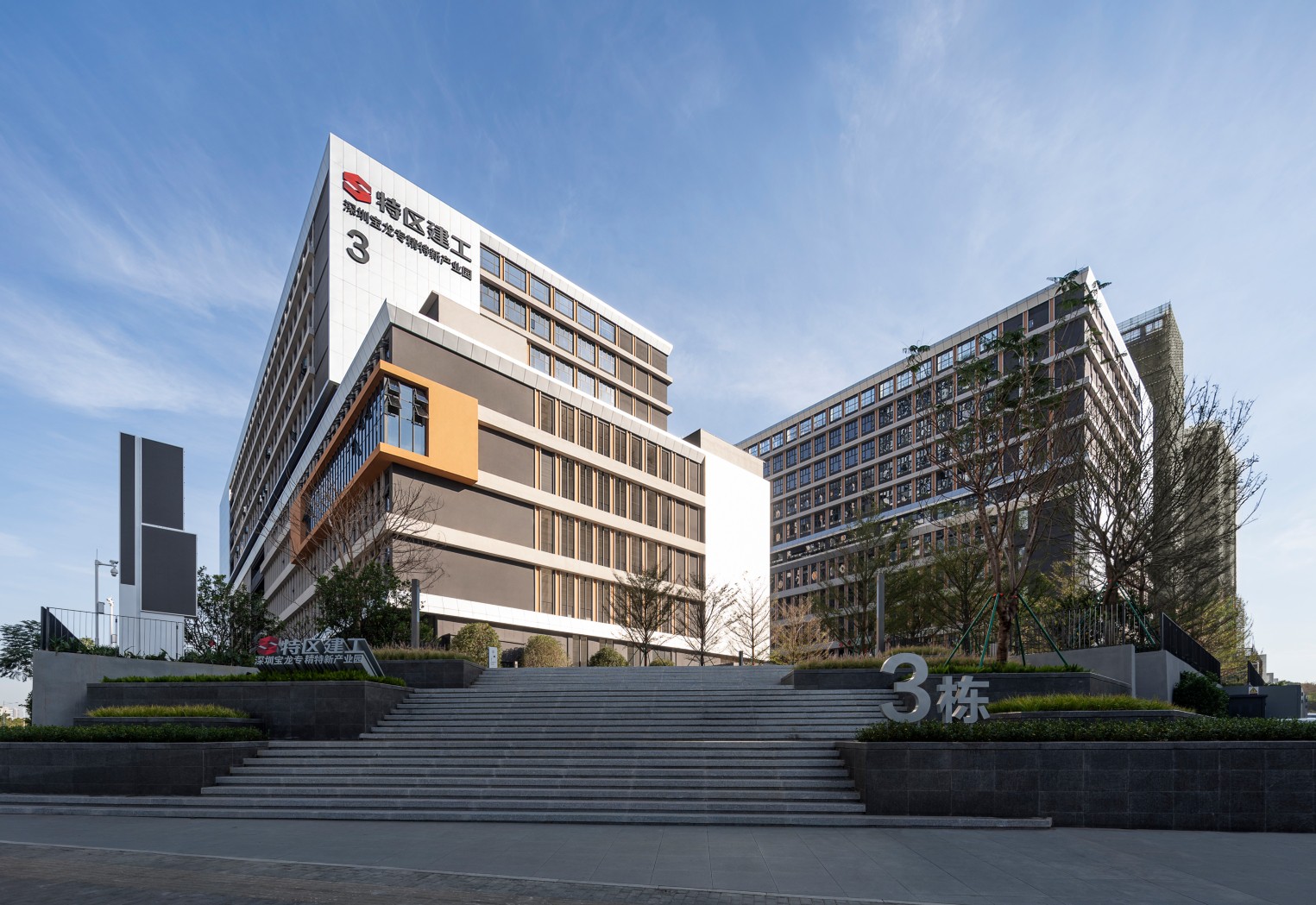
Take Adreamer as an example: As a National High-Tech Enterprise with its own industrial park, their service model covers the full chain from deep ID/MD design, motherboard R&D, Android system deep customization, education/enterprise app integration, to scaled manufacturing and global logistics. They don't just provide hardware; they provide a complete 'Hardware + OS + Content + Management' tablet customization solution for clients across industries, brand owners, suppliers, and distributors.
Tablet customization service is, in essence, procuring a 'tailored productized solution' (tailored productized solution). Its value lies not in individual hardware specs, but in creating a smart terminal that perfectly hosts your specific business logic, enhances organizational efficiency, and highlights your brand value through deep hardware-software integration and ecosystem synergy.
Industry-Specific Solutions
Latest Blog
AI Compute Box Bulk Procurement: 3C, CE, FCC Certification Guide
Learn the key certification requirements for bulk buying AI compute boxes. Covers 3C, CE, FCC compliance, common pitfalls, and how to verify certificates to avoid legal risks.

RK3588 vs N100: Which Is Better for Local LLM Deployment?
Compare RK3588 and N100 for running local LLMs. See real-world token speeds, power, memory, software support, and which chip fits your AI workload.

Edge AI Box vs Cloud Server:Which Is Cheaper Long-Term?
A detailed TCO comparison of edge AI boxes and cloud servers. Covers hardware, bandwidth, power, and O&M costs, with break-even analysis and a decision checklist.
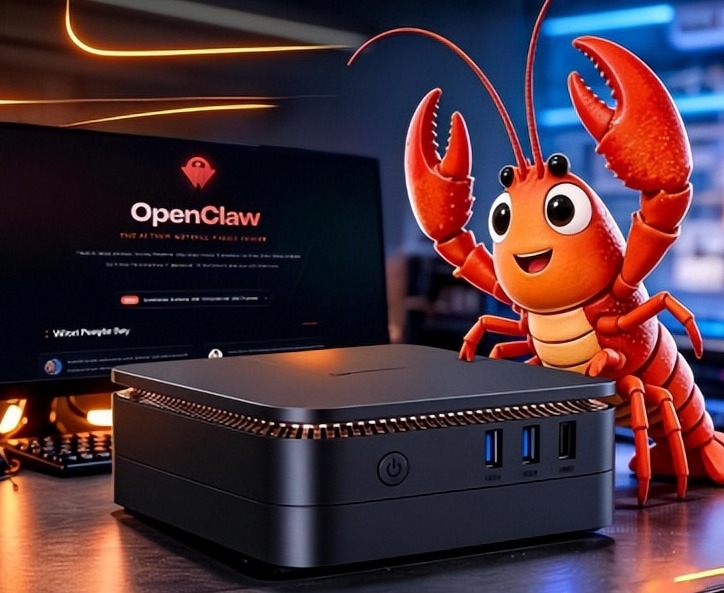
What AI Mini PC Do You Need for Private Local LLM Deployment?
Learn what AI mini PC specs you need for private deployment of local LLMs: memory, NPU, storage, offline capability, and configuration recommendations for 7B–70B models.
Adreamer

© 2012-2025 Copyright Shenzhen Adreamer Technology Co., Ltd.粤ICP备18115621号-2
Contact Adreamer Today for Your Custom Solution & Quote!
© 2012-2025 Copyright Shenzhen Adreamer Technology Co., Ltd.粤ICP备18115621号-2