
Get in Touch
Your Trusted Manufacturer of Laptops & Tablets

WhatsApp Us Directly
+86 13923410269
Email Us
Get in Touch
Your Trusted Manufacturer of Laptops & Tablets

You are preparing to bulk purchase a batch of AI compute boxes—maybe 500 units for smart factory visual inspection, or 2,000 units for retail store foot traffic analytics. The supplier’s quotation says “3C, CE, FCC certifications complete,” the price is reasonable, and the delivery promise is 8 weeks. You think it’s fine and are ready to sign the contract and pay the deposit.
Hold on.
Who is the “applicant” on that certificate? Does the certificate cover exactly the model you are purchasing? Are the screen and Wi-Fi module used in mass production the same model as the prototype used for certification? If the answers to these three questions are vague, you may be paying for a batch of hardware that “legally cannot be sold.”
Certification compliance for AI compute boxes is not just about a piece of paper.
Different target markets correspond to completely different certification systems. Before bulk purchasing, confirm where your products will be sold.
| Target Market | Required Certifications | Key Notes |
|---|---|---|
| Mainland China | CCC + SRRC | Wi-Fi/Bluetooth requires SRRC; 4G/5G also requires CTA network access license |
| EU | CE (EMC+LVD) + RoHS | EMC Directive 2014/30/EU, LVD Directive 2014/35/EU |
| US | FCC | Wireless devices require FCC ID; wired-only devices use SDoC |
| UK | UKCA | Independent post-Brexit certification, but most labs can test CE/UKCA in parallel |
| Multiple Countries | Multi-country certification combination | Recommend reserving 10–12 weeks for certification cycle |
Key insight: AI compute boxes typically have Wi-Fi and Bluetooth, so in the Chinese market, SRRC certification is a prerequisite—without SRRC, you cannot even apply for CCC and network access licenses. In European and American markets, devices with wireless transmission must go through FCC ID or the CE RED directive path, not simple SDoC or EMC self-declaration.
According to published fee standards from national certification bodies, 3C certification costs are as follows:
| Fee Item | Fee Standard (USD) |
|---|---|
| Application fee | $69 per unit |
| Product testing fee | $3,778 (IT equipment category) |
| Factory inspection fee | $347 per person-day, initial inspection 3–6 person-days |
| Approval and registration fee | $111 per unit |
| Annual supervision and review fee | $347 per person-day (2–6 person-days) + sampling testing fee |
| Annuity | $14 per certificate per year |
A complete 3C certification (including initial factory inspection) costs approximately $5,556–$8,333, with a cycle of about 4–6 weeks.
Pitfall 1: The certificate “applicant” is not you.
The 3C certificate has three key roles: applicant (certificate holder), manufacturer, and production enterprise. If the supplier applies for the 3C certificate under its own company name, the applicant on the certificate is the supplier, not you.
This means: you cannot legally sell this batch of products under your own brand. You are merely “white-label reselling.” If market regulators conduct a spot check, both you and the supplier face penalties.
Solution: Require the supplier to apply for 3C certification under your company name as the applicant, or process a 3C derivative—the supplier already has a certificate, and it is derived under your brand name.
Pitfall 2: Key components lack certification.
The power adapter, power cord, fuse, and other components of an AI compute box are key components within the 3C catalog and must use products that have already obtained 3C certification. If the supplier uses an uncertified power adapter to reduce costs, the entire machine’s 3C certification will be deemed invalid.
During bulk procurement: Require the supplier to provide 3C certificate copies and test reports for key components, and stipulate in the contract that “mass production components must be completely consistent with the certification prototype BOM.”
Pitfall 3: Ignoring annual inspections and supervision reviews.
A 3C certificate is valid for 5 years, but there is an annual supervision review after certification. Class A enterprises have one review every two years; Class B enterprises have one every year. If the annual review fails, the certificate may be suspended or even revoked, and your purchased inventory cannot continue to be sold.
Solution: Clearly stipulate in the procurement contract: the supplier is responsible for maintaining the validity of the 3C certificate, and the annual review fee is borne by the supplier; if the certificate becomes invalid due to the supplier’s reasons, the supplier must bear your inventory losses.
CE certification is not a single certificate but requires simultaneous compliance with multiple EU directives:
| Directive | Applicable Standards | Test Content |
|---|---|---|
| EMC Directive (2014/30/EU) | EN 55032, EN 55035 | Electromagnetic emissions and immunity |
| LVD Directive (2014/35/EU) | EN 62368-1 | Electrical safety (applicable voltage 50–1000V AC) |
| RED Directive (2014/53/EU) | ETSI EN 301 489 series | Wireless device RF compliance |
| RoHS Directive | EN IEC 63000 | Restriction of hazardous substances |
AI compute boxes usually have multiple SKUs—different memory/storage configurations, different interface versions. If each model is individually CE certified, costs multiply.
Core logic of series certification: Group models with the same basic design, similar electrical structure, and core components into one series. Only the primary model is tested; derivative models only require document review or difference testing.
| Primary Model Selection Principle | Description |
|---|---|
| Most complex structure | Choose the model with the richest interfaces and densest PCB layout |
| Highest power | Choose the model with the highest rated power and greatest heat generation |
| Most functions | Choose the top configuration with all wireless modules and additional features |
Derivative model fees are typically only 10%–30% of the primary model’s testing fee, significantly reducing bulk certification costs.
The most dangerous pitfall: BOM changes without updating certification documents.
Real industry case: After CE certification, a supplier changed the Wi-Fi module from Intel to a lower-cost Realtek without notifying the brand or updating certification documents. After the product was exported to the EU, a spot check found that the actual RF parameters did not match the certification report, and the entire batch was detained.
Solution: Lock down the certification prototype BOM list in the procurement contract and stipulate that “any component change (brand, model, batch) must be notified to the buyer in writing, and certification validity must be re-evaluated.”
| Path | Applicable Devices | Fee Range (2026) | Cycle |
|---|---|---|---|
| SDoC (Supplier’s Declaration of Conformity) | Wired-only devices, no intentional RF emission | $1,500–$5,000 | 2–4 weeks |
| FCC ID (Certification) | Wireless devices with Wi-Fi/Bluetooth/4G | $3,000–$30,000+ | 4–16 weeks |
AI compute boxes almost all have Wi-Fi, so they must go through the FCC ID path.
| Strategy | Description | Savings |
|---|---|---|
| Use pre-certified wireless modules | Choose Wi-Fi/BLE modules that already have FCC ID | Reduce certification cost by 60%–80% |
| Combine series models | Merge multiple models in the same series into one FCC ID | Derivative model fees are 10%–30% of primary model |
| Pre-testing | Conduct pre-scan before official submission | Avoid retest fees after official test failure (30%–50% of base fee) |
The first-time FCC certification failure rate is as high as 80%—this is public industry data. Retest fees after failure are typically 30%–50% of the base fee, and each retest requires re-queuing, potentially delaying 4–8 weeks.
Buyer’s Response Strategies:
Iron Rule 1: The certificate must be able to bear your brand name.
Whether 3C, CE, or FCC, the “applicant/holder” on the certificate should be you (the brand) or allow the brand to be listed. If the certificate applicant is the supplier, you need to process a certification derivative or require the supplier to re-apply under your name.
Iron Rule 2: Mass production BOM must match the certification prototype.
Certification testing passes for a specific hardware configuration. Changing the screen brand, Wi-Fi module model, or power adapter specification can invalidate the certification. Stipulate in the contract that “certification prototype is sealed as a sample,” and any BOM inconsistency between mass production and the sealed sample is a breach of contract.
Iron Rule 3: Series certification is key to cost reduction.
When bulk purchasing multiple models, scientifically dividing series can reduce certification costs by 50%–70%. Choose the primary model with the “most complex, highest power, most functions” configuration to cover as many derivative models as possible.
Iron Rule 4: Certification cycle must be included in project scheduling.
| Certification Type | Typical Cycle | Reserve Time for Bulk Procurement |
|---|---|---|
| 3C + SRRC | 8–12 weeks | At least 12 weeks |
| CE | 6–8 weeks | At least 10 weeks |
| FCC ID | 8–16 weeks | At least 16 weeks |
| Multi-country combination | 12–20 weeks | At least 20 weeks |
Certification is not the “next step” after mass production—it is a phase that runs in parallel with design validation (DVT). Starting certification during the DVT phase can avoid catastrophic delays when certification fails after mass production is complete.
Iron Rule 5: Annual inspection and maintenance responsibilities must be written into the contract.
3C certificates require annual inspections, CE requires technical file updates, and FCC requires maintaining consistency with the certification report. These long-term maintenance responsibilities must be clearly assigned in the contract, including who bears the cost. It is recommended to stipulate: the supplier is responsible for the continued validity of certifications, and losses caused by certification invalidation shall be compensated by the supplier.
| Certification | Applicable Market | Core Test Items | Fee Range (USD) | Cycle | Key Points for Bulk Procurement |
|---|---|---|---|---|---|
| 3C (CCC) | Mainland China | Safety + EMC | $5,556–$8,333 | 4–6 weeks | Applicant must be the brand; key components must be certified |
| SRRC | Mainland China | Radio frequency | $2,083–$4,167 | 4–8 weeks | Prioritize certified wireless modules |
| CTA Network Access | Mainland China | Telecom network access | $2,778–$6,944 | 6–10 weeks | Only required for devices with 4G/5G |
| CE | EU | EMC+LVD+RED | $4,167–$11,111 | 6–8 weeks | Series certification reduces cost; BOM changes require re-evaluation |
| FCC ID | US | RF + EMC | $3,000–$30,000 | 8–16 weeks | Pre-certified modules can reduce cost by 60%–80% |
| UKCA | UK | Same as CE | $2,778–$5,556 | 4–6 weeks | Can be tested in parallel with CE |
Q1: The supplier says “we have CE certificates.” How do I verify?
Ask the supplier for the certificate number and the name of the issuing laboratory, then verify on the laboratory’s official website. Focus on three things: ① Does the certificate cover the specific model you are purchasing? ② Does the product description on the certificate include wireless functionality (RED directive)? ③ Is the certificate within its validity period?
Q2: For a bulk purchase of 500 units, how are certification fees allocated?
Certification fees are usually paid as a one-time cost and are not allocated to the per-unit cost. However, you can treat certification fees as a fixed project cost and include them in your ROI calculation. For example, if 3C certification costs $5,556, for 500 units the allocation is $11 per unit; for 5,000 units, it is $1.1 per unit. The larger the batch, the lower the marginal certification cost.
Q3: If the supplier’s certification certificate is about to expire, can I still purchase?
Not recommended. 3C certificates are valid for 5 years. CE has no fixed validity period, but standards are updated (e.g., EN 55032 updated from 2015 to 2020). If the certificate is about to expire or the standard has been updated, your product may face the awkward situation of needing re-certification immediately after launch.
Q4: Does the power adapter of an AI compute box need separate certification?
Yes. External power adapters are products within the 3C catalog and must use adapters that have already obtained 3C certification. If the supplier uses an uncertified adapter, the entire machine’s 3C certification cannot pass. During procurement, be sure to require the supplier to provide a copy of the adapter’s 3C certificate.
Q5: In CE certification, does the LVD directive apply?
The power adapter of an AI compute box typically has an input voltage of 100–240V AC, which falls within the scope of the LVD directive (50–1000V AC). Therefore, CE certification must simultaneously satisfy both EMC and LVD directives.
Industry-Specific Solutions
Latest Blog
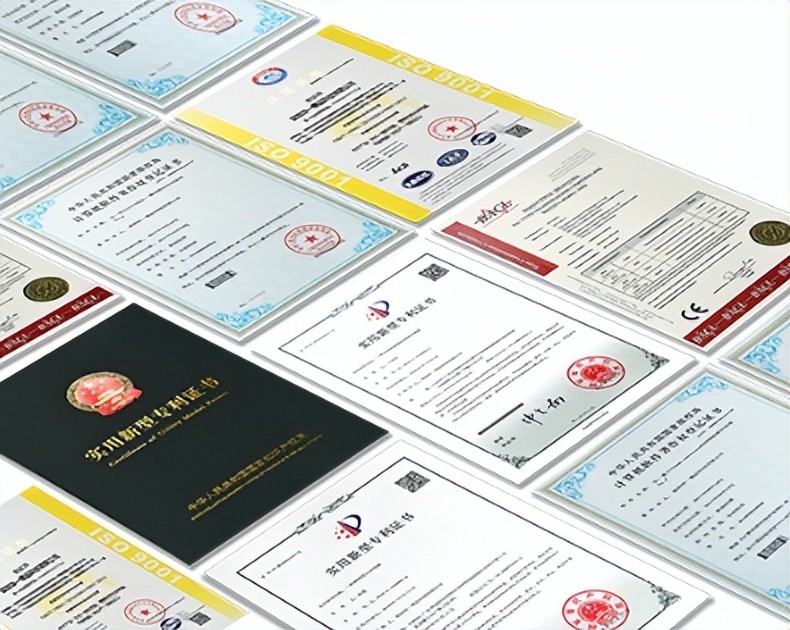
AI Compute Box Bulk Procurement: 3C, CE, FCC Certification Guide
Learn the key certification requirements for bulk buying AI compute boxes. Covers 3C, CE, FCC compliance, common pitfalls, and how to verify certificates to avoid legal risks.

RK3588 vs N100: Which Is Better for Local LLM Deployment?
Compare RK3588 and N100 for running local LLMs. See real-world token speeds, power, memory, software support, and which chip fits your AI workload.

Edge AI Box vs Cloud Server:Which Is Cheaper Long-Term?
A detailed TCO comparison of edge AI boxes and cloud servers. Covers hardware, bandwidth, power, and O&M costs, with break-even analysis and a decision checklist.

What AI Mini PC Do You Need for Private Local LLM Deployment?
Learn what AI mini PC specs you need for private deployment of local LLMs: memory, NPU, storage, offline capability, and configuration recommendations for 7B–70B models.
Adreamer

© 2012-2025 Copyright Shenzhen Adreamer Technology Co., Ltd.粤ICP备18115621号-2
Contact Adreamer Today for Your Custom Solution & Quote!
© 2012-2025 Copyright Shenzhen Adreamer Technology Co., Ltd.粤ICP备18115621号-2