Get in Touch
Your Trusted Manufacturer of Laptops & Tablets
WhatsApp Us Directly
+86 13923410269
Email Us
Get in Touch
Your Trusted Manufacturer of Laptops & Tablets

You have been using cloud-based LLMs like ChatGPT, Claude, and Gemini for months. They are powerful, but you are starting to feel the friction: monthly subscription costs that scale with usage, latency that spikes during peak hours, data privacy concerns when processing sensitive documents, and vendor lock-in that makes you uncomfortable.
You have heard about local LLM deployment—running open-source models like Llama 3, Qwen 2.5, Mistral, or DeepSeek directly on your own hardware. No subscriptions, no data leaving your premises, no network dependency. But when you start researching what hardware you actually need, you run into a wall of confusing acronyms and conflicting advice: TOPS, TDP, DDR5 vs LPDDR5X, memory bandwidth, quantization, GGUF, NPU vs GPU... it is overwhelming.
This guide cuts through the noise. Written for AI engineers, IT managers, system integrators, and tech-savvy professionals, it provides a vendor-neutral, deeply practical framework for selecting the best AI Mini PC in 2026 specifically for local large language model deployment.
By the end, you will know exactly which hardware specifications actually matter for running LLMs—and which 'AI PC' marketing claims you should ignore.
Not every PC advertised as 'AI-ready' can actually run a 7B-parameter LLM at acceptable speed. To understand the difference, we need to look under the hood.
A mini PC is defined by its small form factor (typically under 2 liters), low power consumption (under 65W), and silent or near-silent operation. For local LLM deployment, this means you can place it on a desk, in a server closet, or even mount it behind a monitor—without needing a dedicated server room or cooling infrastructure.
This is the single most important—and most misunderstood—factor in LLM inference.
An LLM is limited by how fast you can move data from memory to the compute unit. Even the most powerful NPU is useless if it spends most of its time waiting for weights to arrive from memory.
| Device | Memory Type | Memory Bandwidth | Max Model Size (4-bit Quantized) | Inference Speed (7B) |
|---|---|---|---|---|
| Entry-level AI PC | LPDDR4X / DDR5-4800 | ~60-80 GB/s | ~7B | ~5-10 tokens/s |
| Mid-range AI PC | LPDDR5X-7500 | ~120 GB/s | ~13B | ~15-25 tokens/s |
| High-end AI PC | LPDDR5X-8533 / LPDDR5T | ~150 GB/s | ~34B | ~25-40 tokens/s |
| Premium AI Mini PC | LPDDR5X-9600 | ~180 GB/s | ~70B (with offloading) | ~40-60 tokens/s |
| Server-grade Workstation | DDR5-5600 (8-channel) | ~400 GB/s | ~70B+ | >80 tokens/s |
The rule of thumb: Memory bandwidth determines your ceiling. If you want to run 13B models comfortably, you need at least 120 GB/s. For 34B models, target 150+ GB/s.
Here is how much memory you need for different model sizes (with 4-bit quantization, which is the standard for local deployment):
| Model Size | Quantized Size | Minimum RAM | Recommended RAM |
|---|---|---|---|
| 7B (Llama 3, Qwen 2.5) | ~4-5 GB | 16 GB | 24-32 GB |
| 13B (Llama 2, Mistral) | ~7-8 GB | 24 GB | 32 GB |
| 34B (Command R, DeepSeek) | ~18-20 GB | 32 GB | 48-64 GB |
| 70B (Llama 3, Qwen) | ~40-45 GB | 64 GB | 96-128 GB |
Critical note: Memory bandwidth matters more than memory capacity for inference speed. A 64 GB system with 150 GB/s bandwidth will run a 34B model faster than a 128 GB system with 80 GB/s bandwidth.
| Processor Type | LLM Inference Performance | Pros | Cons |
|---|---|---|---|
| NPU | Good for small models (7B-13B) | Power-efficient, integrated, low cost | Limited to specific frameworks; may not support larger models |
| Integrated GPU | Good for small-medium models (7B-34B) | More flexible; supports more frameworks | Uses system memory (shared bandwidth) |
| Discrete GPU | Excellent for any model | Highest performance; dedicated memory | Expensive; high power consumption; larger form factor |
For a Mini PC: You will typically rely on NPU or integrated GPU because discrete GPUs require more space and cooling than a mini PC can provide.
Based on the above criteria, here are the leading platforms for running local LLMs in 2026:
| Specification | Details |
|---|---|
| Memory | LPDDR5X-8533 (up to 32 GB) |
| Memory Bandwidth | ~136 GB/s |
| NPU | 48 TOPS |
| GPU | Intel Arc (8 Xe Cores) |
| TDP | 17-30W |
| Inference Speed (7B Q4) | ~20-30 tokens/second |
| Max Model | 13B (comfortable), 34B (with offloading) |
Pros: Excellent balance of performance, power, and software support. OpenVINO offers smooth integration with ONNX and PyTorch models.
Cons: 32 GB memory limit (soldered, non-upgradeable). Cannot run 70B models comfortably.
| Specification | Details |
|---|---|
| Memory | LPDDR5X-9600 (up to 64 GB) |
| Memory Bandwidth | ~180 GB/s |
| NPU | 50 TOPS |
| GPU | RDNA 3.5 (up to 16 CUs) |
| TDP | 15-45W |
| Inference Speed (7B Q4) | ~25-35 tokens/second |
| Max Model | 34B (comfortable), 70B (with offloading) |
Pros: Highest memory bandwidth among mini PCs. ROCm and ONNX Runtime support are rapidly improving. 64 GB option makes 70B offloading viable.
Cons: Software ecosystem is less mature than Intel's OpenVINO. Fewer mini PC options available.
| Specification | M4 | M4 Pro |
|---|---|---|
| Memory Bandwidth | ~120 GB/s | ~180 GB/s |
| Max Memory | 24 GB | 64 GB |
| NPU | 16-core Neural Engine | 16-core Neural Engine |
| GPU | 10-core | 20-core |
| TDP | ~15-22W | ~22-35W |
| Inference Speed (7B Q4) | ~15-25 tokens/s | ~25-40 tokens/s |
| Max Model | 13B | 34B (comfortable) |
Pros: Unified memory architecture is ideal for LLM inference. MLX and Core ML frameworks are well-optimized. Excellent power efficiency.
Cons: Limited to macOS. Not a 'mini PC' in the traditional sense (Mac mini is the closest). High cost.
| Specification | Orin NX (16GB) | AGX Orin (64GB) |
|---|---|---|
| Memory | 16 GB LPDDR5 | 64 GB LPDDR5 |
| Memory Bandwidth | ~102 GB/s | ~204 GB/s |
| GPU | 1024-core Ampere | 2048-core Ampere |
| TDP | 10-25W | 15-60W |
| Inference Speed (7B Q4) | ~10-15 tokens/s | ~20-30 tokens/s |
Pros: Full CUDA and TensorRT support. Excellent for developers; can run any Hugging Face model.
Cons: 16 GB Orin NX is too limited for larger models. AGX Orin is expensive ($2,000+) and large for a mini PC form factor.
| Specification | Details |
|---|---|
| Memory | LPDDR5X-8533 (up to 32 GB) |
| Memory Bandwidth | ~136 GB/s |
| NPU | 45 TOPS |
| TDP | ~23W |
| Inference Speed (7B Q4) | ~15-25 tokens/second |
| Max Model | 13B |
Pros: Excellent power efficiency. Growing Windows on ARM ecosystem. Great for portable AI.
Cons: Limited software compatibility with x86-optimized models. Limited mini PC options.
| Specification | Details |
|---|---|
| Memory | LPDDR4X / LPDDR5 (up to 32 GB) |
| Memory Bandwidth | ~34-50 GB/s |
| NPU | 6 TOPS |
| TDP | 5-15W |
| Inference Speed (7B Q4) | ~3-5 tokens/second |
| Max Model | 7B (slow) |
Pros: Very affordable. Fanless designs available.
Cons: Limited to small models at slow speeds. Only recommended for non-interactive batch processing or very simple tasks.
| Platform | Memory Bandwidth | Max RAM | NPU/GPU TOPS | TDP | 7B Speed (tok/s) | Max Model Size | Best For |
|---|---|---|---|---|---|---|---|
| Intel Lunar Lake (Ultra 9) | 136 GB/s | 32 GB | 48 TOPS | 17-30W | 20-30 | 13B | Best all-rounder |
| AMD Strix Point (AI 9) | 180 GB/s | 64 GB | 50 TOPS | 15-45W | 25-35 | 34B | Best bandwidth |
| Apple M4 Pro | 180 GB/s | 64 GB | — | 22-35W | 25-40 | 34B | Mac ecosystem |
| NVIDIA AGX Orin | 204 GB/s | 64 GB | 275 TOPS | 15-60W | 20-30 | 70B (offload) | Developer flexibility |
| Snapdragon X Elite | 136 GB/s | 32 GB | 45 TOPS | 23W | 15-25 | 13B | Windows ARM |
| Rockchip RK3588 | 50 GB/s | 32 GB | 6 TOPS | 5-15W | 3-5 | 7B (slow) | Budget/education |
Hardware is only half the story. How well the device supports your inference framework is equally important.
| Framework | Intel | AMD | Apple | NVIDIA | Qualcomm |
|---|---|---|---|---|---|
| ONNX Runtime | Yes | Yes | Yes | Yes | Yes |
| Llama.cpp | Yes | Yes | Yes | Yes | Limited |
| PyTorch | Yes | Yes | Yes | Yes | Limited |
| TensorFlow | Yes | Yes | Limited | Yes | Limited |
| MLX | No | No | Yes | No | No |
| OpenVINO | Yes | No | No | No | No |
| TensorRT | No | No | No | Yes | No |
| Qualcomm AI Engine | No | No | No | No | Yes |
| Model | Platform | Max RAM | Memory Bandwidth | 7B Speed | Max Model | Best For | Starting Price |
|---|---|---|---|---|---|---|---|
| Intel NUC 14 Pro | Lunar Lake | 32 GB | 136 GB/s | 20-30 tok/s | 13B | Balanced performance | ~$1,600 |
| Beelink SER9 | Strix Point | 64 GB | 180 GB/s | 25-35 tok/s | 34B | Memory bandwidth | ~$1,800 |
| Apple Mac mini | M4 Pro | 48 GB | 180 GB/s | 25-40 tok/s | 34B | macOS ecosystem | ~$2,000 |
| ASUS NUC 14 Pro+ | Lunar Lake | 32 GB | 136 GB/s | 20-30 tok/s | 13B | Rugged/deployment | ~$1,700 |
| Geekom A8 | Strix Point | 32 GB | 180 GB/s | 20-30 tok/s | 13B | Best value | ~$1,400 |
Running a 70B model (like Llama 3 70B) locally on a mini PC is challenging but possible with:
Among mini PCs, only systems with 64 GB or more can attempt 70B offloading—most Mini PCs top out at 64 GB, making the AMD Strix Point (64 GB) or AGX Orin (64 GB) the only viable candidates. Expect speeds of 5-10 tokens/second on 64 GB systems, which is usable for chat but not for real-time tasks.
If you need comfortable 70B performance, you are stepping out of the mini PC category into workstation territory—with significantly higher cost, power consumption, and physical footprint.
The alternative: Run 70B models on high-end Mac Studios or cloud-hosted GPUs.
| Platform | Recommended Framework | Notes |
|---|---|---|
| Intel | OpenVINO + ONNX Runtime | Best integration with Intel hardware |
| AMD | ONNX Runtime + ROCm | ROCm support is improving rapidly |
| Apple | MLX | Native optimized for Apple Silicon |
| NVIDIA | TensorRT + Llama.cpp | Industry standard for CUDA |
| Qualcomm | Qualcomm AI Engine | Emerging; use ONNX Runtime as fallback |
| Requirement | Recommendation |
|---|---|
| Run 7B models (e.g., Llama 3, Qwen 2.5) on a budget | Intel NUC 14 Pro (Ultra 5) or Snapdragon X Elite system |
| Run 7B-13B models with best software support | Intel NUC 14 Pro (Ultra 9) |
| Run 34B models (e.g., Command R, DeepSeek) | AMD Strix Point with 64 GB (Beelink SER9) |
| Run 34B models in macOS ecosystem | Apple Mac mini (M4 Pro) with 48+ GB |
| Need CUDA support for development | NVIDIA AGX Orin (64 GB) |
| Need rugged, industrial deployment | ASUS NUC 14 Pro+ or industrial-grade Mini PC |
A 50 TOPS NPU is useless if memory bandwidth is only 80 GB/s. For LLM inference, memory bandwidth is at least as important.
Running a 13B model with 16 GB RAM will cause swapping and extremely slow performance. Always add 30-50% memory overhead for context length and system usage.
4-bit quantization (Q4_K_M) is the standard for local deployment. Some systems only support 8-bit or FP16, which doubles memory requirements.
A great Intel NPU is useless if your model is optimized for CUDA. Match your software stack to the hardware.
An AI Mini PC that throttles after 5 minutes of inference is useless. Check thermal benchmarks for sustained load, not just peak performance.
Q1: Can a mini PC run ChatGPT-level models locally?
Yes. Llama 3 7B (4-bit) runs at 20-30 tokens/second on modern AI Mini PCs—fast enough for real-time conversation. For GPT-4-level reasoning, you need 70B+ models, which generally exceed mini PC capabilities.
Q2: What is the difference between NPU and GPU for LLMs?
Q3: How much RAM do I need?
| Model Size | Minimum RAM | Recommended RAM |
|---|---|---|
| 7B | 16 GB | 24-32 GB |
| 13B | 24 GB | 32 GB |
| 34B | 32 GB | 48-64 GB |
| 70B | 64 GB | 96-128 GB (workstation required) |
Q4: Do I need Windows or Linux for local LLM deployment?
Linux is generally better optimized for LLM inference (better memory management, more efficient containers). Windows with WSL2 is a good compromise. For Apple Silicon, macOS with MLX is the best choice.
Q5: When should I choose an AI Mini PC over cloud inference?
Q6: Can I upgrade the RAM later?
Most AI Mini PCs (Lunar Lake, Strix Point, Snapdragon) use soldered LPDDR5X memory. Upgrading is not possible. This is a critical buying decision—buy the RAM you need upfront.
Industry-Specific Solutions
Latest Blog
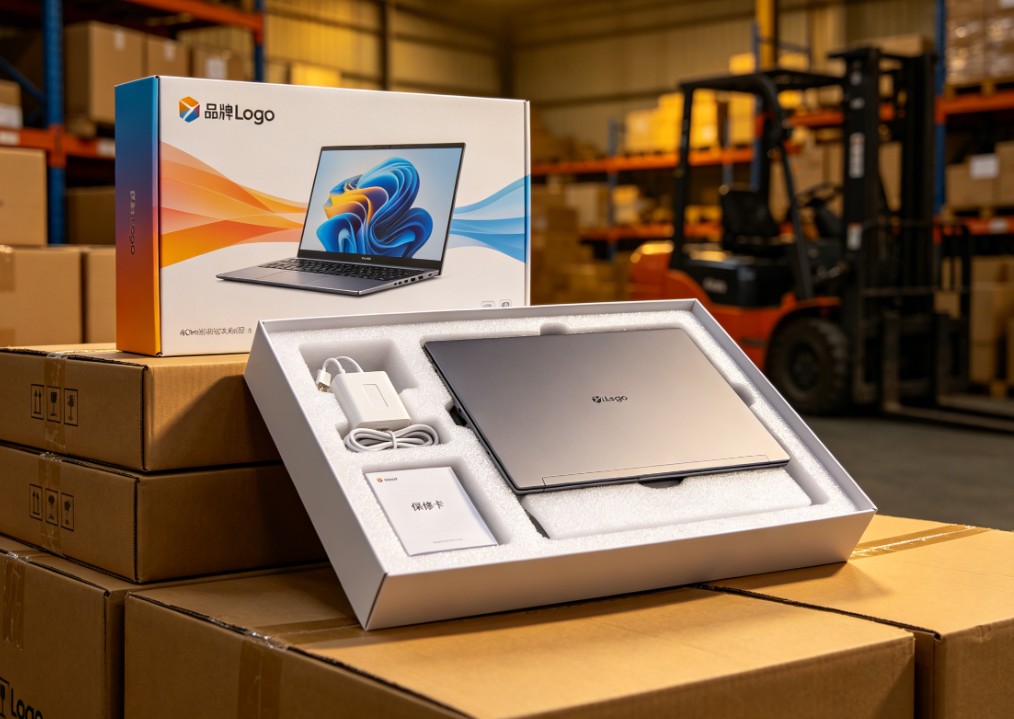
White-Label vs Neutral Laptops: Worth Buying? Pros, Cons & Guide
Should you buy white-label or neutral laptops in bulk? Learn the real pros and cons, quality-control risks, TCO calculation, sample inspection, and after-sales planning.

Celeron N5095 vs N100 vs N305: White-Label Laptop CPU Guide
Celeron N5095 or Intel N100/N305? Compare architecture, iGPU, memory support, power limits, and real-world performance to choose the right white-label laptop.

White-Label Laptops Explained: What They Are & Should You Buy?
Learn what a white-label laptop is, how it differs from knockoffs, barebones, and private-label models. Covers pros, cons, risks, and a practical buying guide for budget buyers.

AMD Ryzen AI Max 395 Mini PC: Worth It? Pros, Cons & Benchmarks
Is the Ryzen AI Max 395 mini PC worth the price? See real-world LLM inference, gaming, power, noise, and pros/cons to decide if this 128GB AI workstation fits your needs.
Adreamer

© 2012-2025 Copyright Shenzhen Adreamer Technology Co., Ltd.粤ICP备18115621号-2
Contact Adreamer Today for Your Custom Solution & Quote!
© 2012-2025 Copyright Shenzhen Adreamer Technology Co., Ltd.粤ICP备18115621号-2