Get in Touch
Your Trusted Manufacturer of Laptops & Tablets
WhatsApp Us Directly
+86 13923410269
Email Us
Get in Touch
Your Trusted Manufacturer of Laptops & Tablets

Search for “AI Mini PC” on any e‑commerce platform and you’ll find a flood of products. Search for “AI Computing Mini Host” and another flood appears. They look much the same, but prices range from around $200 to over $800. Are they the same thing? Which one do you actually need?
This question confuses many buyers. Some buy an “AI Mini PC” only to find it can’t run large language models smoothly. Others buy an “AI Computing Mini Host” and end up with high power consumption, noisy fans, and a device too bulky for their desk.
This guide will clearly explain the differences between these two concepts and help you choose based on your actual needs.
No. They overlap, but they are not identical.
Simply put: Every “AI Mini PC” qualifies as an “AI Computing Mini Host,” but not every “AI Computing Mini Host” is an “AI Mini PC.”
| Dimension | AI Mini PC | AI Computing Mini Host (Broad Sense) |
|---|---|---|
| Primary Compute Source | NPU (Neural Processing Unit) | NPU / GPU / High‑performance iGPU |
| Representative Platforms | AMD Ryzen AI, Intel Core Ultra, Rockchip RK series | Same + small workstations with RTX discrete GPUs |
| Power Consumption | 6–45W (typically 15–28W) | 15–150W+ |
| Volume | 0.5–1.5L | 0.5–8L (including compact discrete‑GPU models) |
| Noise Level | Very low (small fan / passive cooling) | Moderate (discrete‑GPU models have noticeable fan noise) |
| 7B Model Inference Speed | 15–35 tokens/sec (NPU‑accelerated) | 5–60 tokens/sec (depends on configuration) |
| Max Model Size | 7B–13B (runs smoothly with quantization) | 7B–70B (higher‑end configurations) |
| Price | $210–700 | $210–1,400+ |
| Typical Form Factor | Palm‑sized, can mount behind monitor | Palm‑sized (iGPU) to small chassis (dGPU) |
| Best For | Desktop AI inference, light office, enterprise on‑premise deployment | Covers everything from desktop inference to AI development |
Definition: A compact computer with a built‑in NPU, designed for low‑power AI inference and desktop integration.
Representative products:
Typical specifications:
Who is this for?
Definition: A compact host that integrates a discrete GPU (or high‑performance iGPU) to run AI models using GPU compute power.
Representative products:
Typical specs (RTX 4060 example):
Who is this for?
This is the category that causes the most confusion in the current market.
Representative product: Adreamer PB1202 (AMD R5‑6600H + Radeon 660M)
| Spec | PB1202 |
|---|---|
| CPU | AMD R5‑6600H (6‑core, 12‑thread, 3.3–4.5GHz) |
| Compute Source | Radeon 660M iGPU (~5–6 TFLOPS FP16) |
| NPU | None |
| Power Consumption | 45–54W |
| Volume | 0.66L (113×113×52mm) |
| 7B Inference Speed | 8–12 tokens/sec |
| 13B Inference Speed | 5–8 tokens/sec |
Characteristics of this category: It sits between a “pure AI mini PC” and a “GPU mini host.” It has no NPU, but relies on a strong iGPU to deliver usable AI compute. Power consumption is higher than NPU‑based systems but much lower than discrete‑GPU models. It’s very compact, but inference speed doesn’t match flagship NPU models.
Who is this for:
This is precisely the category that is often mistaken for an “AI Mini PC.” Some vendors label these as “AI‑ready” mini PCs even though they lack an NPU. Always check the specs – no NPU means it’s not a true AI Mini PC.
| Device Type | Example | 7B Speed | 13B Speed | Power | Price | Best For |
|---|---|---|---|---|---|---|
| Pure AI Mini PC (w/ NPU) | Ryzen AI Mini PC (Adreamer PB1301) | 25–35 | 15–22 | 28W | ~$670 | Low‑power + smooth AI |
| iGPU AI Computing Host (no NPU) | Adreamer PB1202 | 8–12 | 5–8 | 45W | ~$350 | Budget, office/gaming, entry‑level AI |
| dGPU AI Computing Host | RTX 4060 Mini Host | 40–60 | 25–40 | 150W+ | ~$970 | High‑speed inference or training |
| Regular Mini PC (no AI) | N100 Mini PC | 3–5 | Unusable | 6W | ~$210 | Pure office/media, no AI |
Scenario 1: Desktop AI assistant running 24/7
→ Choose a pure AI Mini PC with NPU. Low power, low noise, and adequate speed. You can keep it on without worrying about electricity bills, and it won’t clutter your desk.
Scenario 2: Team AI trial with limited budget
→ Choose an iGPU AI Computing Mini Host (like PB1202). 8–12 tokens/sec is sufficient for internal knowledge bases and document Q&A. At ~$350, you can buy multiple units for distributed deployment.
Scenario 3: AI development / debugging – running models above 13B
→ Choose a dGPU AI Computing Mini Host. You’ll need Tensor Core acceleration and sufficient VRAM. If budget allows, this is the most hassle‑free option.
Scenario 4: Unsure – just want to try it out
→ Start with an iGPU AI Computing Mini Host (like PB1202). The $350 entry point is low. Run 7B models to see if it meets your needs. If not, upgrade to a dGPU solution – and the PB1202 can still serve as an office PC or HTPC without any waste.
Q1: How do I tell if a device is an “AI Mini PC” or an “AI Computing Mini Host”?
A: Check for an NPU. A true AI Mini PC must have an NPU. If the product page only says “AI‑capable” but doesn’t list NPU TOPS, it’s likely a system using GPU compute – not a genuine AI Mini PC.
Q2: The PB1202 has no NPU – can it still be called an “AI Computing Mini Host”?
A: Yes. It delivers ~5–6 TFLOPS of FP16 compute via the Radeon 660M iGPU, achieving 8–12 tokens/sec on 7B models – a usable speed. It falls under “AI Computing Mini Host” but not “AI Mini PC” (since it lacks an NPU).
Q3: Is an AI Mini PC with an NPU always faster than one without?
A: Not necessarily. The NPU’s advantage is AI inference at low power. For the same 7B model, a 50 TOPS NPU is both faster and more power‑efficient than an iGPU. But if the iGPU is very strong (e.g., Radeon 780M), it could outperform an entry‑level NPU. Always check real‑world benchmarks.
Q4: For local AI agents (like OpenClaw), which should I choose?
A: For low‑frequency use (<20 tasks/day), a PB1202‑class iGPU host is sufficient. For high‑frequency or multi‑agent concurrent workloads, choose an NPU‑based AI Mini PC (like Adreamer PB1301) – faster, lower power, and better suited for 24/7 operation.
Q5: Can the PB1202 run 13B models?
A: Yes, but at ~5–8 tokens/sec – usable but not smooth. Suitable for non‑real‑time tasks like batch document processing or overnight automation. For smooth 13B real‑time conversation, choose a system with 32GB RAM + discrete GPU or a high‑compute NPU.
Industry-Specific Solutions
Latest Blog

AMD Ryzen AI Max 395 Mini PC: Worth It? Pros, Cons & Benchmarks
Is the Ryzen AI Max 395 mini PC worth the price? See real-world LLM inference, gaming, power, noise, and pros/cons to decide if this 128GB AI workstation fits your needs.
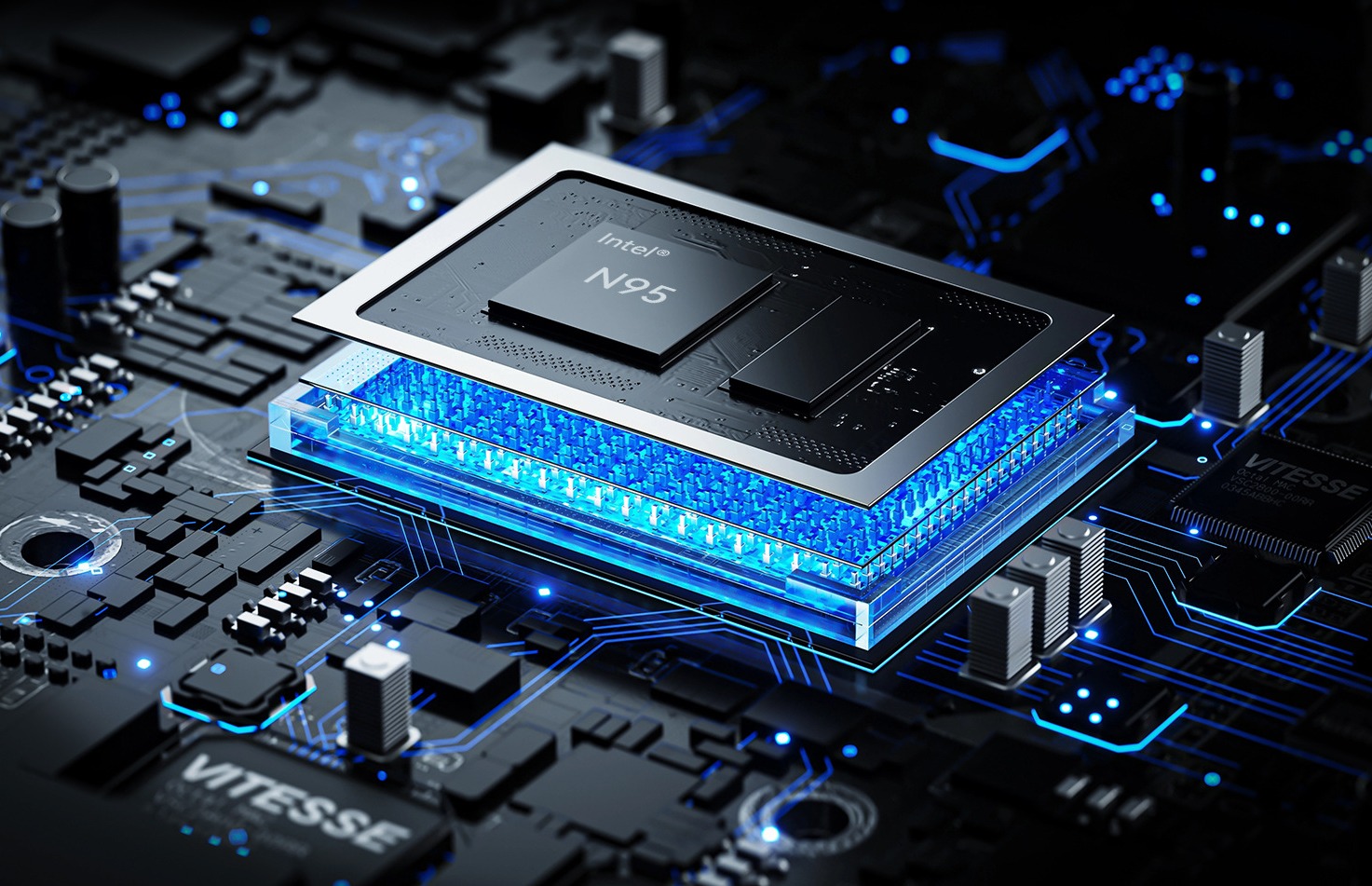
N100 vs N95 Mini PC Performance Comparison
Compare Intel N100 vs N95 mini PCs. See CPU, iGPU, TDP, power draw, gaming, and NAS performance—plus clear buying advice for office, soft router, and light gaming.
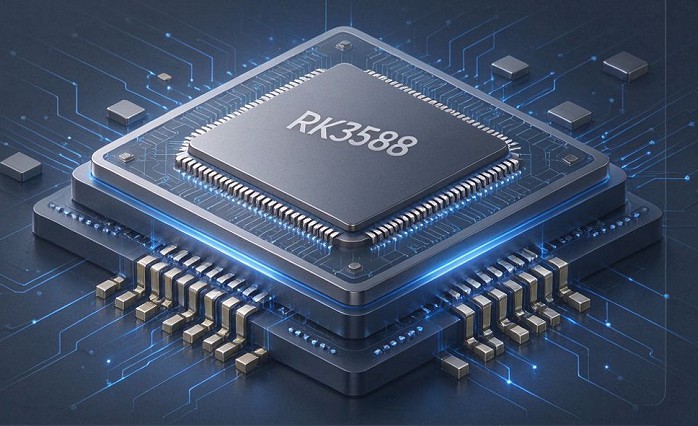
RK3588 vs RK3588S: Key Differences for Edge Computing Boards
Compare RK3588 and RK3588S for edge computing. Learn PCIe, SATA, Ethernet, and MIPI interface differences to choose the right board for your project’s expansion needs.
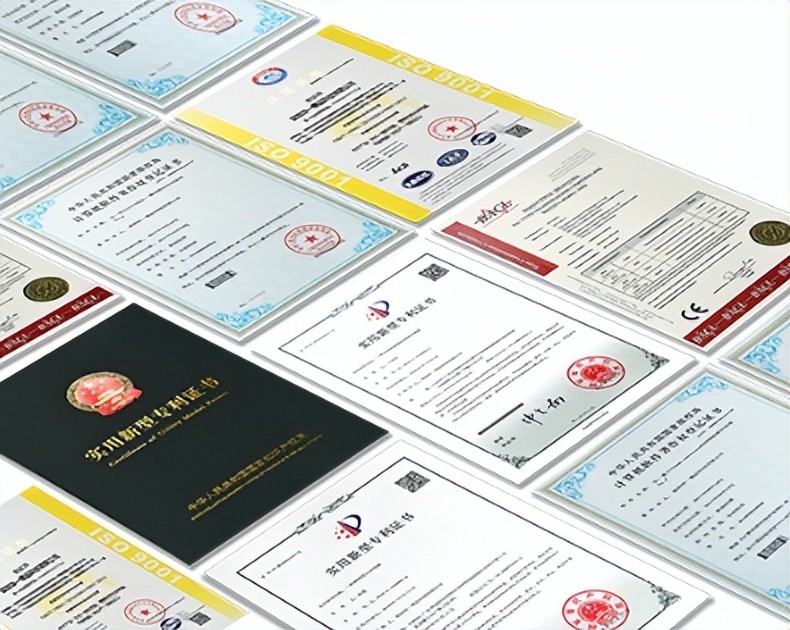
AI Compute Box Bulk Procurement: 3C, CE, FCC Certification Guide
Learn the key certification requirements for bulk buying AI compute boxes. Covers 3C, CE, FCC compliance, common pitfalls, and how to verify certificates to avoid legal risks.
Adreamer

© 2012-2025 Copyright Shenzhen Adreamer Technology Co., Ltd.粤ICP备18115621号-2
Contact Adreamer Today for Your Custom Solution & Quote!
© 2012-2025 Copyright Shenzhen Adreamer Technology Co., Ltd.粤ICP备18115621号-2