
Get in Touch
Your Trusted Manufacturer of Laptops & Tablets

WhatsApp Us Directly
+86 13923410269
Email Us
Get in Touch
Your Trusted Manufacturer of Laptops & Tablets

You have identified the opportunity: the global edge AI computing market is projected to exceed $80 billion by 2027. Businesses everywhere need compact, low-power devices to run local large language models (LLMs), computer vision, and smart retail analytics without sending sensitive data to the cloud.
You want to capitalize on this trend by launching your own brand of AI Mini PCs. But here is the reality check: you do not own a factory, and you need a product that can clear customs in Europe, the US, and Southeast Asia without legal headaches.
This is where the White Label AI Mini PC Factory model comes in.
But not all factories are created equal. The difference between a smooth, profitable wholesale partnership and a logistical nightmare often comes down to three things: certification readiness (CE & FCC), component selection (AI chipsets), and production flexibility (MOQ and customization).
This guide provides a vendor-neutral, deeply technical framework for international buyers, importers, and system integrators looking to source white-label AI mini PCs from manufacturing partners in 2026.
Before diving into factory selection, let us clarify the terminology so you know exactly what you are buying.
A white-label product is manufactured by one company (the factory/ODM) and branded and sold by another company (you). Think of it as the 'blank canvas' of electronics.
A standard mini PC just runs office software. An AI Mini PC incorporates a dedicated Neural Processing Unit (NPU) or a powerful integrated GPU that enables on-device machine learning inference.
Specifically, for 2026, an 'AI Mini PC' typically means it can run a 7B-parameter quantized LLM (like Llama 3 or Qwen 2.5) locally, or process real-time object detection at 30+ FPS, all while consuming under 65W of power.
This is the single most critical section of this guide. If you skip certification, your shipment will be seized at the port, or worse, you could face lawsuits if your device interferes with critical communications.
| Certification | Market | Governing Body | What It Tests |
|---|---|---|---|
| FCC (Part 15) | USA | Federal Communications Commission | Electromagnetic Interference (EMI) – ensures the device does not disrupt radio/TV signals. |
| CE (EMC + LVD) | European Union | European Commission | EMC (Electromagnetic Compatibility) + LVD (Low Voltage Directive – electrical safety). |
| RoHS / REACH | EU / Global | EU Commission | Restricts hazardous substances (Lead, Mercury, Cadmium) in materials. |
| UKCA | United Kingdom | UK Government | Replacement for CE in Great Britain (though CE is still accepted temporarily, UKCA is safer for long-term). |
| CCC | China | CNCA | Mandatory for any device sold in or passing through China (if you source there, the factory often has it). |
Many factories advertise 'CE/FCC' but only hold certification for their consumer motherboard, not the finished assembled system (with power supply, enclosure, and Wi-Fi module).
Rule of thumb: The certification must cover the final product SKU you are importing. Request the Certificate Number and verify it on the issuing lab's website (e.g., Nemko, UL, TÜV).
If you buy non-certified barebones and try to get FCC/CE yourself:
A reputable white-label AI Mini PC factory with export experience will have a 'Pre-scan' lab on-site to test radiation and ESD before sending units to third-party labs, ensuring a first-pass approval rate of over 95%.
The 'AI' capability of your mini PC is determined by the SoC (System on Chip) or CPU + NPU combination. Here are the dominant platforms available for wholesale orders in 2026.
A genuine white-label factory offers more than just applying your logo. Here is what you should demand in the RFQ (Request for Quotation).
Do not just rely on the sales pitch. Audit the factory against these 5 critical dimensions (adapted from our industrial selection framework).
Understanding where these devices go helps you market them better.
| Industry | Application | AI Task | Preferred Platform |
|---|---|---|---|
| Smart Retail | Shelf-scanning and people-counting | Real-time object detection (Yolo) | Rockchip RK3588 (Cost) / Intel Ultra |
| Smart Office | Automated meeting transcription | Local LLM for meeting summaries | Intel Core Ultra (Windows) |
| Industrial IoT | Predictive maintenance (Vibration analysis) | Time-series anomaly detection | AMD Ryzen (Industrial temp range) |
| Digital Signage | Interactive ads reacting to demographics | Facial attribute recognition | Qualcomm / Rockchip (Low power) |
| Healthcare | Patient bedside monitoring alerts | Fall detection / Sound analysis | Fanless RK3588 (No dust intake) |
Q1: What is the typical MOQ for a white-label AI Mini PC with my logo on the enclosure?
With the rise of flexible manufacturing, the global standard has dropped. For simple silk-screening, MOQ can be 300 units. For custom enclosure colors, MOQ is typically 1,000 units. For motherboard modifications, expect 3,000 – 5,000 units.
Q2: How do I verify the FCC/CE certificate is authentic and covers my specific model?
Ask the factory for the 'Certificate Number' and the 'Test Lab Name' (e.g., UL, SGS, TÜV Rheinland). Go to that lab's official verification portal and search the number. Ensure the Applicant Name on the certificate matches the factory (or allows for 'Brand Owner' listing).
Q3: Can the factory load my custom software (Windows Image) during mass production?
Yes. This is standard practice. You provide the SSD cloning image or the deployment package. The factory will flash it during the assembly line phase. Ensure you have a Volume Licensing agreement with Microsoft if you are distributing Windows.
Q4: What are the payment terms for wholesale export orders?
Standard industry practice is:
Q5: How do I handle warranty claims with an overseas factory?
This is a critical clause. Most factories offer a '1-year warranty for functional defects' based on the 'Return to Factory' (RTF) model. You (the importer) cover shipping costs to send the defective unit back, and the factory covers the repair and return shipping. For larger orders, negotiate a 'Spare Parts Kit' (3% of the order value) so your local technicians can fix common issues (power supply, fan failures) without shipping the entire unit back.
Industry-Specific Solutions
Latest Blog
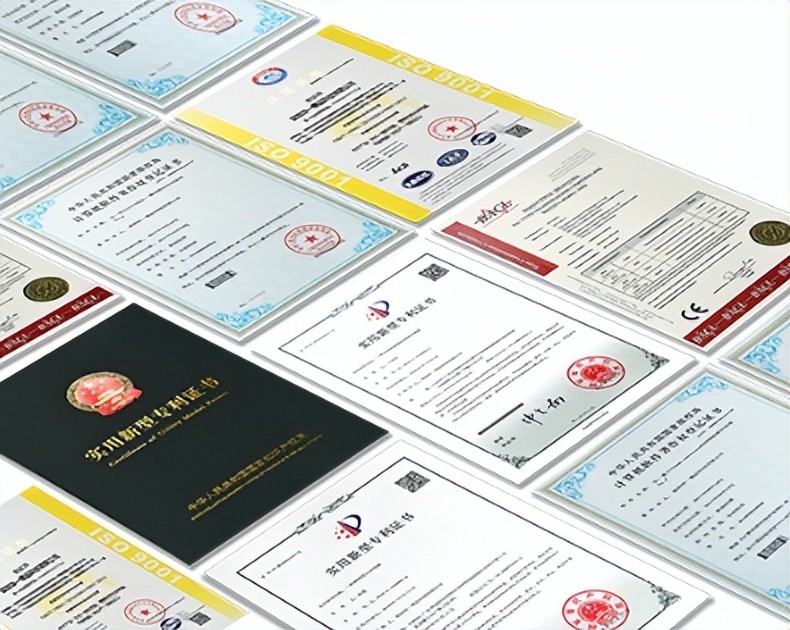
AI Compute Box Bulk Procurement: 3C, CE, FCC Certification Guide
Learn the key certification requirements for bulk buying AI compute boxes. Covers 3C, CE, FCC compliance, common pitfalls, and how to verify certificates to avoid legal risks.

RK3588 vs N100: Which Is Better for Local LLM Deployment?
Compare RK3588 and N100 for running local LLMs. See real-world token speeds, power, memory, software support, and which chip fits your AI workload.

Edge AI Box vs Cloud Server:Which Is Cheaper Long-Term?
A detailed TCO comparison of edge AI boxes and cloud servers. Covers hardware, bandwidth, power, and O&M costs, with break-even analysis and a decision checklist.
What AI Mini PC Do You Need for Private Local LLM Deployment?
Learn what AI mini PC specs you need for private deployment of local LLMs: memory, NPU, storage, offline capability, and configuration recommendations for 7B–70B models.
Adreamer

© 2012-2025 Copyright Shenzhen Adreamer Technology Co., Ltd.粤ICP备18115621号-2
Contact Adreamer Today for Your Custom Solution & Quote!
© 2012-2025 Copyright Shenzhen Adreamer Technology Co., Ltd.粤ICP备18115621号-2