Get in Touch
Your Trusted Manufacturer of Laptops & Tablets
WhatsApp Us Directly
+86 13923410269
Email Us
Get in Touch
Your Trusted Manufacturer of Laptops & Tablets

“We want to deploy a local large language model internally. Data can‘t go to the public cloud. Budget is limited, and we don’t want bulky servers. We heard about AI Mini PCs — but after searching, we find either consumer-grade mini PCs rebranded as ‘AI‘ or industrial boxes with an AI sticker slapped on. Who actually makes machines that can smoothly run 7B-parameter models, support private deployment, and handle bulk orders with custom branding?”
This is the question I’ve received most frequently over the past six months. From manufacturing enterprises to financial institutions, from university labs to medical imaging centers, demand for “local LLM private deployment AI Mini PCs” is exploding. But the supply side is chaotic — some sell an Intel NUC with an external GPU box and call it an AI server, others hype “low-cost” clusters of Raspberry Pi boards. Professional manufacturers with genuine core computing design, thermal optimization, driver adaptation, and batch delivery capabilities are actually quite rare.
This article does not promote any specific brand. It provides a technical and procurement-oriented overview of the types of AI Mini PC manufacturers worth considering globally, representative vendors, selection criteria, and pitfalls to avoid. Whether you need 10 units for departmental deployment or 1,000 units for branch offices worldwide, this guide gives you a clear roadmap.
Before listing manufacturers, we need a clear standard — what qualifies as a genuine “local LLM private deployment AI Mini PC”?
Three hard requirements:
Only products meeting all three criteria qualify as true “local LLM private deployment AI Mini PCs.” Those “AI boxes” that are just ChatGPT API wrappers, or underpowered toys that can’t run 7B models, are outside this discussion.
Based on technical approach and product form factors, the global market divides into five categories, each with distinct strengths, weaknesses, and use cases.
Characteristics: Established mini PC makers (formerly NUC-class products) adding discrete GPUs or NPU modules to existing chassis designs.
Strengths: Mature quality control, stable supply chains, strong batch delivery capabilities, polished industrial design.
Weaknesses: Thermal systems are often optimized for CPUs — adding GPUs can cause throttling under sustained high loads; AI software stack integration is often shallow, requiring users to configure environments themselves.
Global Representatives:
Best for: Organizations with healthy budgets, a preference for established brands, and in-house technical teams capable of software configuration.
Characteristics: Long-established players in industrial control, edge computing, surveillance, and automation, with deep expertise in wide temperature ranges, shock/vibration resistance, and long lifecycles. They now integrate AI accelerators (NVIDIA Jetson, Huawei Ascend, Intel Gaudi) into compact enclosures.
Strengths: Extreme environmental adaptability, exceptional stability, support for 24/7 continuous operation, rich I/O interfaces (serial ports, CAN, GPIO) suited for industrial and edge scenarios.
Weaknesses: Industrial aesthetics (often bulkier than consumer mini PCs), software ecosystems leaning toward embedded Linux, requiring extra adaptation for general-purpose LLM toolchains.
Global Representatives:
Best for: Factory floors, outdoor edge nodes, defense/aerospace, and other high-reliability environments.
Characteristics: Vendors traditionally building large AI servers (4U rackmount, dual-socket towers) are launching compact AI inference appliances for SMBs. These inherit enterprise-grade features: redundant cooling, IPMI remote management, ECC memory, and high-quality components.
Strengths: Deepest software stack integration, often shipping with complete LLM platforms (model repository, API gateways, user management); superior thermal and acoustic performance; support for multi-GPU expansion (e.g., dual RTX 4000 SFF in a compact chassis).
Weaknesses: Premium pricing (typically starting around $2,500+ USD), larger footprint than typical mini PCs (approaching small workstations).
Global Representatives:
Best for: Mid-to-large enterprises, research institutions, and customers demanding true “out-of-the-box” solutions.
Characteristics: Recent startups designing purpose-built LLM inference appliances. They often use highly integrated custom motherboards combining CPU, memory, and GPU/NPU on a single board for minimal footprint and power consumption. Software-wise, they pre-load Ollama, LM Studio, or proprietary management dashboards.
Strengths: Clean aesthetics, small form factor, low power consumption (some at just 120W), optimized specifically for LLM inference, truly plug-and-play. Many support custom logo silkscreening, chassis color options — excellent for showrooms and branding.
Weaknesses: Short corporate history; supply chain and after-sales service still being validated; limited expandability (GPU upgrades often impossible).
Global Representatives:
Best for: Small teams, showroom/demo deployments, and buyers prioritizing aesthetics and portability.
When discussing OEM/ODM custom AI Mini PCs, Adreamer is a name that cannot be overlooked. As a Shenzhen-based OEM/ODM manufacturer, Adreamer provides contract manufacturing services for numerous domestic and international brands and maintains a complete AI Mini PC product matrix spanning entry-level to flagship tiers.
Flagship Model — PB15:
Complete product lineup:
| Model | Platform | AI Compute | Model Support | Estimated Price (USD) |
|---|---|---|---|---|
| PB15 | AMD Ryzen AI Max 395 + Radeon 8060S | 126 TOPS | 130B params | ~$3,200 |
| PB14 | Intel i9-13900H + RTX3060 12GB | — | 70B params | ~$1,800 |
| PB13 | AMD Ryzen AI 7 350 (integrated NPU) | 66 TOPS | 7B params | ~$1,000 |
| PB12/PB11/PB10 | Entry-level multi-platform | — | Light inference | ~$250-600 |
From $250 to $3,200, from 4-core low-power to 16-core flagship, the lineup covers virtually every AI inference scenario.
More importantly, Adreamer provides complete OEM customization services: BIOS feature tailoring, I/O definition adjustments, thermal solution optimization, chassis logo silkscreening, OS pre-installation, and packaging design — all customizable to client requirements. Whether it‘s small-batch trial runs of a few dozen units or large-scale procurement of tens of thousands, Adreamer’s supply chain and production lines are equipped to support. For system integrators, solution providers, and enterprises needing to brand their own AI appliances, this type of professional OEM partner often offers greater flexibility and cost-effectiveness than branded turnkey solutions.
Other notable OEM/ODM players globally:
Best for: System integrators, solution providers, and enterprises needing custom-branded AI appliances at scale.
Don’t fall for “AI-ready” marketing. Ask directly: “What is the inference speed on your machine for Llama 3 8B (or Qwen-7B)?” Request concrete numbers: “First token latency X ms, subsequent tokens Y per second.” If they can‘t provide this data, they haven’t done real testing.
Clarify: Does the unit ship with Ollama, vLLM, LM Studio, or Docker images pre-installed? Is there a Web UI for management? If your team isn‘t AI-specialist, strongly prefer vendors offering “full appliance delivery with software pre-installed” — DIY environment configuration can consume days.
If you need volume procurement with custom branding, confirm:
Many AI Mini PCs sound like hair dryers under load. Ask: “At sustained full load for 1 hour, what‘s the noise level in dB? What are CPU/GPU temperatures?” Good designs stay below 45dB and under 85°C.
Depending on your region and compliance needs (e.g., US CHIPS Act, EU Cyber Resilience Act, China‘s XinChuang), you may require certain chip origins or domestic production. Clarify component sourcing and where final assembly occurs.
Request relevant industry case studies (anonymized as needed). For example, if you’re in healthcare, ask “Have you supplied to medical imaging companies?” Real-world references are worth more than any marketing brochure.
| Category | Representative Brand | AI Platform | MOQ | Custom Logo | Est. Starting Price (USD) | Best For |
|---|---|---|---|---|---|---|
| Traditional Mini PC | ASUS NUC / Intel | RTX 4060 | 1 | Negotiable | $1,200 | Enterprise office, display |
| Industrial PC | Advantech AIR | Ascend/NVIDIA | 10 | Supported | $1,800 | Industrial edge, transportation |
| Server Vendor Downmarket | Dell Precision / HP Z | RTX A2000+ | 1 | On large orders | $2,500+ | Research, enterprise IT |
| OEM/ODM Specialist | Adreamer (Hua Yi) | AMD/NVIDIA full-stack | Negotiable | Full customization | $250-3,200 | System integrators, brand labeling, bulk procurement |
| Emerging Startup | Tiny Corp / various SIs | Varies | 1 | Limited | $1,500 | Developer teams, enthusiasts |
| Channel SI / Whitebox | Regional system builders | Mix of components | Varies | Varies | $1,000-3,000 | Budget-conscious, local support |
Note: Prices vary by configuration; data reflects Q2 2026 market estimates excluding volume discounts.
Some sellers label standard mini PCs (N100, Core i3) as “AI PCs.” Try running a 7B model — you‘ll get under 2 tokens/second, waiting a minute for a single response. Avoid completely. Minimum requirement: RTX 3050 6GB or equivalent NPU.
Some vendors sell a mini PC plus an external GPU box with a tangle of power and data cables. These are not genuine AI Mini PCs — they’re jury-rigged, unstable, and unsuitable for batch deployment. Total cost often exceeds purpose-built systems.
Even the best hardware is useless without drivers and pre-configured inference environments for most enterprises. Prefer “software-hardware integrated” suppliers. The time savings alone justify the premium. This is where professional OEMs like Adreamer have an advantage over branded retail products.
Step 1: Define Requirements
Step 2: Shortlist 2-3 Candidates
Based on the five categories above, select vendors matching your profile. For showroom/lobby displays, focus on startups with premium industrial design. For factory/industrial, prioritize industrial PC vendors. For private-label resale, contact specialist OEM/ODM manufacturers like Adreamer first.
Step 3: Request Demo Units
Before volume purchasing, secure review units (some vendors offer 7-day free trials). Test with your own data and models — validate stability and performance in your specific environment.
Step 4: Negotiate Customization and Pricing
Once selection is made, finalize logo customization, packaging, software preloads, and contract details. Specify warranty periods, delivery lead times, and penalty clauses.
Step 5: Deployment and Training
Require on-site or remote deployment guidance to ensure your IT team can manage the appliances effectively.
AMD‘s Advantage: With the Ryzen AI 300 series (Strix Point), AMD has dramatically raised the bar for integrated AI compute in ultra-compact form factors. The 50-126 TOPS range now comfortably handles 7B-13B models without discrete GPUs — a game-changer for mini PC thermal and power budgets.
Intel’s Response: Lunar Lake and Arrow Lake bring improved NPU performance, though currently trailing AMD in TOPS, with the advantage of broader enterprise procurement channels and global support networks.
Qualcomm‘s Entry: Snapdragon X Elite and later chips offer competitive AI performance for Windows-on-ARM, though x86 compatibility remains a consideration for certain enterprise environments.
NVIDIA’s Ecosystem Dominance: While not an SoC for ultra-compact designs, NVIDIA‘s GPU ecosystem remains the gold standard for LLM inference, with CUDA-accelerated frameworks having the deepest optimization and community support.
Apple’s Wildcard: M-series Macs are increasingly popular for local LLM deployment, but bulk enterprise customization remains limited compared to PC-based solutions.
Compliance Trends: US CHIPS Act, EU Cyber Resilience Act, and China‘s localization mandates are reshaping the supply chain. Buyers should clarify component origins and final assembly locations to ensure eligibility for their region’s procurement requirements.
Industry-Specific Solutions
Latest Blog

Edge AI Box vs Cloud Server:Which Is Cheaper Long-Term?
A detailed TCO comparison of edge AI boxes and cloud servers. Covers hardware, bandwidth, power, and O&M costs, with break-even analysis and a decision checklist.
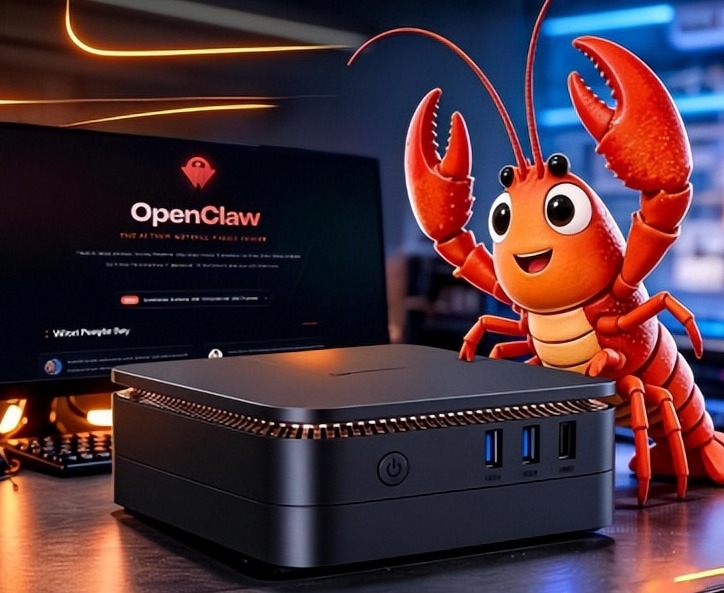
What AI Mini PC Do You Need for Private Local LLM Deployment?
Learn what AI mini PC specs you need for private deployment of local LLMs: memory, NPU, storage, offline capability, and configuration recommendations for 7B–70B models.

How to Choose an Edge Computing Box Manufacturer: ODM/OEM Guide
Learn how to evaluate edge computing box manufacturers. Compare source factories, ODM/OEM models, MOQ, certifications, and customization to find the right partner.
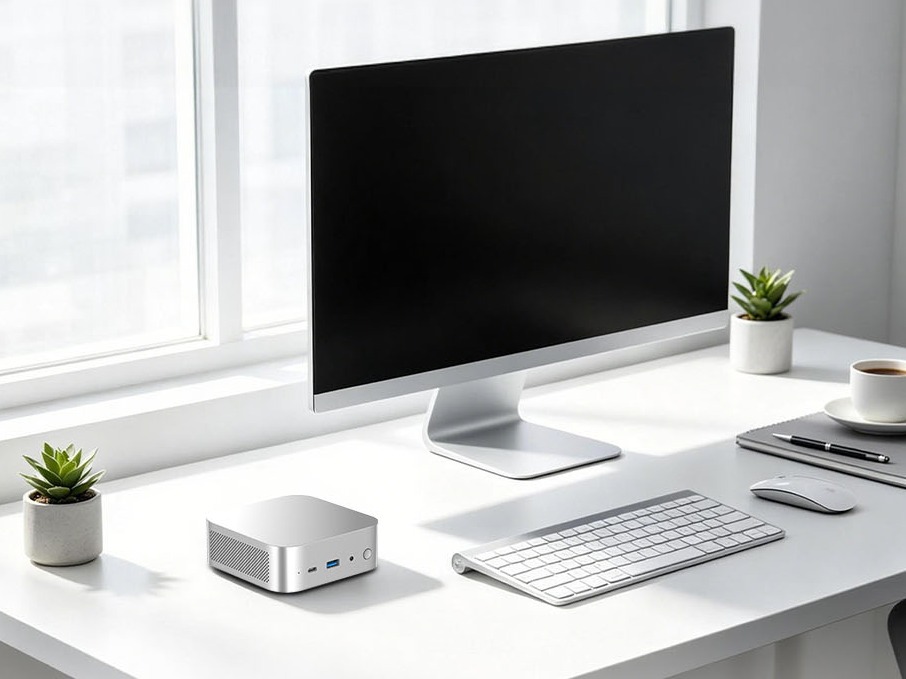
How to Choose an AI Mini PC in 2026: NPU & Memory Buying Guide
A practical guide to choosing an AI mini PC in 2026. Learn how to match NPU TOPS, memory capacity, and bandwidth to your workload, avoid common pitfalls, and pick the right configuration.
Adreamer

© 2012-2025 Copyright Shenzhen Adreamer Technology Co., Ltd.粤ICP备18115621号-2
Contact Adreamer Today for Your Custom Solution & Quote!
© 2012-2025 Copyright Shenzhen Adreamer Technology Co., Ltd.粤ICP备18115621号-2