
Get in Touch
Your Trusted Manufacturer of Laptops & Tablets

WhatsApp Us Directly
+86 13923410269
Email Us
Get in Touch
Your Trusted Manufacturer of Laptops & Tablets


In 2026, the laptop market is no longer dominated solely by Lenovo, HP, and Dell. On Amazon, you see countless lesser‑known brands with impressive sales. On Shopify, entrepreneurs are launching their own laptop product lines. How do they do it? The answer is OEM (Original Equipment Manufacturer).
Simply put, OEM means “you provide the design and brand, I handle manufacturing.” You don’t need to build your own factory, buy SMT lines, or hire thousands of workers. You just need to find a contract manufacturer with production capabilities, turn your requirements into physical products, put your logo on them, and sell them worldwide.
However, OEM sounds simple but has many nuances. From product definition and mold development to component sourcing and international certifications, any mistake can lead to delays, financial losses, or even legal disputes.
In the OEM model, the following roles are typically involved:
Analogy: You want to open a burger shop, but you don’t know how to bake buns or grill patties. You find a food processing factory, give them your recipe and packaging, they produce the burgers, and you sell them. That’s OEM. If the factory also designs the recipe for you, and you just put your label on it, that’s ODM.
In the laptop space, most startups start with ODM (using reference designs) and move to OEM (customizing exclusive appearance and features) as they mature.
The brand must produce a detailed Product Requirements Specification (PRS) covering at least:
The OEM factory will assess feasibility and provide a quote and development timeline.
Key point: Prototype testing should go beyond “it boots.” Simulate real‑world usage – open 10 browser tabs + play video + charging – to check for overheating and throttling.
If the brand requires an exclusive appearance, a new mold is needed. Process:
Note: New molds significantly extend lead time (+2 months) and cost. Startups are advised to start with reference molds (only logo change) and switch to exclusive molds after sales volume grows.
Why it’s necessary: Many problems don’t appear during prototype stage. Small‑batch runs expose assembly interference, batch‑to‑batch component variation, and software compatibility issues, preventing mass production disasters.
Based on target markets, send products to third‑party labs for testing:
European Union | CE (LVD+RED), RoHS, REACH, ErP energy efficiency |
United States | FCC Part 15, UL (safety, often required by retailers) |
United Kingdom | UKCA |
Other markets | PSE (Japan), KC (Korea), RCM (Australia/NZ), CCC (China) |
A good OEM factory offers pre‑testing services to rectify issues early and increase first‑pass yield.
Many factories advertise “100 units MOQ,” but the actual quote hides high engineering fees and mold amortization, making unit cost extremely high.
Solution: Get written confirmation whether engineering fees, mold costs, and certification fees are included in the unit price, and after how many units they are fully amortized.
Recommendation: Small‑batch pilot (500 units) may accept higher unit price; for mass production, aim for ≥1,000 units to spread fixed costs.
Some unscrupulous factories use branded components (e.g., Samsung RAM, BOE screen) in prototypes but switch to generic or lower‑grade parts in mass production, leading to performance degradation and higher failure rates.
Solution: Specify component brands and models in the contract, reserve the right for batch sampling, and ask for purchase invoices or original manufacturer shipping documents.
Uncontrollable factors like mold development and chip shortages do cause delays, but many contracts lack delay penalties, giving factories little urgency.
Recommendation: Agree on a penalty of 0.3%‑0.5% of the order value per day of delay, with a reasonable cap. Also, understand lead times of key components in advance.
In OEM, designs, molds, and software code provided by the brand belong to the brand. However, new technologies developed during cooperation (e.g., a novel cooling structure) could be patented by the factory.
Solution: Clearly state in the contract that “all product‑related IP generated during the cooperation belongs to the brand,” and require the factory to sign a non‑disclosure agreement.
After bulk purchase, if a batch quality issue occurs, a factory that shirks responsibility or takes too long to repair will seriously damage the brand’s reputation.
Recommendation: Agree on response time (e.g., confirm fault cause within 48 hours), repair turnaround (≤7 business days), and set a quality guarantee deposit (e.g., 5% of contract value) payable one year later if no major issues arise.
| Aspect | OEM | ODM |
|---|---|---|
| Design Source | Brand provides full design | Factory provides reference solution |
| Product Differentiation | High (exclusive appearance & features) | Low (may look similar to other brands) |
| Development Cycle | Long (4‑6 months) | Short (2‑3 months) |
| Minimum Order Quantity | High (typically ≥2,000 units) | Lower (500‑1,000 units) |
| R&D Investment | High (engineering & mold fees) | Low (only logo/software changes) |
| Intellectual Property | Owned by the brand | Owned by the factory (or shared) |
| Suitable For | Mature brands seeking exclusivity | Startups, quick market testing |
Suggested path: Startups should begin with ODM using reference molds to quickly validate the market. Once sales volume reaches a certain scale (e.g., 5,000+ units per year), invest in exclusive molds and transition to OEM.
Look for the following:
Certifications: ISO9001; proven experience with target market certifications (CE, FCC, UKCA, etc.).
Case studies: Ask for mass production examples of similar products, preferably with client references you can contact.
Production line: Visit the factory – inspect SMT line count, burn‑in room, lab, and observe worker discipline.
R&D team: Number of hardware, software, and mechanical engineers; their responsiveness.
Services: One‑stop from design to certification? Small‑batch acceptance? Spare parts commitment duration?
Laptop OEM is not “just slap on a logo.” It involves product definition, supply chain management, quality control, intellectual property, and many other professional fields. But for brands without manufacturing capabilities, it is the shortest path from idea to sellable product.
By understanding the complete OEM process and its key pitfalls, choosing a reliable manufacturing partner, and signing a rigorous contract, you will have already won more than half the battle toward launching your own branded laptop.
Industry-Specific Solutions
Latest Blog
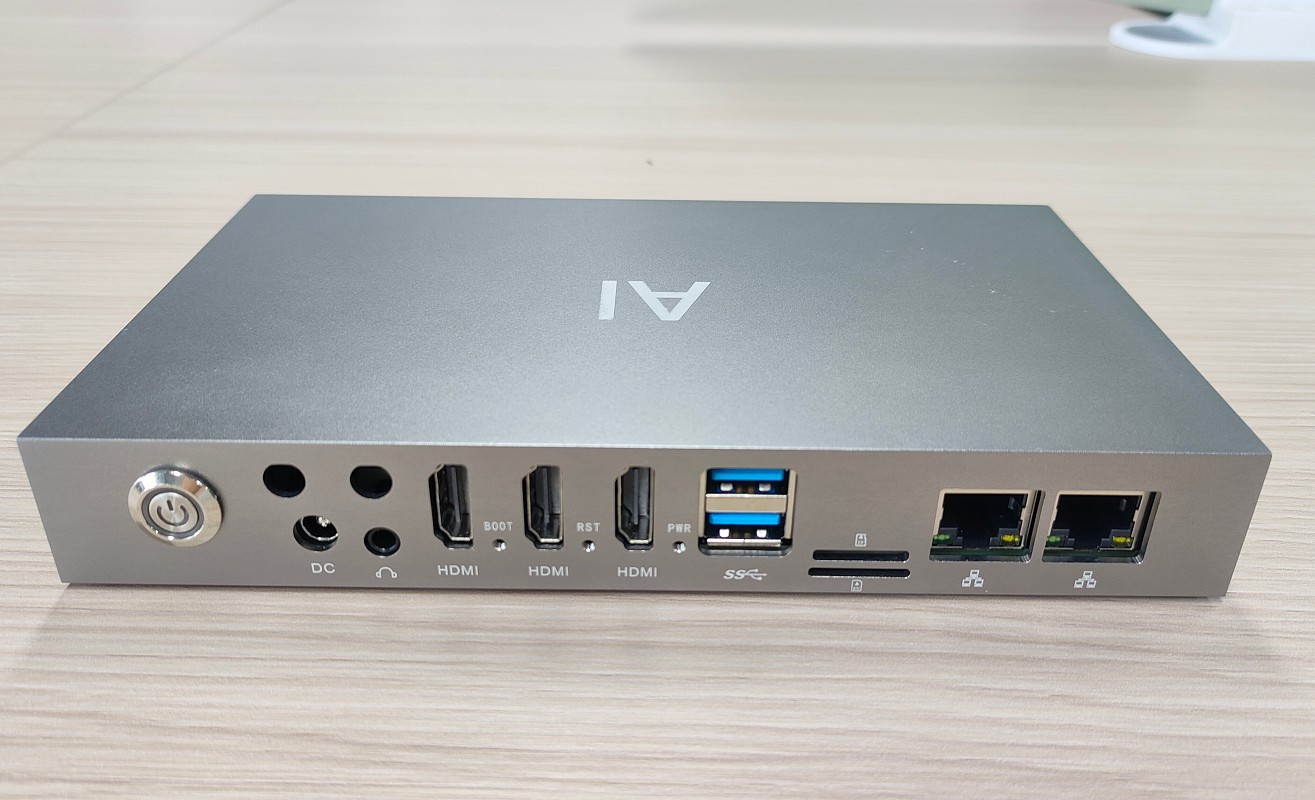
How to Partner with an Edge Box Manufacturer
Complete OEM/ODM process for edge computing boxes – from requirements and factory vetting to sample sign‑off, pilot runs, and bulk delivery. Includes contract tips and IP protection.
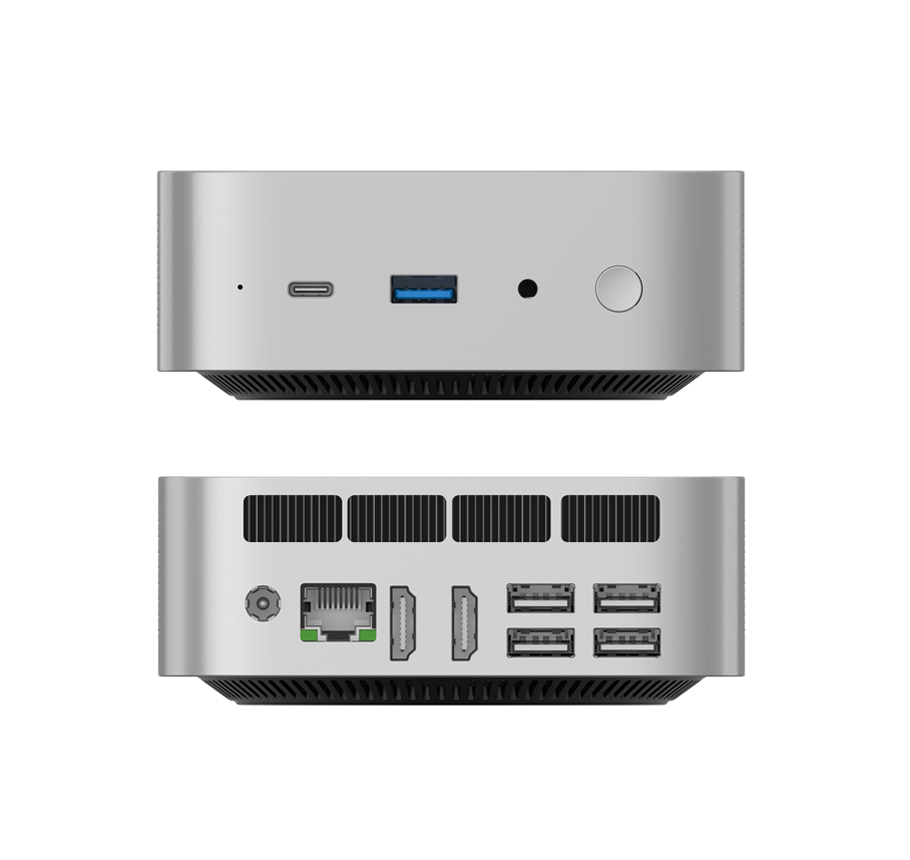
What Is an Edge Box? Compare with PC, AI Mini PC & Edge Server
What is an edge box and how does it differ from a regular PC, AI mini PC, or edge server? This guide explains edge box features, use cases, and selection criteria for AI inference at the edge.

What to Look for When Buying AI Mini PCs in Bulk
Bulk AI mini PC procurement requires more than specs. Learn about sustained performance, thermal design, memory capacity, software ecosystem, after‑sales support, and total cost of ownership.

NPU Explained: How TOPS Affects Local LLM Performance on AI Mini PCs
What is an NPU and how much does TOPS really matter for running local large language models? This guide breaks down NPU vs CPU/GPU, memory bandwidth, capacity, and software optimization – so you can choose the right AI Mini PC.
Adreamer

© 2012-2025 Copyright Shenzhen Adreamer Technology Co., Ltd.粤ICP备18115621号-2
Contact Adreamer Today for Your Custom Solution & Quote!
© 2012-2025 Copyright Shenzhen Adreamer Technology Co., Ltd.粤ICP备18115621号-2