
Get in Touch
Your Trusted Manufacturer of Laptops & Tablets
WhatsApp Us Directly
+86 13923410269
Email Us
Get in Touch
Your Trusted Manufacturer of Laptops & Tablets

You walk into an electronics store, and the salesperson tells you the latest desktop is an 'AI PC.' You go online and search for a mini PC, and half the listings say 'AI Mini PC.' You ask the difference. The salesperson shrugs and says: 'Same thing. Just different sizes.'
That is a lie.
The truth is, most people assume the difference between an AI PC and an AI Mini PC is simply big case versus small case. This misunderstanding often leads to one of two painful outcomes:
Neither is a good outcome. Here is the reality check you need before you spend your money.
Before we compare anything, we need to clear up a common confusion. The term 'AI PC' is used in two completely different ways in the real world:
| Meaning | Definition | Example |
|---|---|---|
| Broad Definition | Any computer capable of running AI software | Any laptop that can run ChatGPT or Stable Diffusion |
| Narrow Definition | A native AI computer with a dedicated NPU (Neural Processing Unit) on the chip | Devices that meet Microsoft's Copilot+ PC definition |
In this article, we are talking about the narrow definition—computers with a built-in NPU that accelerate AI tasks at the hardware level. A high-end gaming PC without an NPU is powerful, but it is not a native AI PC in the current industry terminology.
The core takeaway: AI PC and AI Mini PC are not a 'large vs small' relationship. They are different form factors of the same underlying technology. Both have NPUs. The difference is the chassis, the cooling, and the use case.
Here is the high-level comparison table. If you are in a hurry, this is where you need to look.
| Feature | AI PC (Desktop / Laptop) | AI Mini PC |
|---|---|---|
| Volume | Desktop: 20–50L / Laptop: 1–3L (with screen) | 0.5–4L (palm-sized) |
| NPU Performance | 10–50+ TOPS | 10–50+ TOPS (identical) |
| RAM | 16–128GB (upgradeable) | 16–128GB (partially soldered, partially upgradeable) |
| Graphics | Integrated or Dedicated (e.g., RTX 4060+) | Mostly Integrated (few exceptions with dGPU) |
| Power Consumption | Desktop: 200–800W / Laptop: 30–150W | 15–120W (significantly lower) |
| Cooling | Desktop: excellent / Laptop: moderate | Compact, active or passive cooling |
| Portability | Desktop: none / Laptop: high | Portable, but requires an external display |
| Upgradability | High (swap CPU, GPU, RAM, storage) | Limited (usually just RAM and storage) |
| Starting Price | ~$700–$3,000+ | ~$230–$1,500+ |
This is the obvious one—but it is also the most consequential for many buyers.
Why it matters: If you value a clean, minimalist workspace, the Mini PC is the only option that delivers. No matter how powerful a full-sized desktop is, it will never solve the space problem.
AI tasks—especially inference—are sustained, high-load operations. Power draw directly affects your electricity bill and your sanity (noise levels).
| AI PC (Desktop) | AI Mini PC | |
|---|---|---|
| Typical Power Draw | 200–800W | 15–120W |
| Annual Electricity Cost (24/7) | ~$150–$600+ | ~$15–$80 |
| Noise Level (Full Load) | Noticeable (multiple fans) | Minimal (single fan or passive) |
Why it matters: If you plan to run a local AI server, a home automation agent, or a 24/7 LLM API, the Mini PC will save you hundreds of dollars a year in electricity alone. Over three years, that saving can almost pay for the device itself.
This is where the desktop AI PC absolutely dominates.
With a Desktop AI PC, you can:
With an AI Mini PC, you are mostly stuck with what you buy:
Why it matters: If you are a tinkerer, a developer, or someone who likes to keep hardware for 5+ years, the desktop AI PC wins hands down. If you prefer a 'set it and forget it' device for 2–3 years, the Mini PC is perfectly fine.
This is the interesting part. You can get the same 50 TOPS NPU in both a full-sized desktop and a tiny Mini PC. But the prices are not the same.
| NPU Tier | AI PC (Desktop) | AI Mini PC |
|---|---|---|
| 50 TOPS NPU Models | $800–$1,500+ | $550–$1,100 |
| Entry-Level (10–15 TOPS) | $500–$800 | $230–$400 |
Why it matters: The Mini PC is almost always cheaper for the same NPU performance because it does not pay for the extra cooling, power delivery, or motherboard complexity of a full-sized desktop. You are paying for the core AI capability—not the extra bells and whistles.
Here is a simple framework. Find your primary use case in the table below.
| Your Primary Use Case | Best Choice | Why |
|---|---|---|
| Minimalist desk setup / small apartment | AI Mini PC | 0.5–4L, mounts behind monitor |
| Gaming + AI (3A titles, rendering) | AI PC (Desktop) | Needs a dedicated GPU for gaming |
| 24/7 AI server / home lab | AI Mini PC | Low power, low heat, low noise |
| CUDA development / deep learning | AI PC (Desktop) | Needs NVIDIA dedicated GPU (or special Mini PC with dGPU) |
| Running 70B+ parameter models | Either | Key factor is RAM (128GB+), not form factor |
| Frequent travel / mobile work | AI PC (Laptop) | Built-in screen, keyboard, and battery |
| Tight budget (under $300) | AI Mini PC | Entry-level AI Mini PCs start ~$230 |
| Long-term upgradability | AI PC (Desktop) | Swap CPU, GPU, RAM—keeps device relevant for 5+ years |
Yes. As long as you have sufficient RAM (16GB+ for 7B models, 32GB+ for 13B, 128GB for 70B), both can run local LLMs. The difference is sustained performance, power draw, and future upgradability.
Not necessarily. The inference speed is determined by the NPU and CPU, not the chassis. However, Mini PCs have more thermal constraints. A poorly cooled Mini PC will throttle its performance after 5–10 minutes of heavy load. Always check thermal reviews before buying.
It depends. For 80% of office work + AI inference scenarios, yes—it can fully replace a desktop. But if you need 3A gaming, professional 3D rendering, or frequent hardware upgrades, the full-sized AI PC is still the better choice.
Usually no. Most Mini PCs rely on integrated graphics. However, there are rare exceptions (e.g., the AtomMan PB1401) that pack an RTX 3060 mobile GPU into a compact chassis. These are niche products and cost significantly more.
Three things:
The AI PC and AI Mini PC are not enemies. They are cousins with different talents.
The salesperson who told you 'they're the same' was either misinformed or trying to make a quick sale. The truth is, they serve completely different users.
The smart buyer doesn't ask which is better. They ask which is better for them.
Industry-Specific Solutions
Latest Blog
AI Compute Box Bulk Procurement: 3C, CE, FCC Certification Guide
Learn the key certification requirements for bulk buying AI compute boxes. Covers 3C, CE, FCC compliance, common pitfalls, and how to verify certificates to avoid legal risks.

RK3588 vs N100: Which Is Better for Local LLM Deployment?
Compare RK3588 and N100 for running local LLMs. See real-world token speeds, power, memory, software support, and which chip fits your AI workload.

Edge AI Box vs Cloud Server:Which Is Cheaper Long-Term?
A detailed TCO comparison of edge AI boxes and cloud servers. Covers hardware, bandwidth, power, and O&M costs, with break-even analysis and a decision checklist.
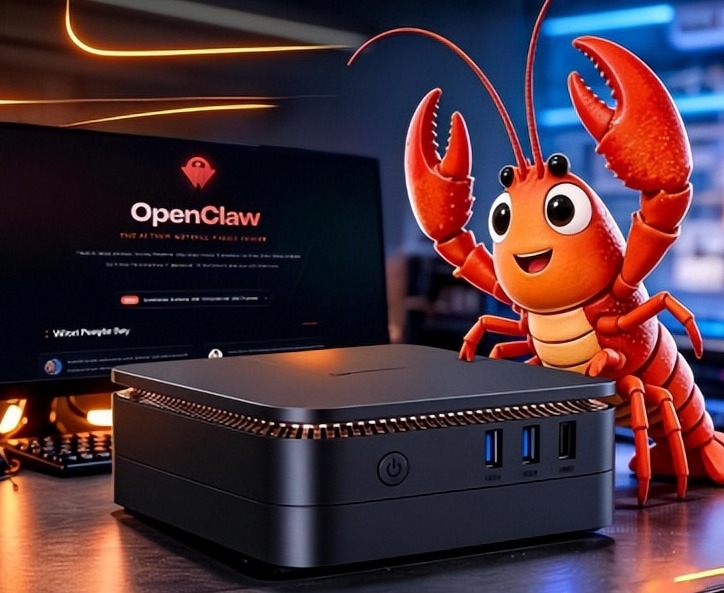
What AI Mini PC Do You Need for Private Local LLM Deployment?
Learn what AI mini PC specs you need for private deployment of local LLMs: memory, NPU, storage, offline capability, and configuration recommendations for 7B–70B models.
Adreamer

© 2012-2025 Copyright Shenzhen Adreamer Technology Co., Ltd.粤ICP备18115621号-2
Contact Adreamer Today for Your Custom Solution & Quote!
© 2012-2025 Copyright Shenzhen Adreamer Technology Co., Ltd.粤ICP备18115621号-2