
Get in Touch
Your Trusted Manufacturer of Laptops & Tablets
WhatsApp Us Directly
+86 13923410269
Email Us
Get in Touch
Your Trusted Manufacturer of Laptops & Tablets


BEIJING, Dec. 24-- China's major chip maker Loongson on Tuesday unveiled its new generation of general-purpose CPUs with improved processing performance in Beijing.
The new generation CPUs, Loongson 3A4000 and 3B4000, adopt a 28 nm technique and their main frequency reaches 1.8GHz to 2.0GHz. Their performances are more than twice that of the previous generation, according to Hu Weiwu, president of Loongson.
All the source code of the chip is independently developed, and a security control mechanism is designed in the processor core. An open-source operating system has also been developed to support enterprises. The upgrade of Loongson CPUs and motherboard will not affect the compatibility of the operating system and applications.
Hu said Loongson is taking steps to compete with international chip giants, adding that Loongson will launch new CPUs that adopt a 12 nm technique in 2020 and 2021. Their main frequency is expected to reach 2.5GHz, with the processing performance reaching world-class levels.
Loongson was initiated by the Institute of Computing Technology under the Chinese Academy of Sciences (CAS). Loongson chips have been applied to China's space program, finance, energy and other fields.
Loongson is trying to establish a new information industry ecosystem and statistic shows that Loongson chip shipments have reached more than 500,000 in 2019.
Zhou Dejin, an official from the CAS said Loongson has mastered the core technology of CPUs through independent research and development after 20 years' effort, showing its determination in building an independent and innovative information industry system.
Loongson's users, including Lenovo and the China Academy of Launch Vehicle Technology, also released products based on Loongson's new generation processors, such as desktop computers, notebooks, servers, network security equipment and industrial control computers.
Industry-Specific Solutions
Latest Blog
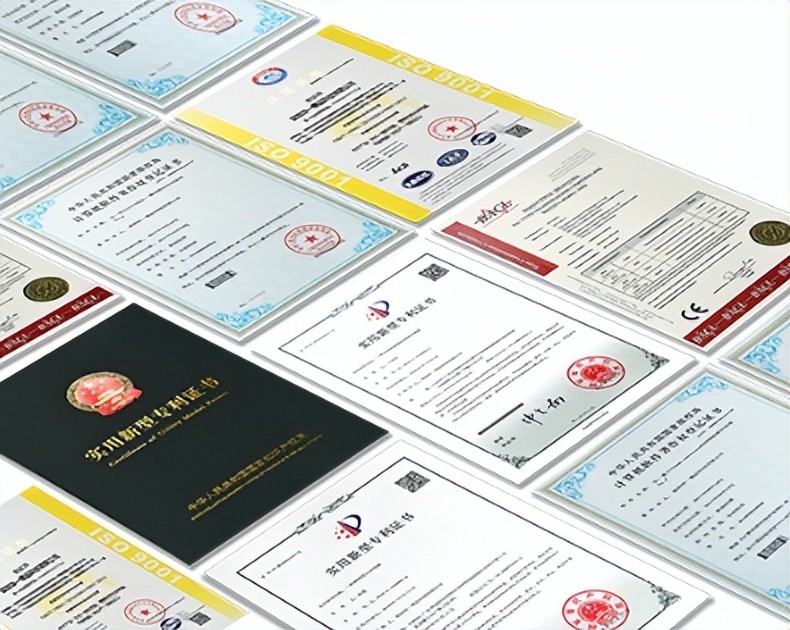
AI Compute Box Bulk Procurement: 3C, CE, FCC Certification Guide
Learn the key certification requirements for bulk buying AI compute boxes. Covers 3C, CE, FCC compliance, common pitfalls, and how to verify certificates to avoid legal risks.

RK3588 vs N100: Which Is Better for Local LLM Deployment?
Compare RK3588 and N100 for running local LLMs. See real-world token speeds, power, memory, software support, and which chip fits your AI workload.

Edge AI Box vs Cloud Server:Which Is Cheaper Long-Term?
A detailed TCO comparison of edge AI boxes and cloud servers. Covers hardware, bandwidth, power, and O&M costs, with break-even analysis and a decision checklist.
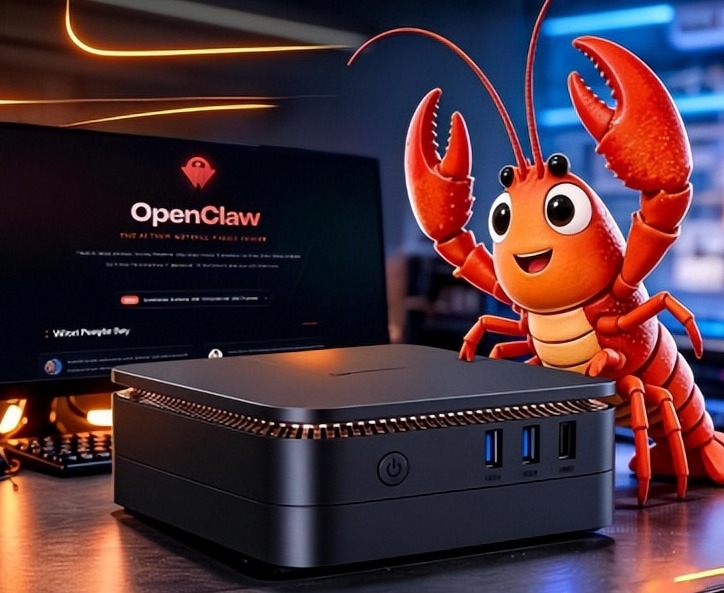
What AI Mini PC Do You Need for Private Local LLM Deployment?
Learn what AI mini PC specs you need for private deployment of local LLMs: memory, NPU, storage, offline capability, and configuration recommendations for 7B–70B models.
Adreamer

© 2012-2025 Copyright Shenzhen Adreamer Technology Co., Ltd.粤ICP备18115621号-2
Contact Adreamer Today for Your Custom Solution & Quote!
© 2012-2025 Copyright Shenzhen Adreamer Technology Co., Ltd.粤ICP备18115621号-2