Get in Touch
Your Trusted Manufacturer of Laptops & Tablets
WhatsApp Us Directly
+86 13923410269
Email Us
Get in Touch
Your Trusted Manufacturer of Laptops & Tablets

Walk into a chain restaurant, and you might see servers using tablets to take orders. In a hospital nurse station, tablets become mobile nursing terminals. At a warehouse, tablets paired with barcode scanners manage inventory. In a bank lobby, tablets guide customers through transactions. In a classroom, tablets serve as digital schoolbags for students.
These tablets differ in appearance, system, and interfaces, but they share one thing: none are 'off-the-shelf' products bought from an e-commerce platform. Instead, they are purpose-built devices tailored to industry-specific scenarios through OEM customization.
Why are more businesses choosing tablet OEM customization? Because standard products only solve general needs, while industry applications often require precise adaptation—hardware interfaces, software systems, protection ratings, accessory ecosystems, and even branding all need to be customized on demand.
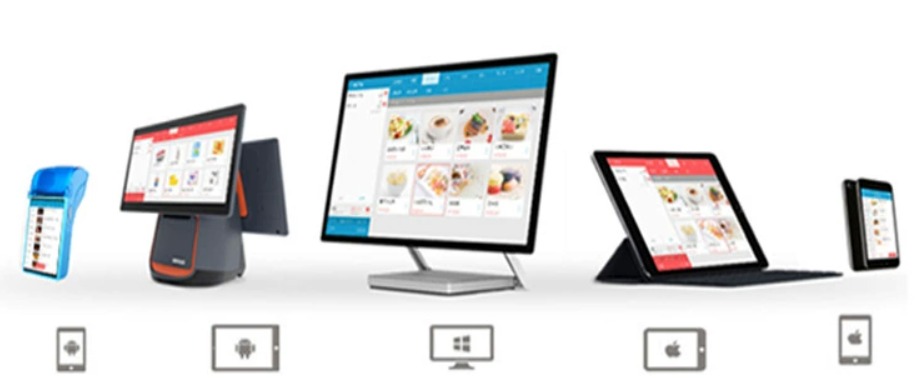
A national bakery chain with 800 stores faced long checkout lines during peak hours, leading to high customer churn. Staff frequently ran between counters and shelves to check prices and verify inventory. Traditional POS systems were bulky and fixed, unable to meet mobility needs.
The chain partnered with an OEM manufacturer to customize a 10-inch mobile POS tablet:
Hardware Customization: Integrated 58mm thermal printer (for receipts), barcode scanning engine (for membership codes/product barcodes), high-capacity battery (all-day operation).
Software Customization: Pre-installed store POS system with auto-start on boot and disabled irrelevant apps; backend ERP integration for real-time inventory sync.
Accessory Customization: Desktop docking station (charging + cash drawer connection), shoulder strap, drop-proof protective case.
Results in Retail Tablet Customization:
ROI Calculation:
At a major tertiary hospital, nurses previously had to make multiple trips between wards and the nurse station, manually recording patient vital signs before entering them into a computer. This was inefficient, error-prone, and couldn't sync in real time with doctors' stations. Traditional PDAs had small screens and were cumbersome, leading to resistance from nursing staff.

The hospital procured 800 customized medical tablets:
Hardware Customization: Antimicrobial casing (alcohol-wipe friendly), IP67 waterproofing (resistant to liquid spills), integrated NFC (for reading patient wristbands), 8MP front camera (for wound photography).
Software Customization: Pre-installed mobile nursing system integrated with HIS; voice input for vital signs to reduce typing; offline cache mode for local storage when network is interrupted.
Security Customization: Hardware-level data encryption compliant with HIPAA; remote lock/wipe capability.
Results in Medical Tablet Applications:
ROI Calculation:
An e-commerce logistics sorting center processing 200,000 packages daily. Workers used handheld PDAs to scan barcodes, but the PDAs had small screens, laggy systems, poor battery life, and couldn't handle multiple orders simultaneously. Sorting error rates were high, and peak periods led to warehouse overflow.
The logistics company customized 1,000 units of 8-inch logistics tablets:
Hardware Customization: Integrated UHF RFID module (batch reading of 10+ packages), 1D/2D barcode scanning engine, hot-swappable battery, high-brightness screen (for dim warehouse lighting).
Software Customization: Pre-installed WMS client with voice-guided sorting; offline caching with auto-upload when network restored; integration with AGV dispatch system to coordinate workers and robots.
Protection Customization: IP67 rating, 1.2-meter drop resistance, anti-vibration mount.
Results in Logistics Tablet Customization:
ROI Calculation:
At a commercial bank branch, customers needing simple transactions (e.g., account opening, fund transfers, information updates) had to take a number and wait in line. Counter tellers averaged 10 minutes per transaction. During peak hours, wait times exceeded 30 minutes, leading to low satisfaction. Meanwhile, the bank wanted to prospect for potential customers, but lobby managers lacked mobile tools.
The bank customized 2,000 financial tablets:
Hardware Customization: Integrated ID card reader (government-certified), fingerprint recognition module, magnetic stripe/IC card reader, high-security encryption chip.
Software Customization: Pre-installed mobile teller system supporting facial recognition login, electronic signature, remote authorization; real-time encrypted transmission of transaction data; pre-integrated CRM system to surface customer potential needs.
Security Customization: National cryptographic algorithm encryption, secure boot, tamper detection; remote lock and data wipe if device lost.
Results in Financial Tablet Applications:
ROI Calculation:
A provincial education technology center needed to equip 100 rural schools with learning tablets for a 'Three Classrooms' initiative. After purchasing standard commercial tablets, they encountered problems: students easily installed games, parents had no control, screens were harsh on eyes, bulk management was difficult, and rural schools had poor network connectivity requiring offline functionality.

The center worked directly with a factory to customize 15,000 education tablets:
Hardware Customization: 10-inch low-blue-light eye-care screen (GB/T 42039 certified), distance sensor (to remind about sitting posture), high-capacity battery (8-hour life), drop-proof silicone protective case.
Software Customization: Deeply customized Android system showing only learning apps, hiding settings access; pre-installed National Smart Education Platform for Primary & Secondary Schools plus local teaching resources; parent app for remote usage time control.
Management Customization: MDM platform for batch app pushing, device locking, and usage reporting; offline learning support with auto-sync when network available.
Results in Education Tablet Applications:
ROI Calculation:
Step 1: Define Scenario Requirements
Step 2: Assess Customization Depth
| Level | Scope | Typical MOQ |
|---|---|---|
| Light Customization | Logo, boot animation, pre-installed apps | 100-300 units |
| Medium Customization | Case color/silkscreen changes, simple module addition | 1,000-2,000 units |
| Deep Customization | New molds, motherboard modifications, deep OS development | 2,000+ units |
Step 3: Evaluate OEM Manufacturer
Tablet OEM customization was once considered 'a game only big players could afford.' But in 2026, flexible manufacturing and modular design have dramatically lowered the barriers. Minimum order quantities of 1,000 units, delivery times of 2-3 weeks, and development fees in the tens of thousands of dollars have become industry norms.
The real-world cases across retail, healthcare, logistics, finance, and education prove that the efficiency gains, cost savings, and experience improvements from customized tablets far exceed the hardware investment itself. It's not a luxury—it's precision. Precision that adapts to your business processes, solves your user pain points, and improves your ROI.
Industry-Specific Solutions
Latest Blog
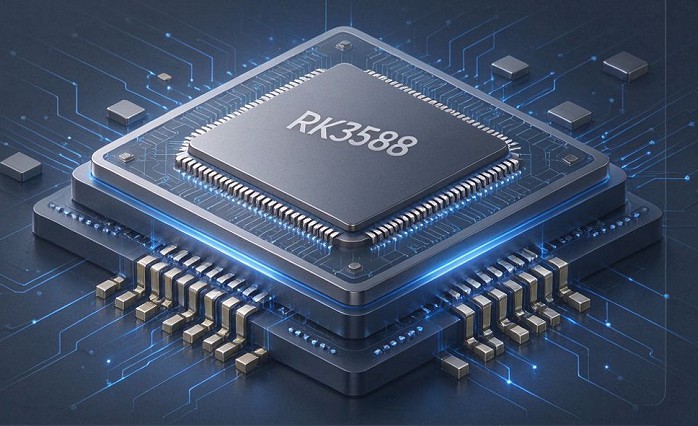
RK3588 vs RK3588S: Key Differences for Edge Computing Boards
Compare RK3588 and RK3588S for edge computing. Learn PCIe, SATA, Ethernet, and MIPI interface differences to choose the right board for your project’s expansion needs.
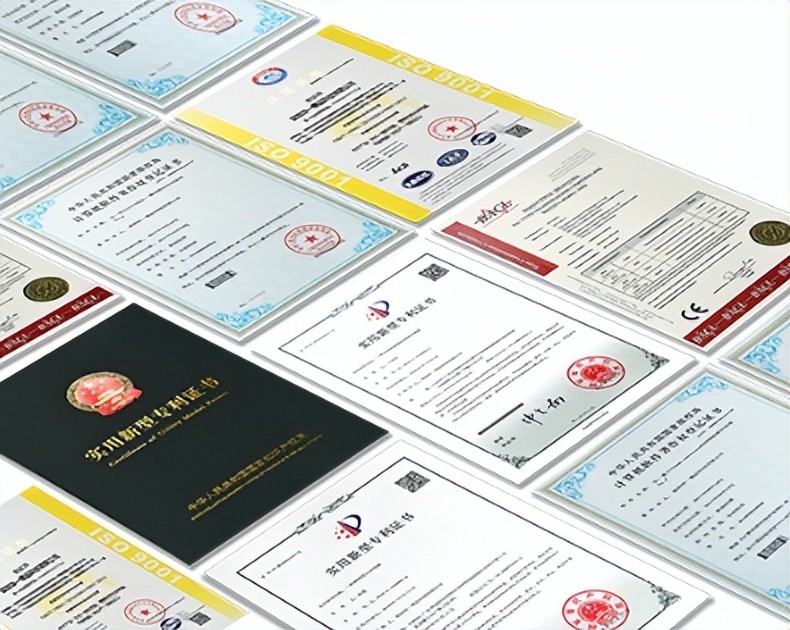
AI Compute Box Bulk Procurement: 3C, CE, FCC Certification Guide
Learn the key certification requirements for bulk buying AI compute boxes. Covers 3C, CE, FCC compliance, common pitfalls, and how to verify certificates to avoid legal risks.

RK3588 vs N100: Which Is Better for Local LLM Deployment?
Compare RK3588 and N100 for running local LLMs. See real-world token speeds, power, memory, software support, and which chip fits your AI workload.
Edge AI Box vs Cloud Server:Which Is Cheaper Long-Term?
A detailed TCO comparison of edge AI boxes and cloud servers. Covers hardware, bandwidth, power, and O&M costs, with break-even analysis and a decision checklist.
Adreamer

© 2012-2025 Copyright Shenzhen Adreamer Technology Co., Ltd.粤ICP备18115621号-2
Contact Adreamer Today for Your Custom Solution & Quote!
© 2012-2025 Copyright Shenzhen Adreamer Technology Co., Ltd.粤ICP备18115621号-2