
Get in Touch
Your Trusted Manufacturer of Laptops & Tablets

WhatsApp Us Directly
+86 13923410269
Email Us
Get in Touch
Your Trusted Manufacturer of Laptops & Tablets

The 8-inch mini laptop is carving out a unique niche, becoming a favorite for mobile professionals, specialists, and tech enthusiasts. It perfectly bridges the gap between smartphones and traditional notebooks—small enough to slip into a bag, yet powerful enough for serious work.
Before choosing, it's crucial to understand the unique philosophy behind this size. An 8-inch device isn't just a shrunken-down laptop; it's a deliberate design choice.
Ultimate Portability: This is its core appeal. Weighing between 500-700g and comparable in size to a small notebook, it fits easily into a coat pocket, sling bag, or camera case pouch. It minimizes carry weight for journalists, consultants, or IT staff who commute or travel frequently.
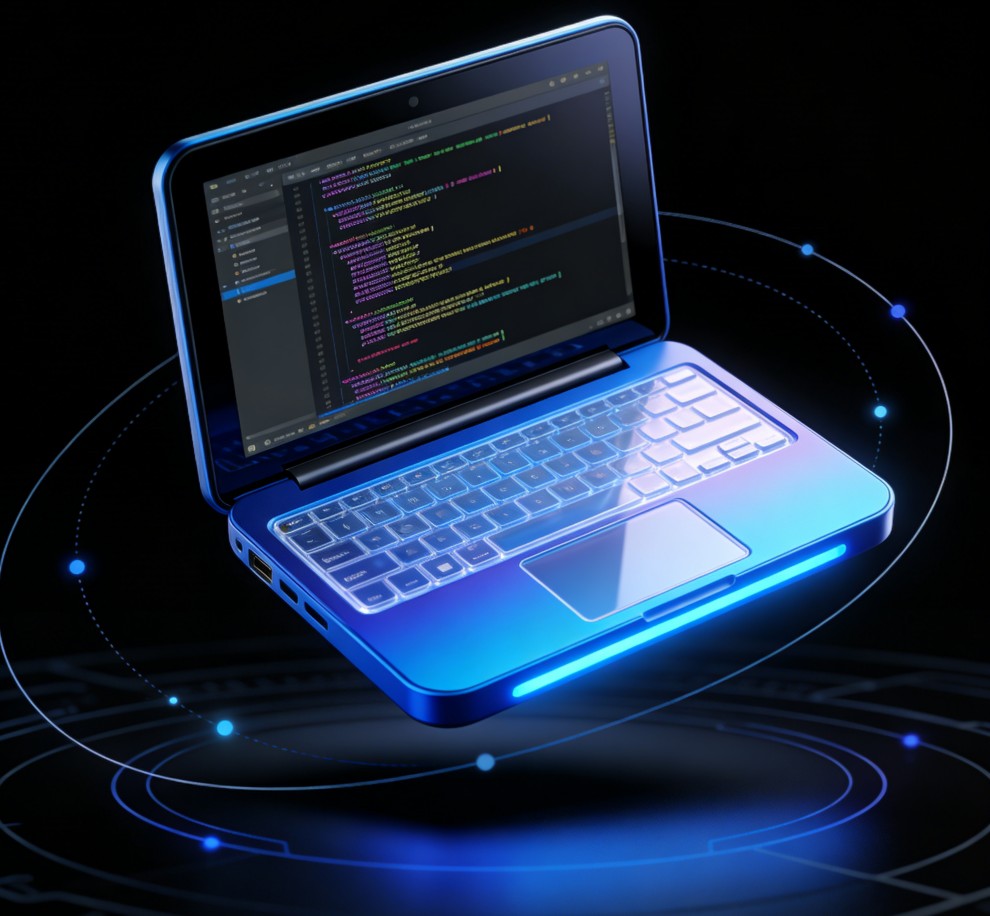
Contextual Productivity: In cramped airplane seats, busy cafe corners, or during factory floor walks, unfolding a 13-inch laptop can be awkward. An 8-inch device elegantly handles quick tasks like email, code edits, document reviews, or remote desktop connections in these fragmented spaces.
Specialized Professional Need: In certain fields, the small form factor is non-negotiable. Network engineers need a device for server racks to run command-line tools; field researchers use it to connect sensors and log data; writers appreciate its minimalism for focused composition.
Balanced Power & Battery Life: Thanks to smaller screens and low-power processors, many 8-inch mini laptops offer excellent battery life, often lasting a full day for moderate tasks without a bulky charger.
Acknowledge the Limits: It's not a one-size-fits-all solution. The compact keyboard requires adaptation and isn't ideal for long, intensive typing sessions. Limited screen space hampers multi-window workflows. Thus, it's best suited as a secondary device for professionals or a primary tool for specific scenarios.
Forget conflicting ‘top 10’lists. Learn to judge for yourself by focusing on these six critical areas:
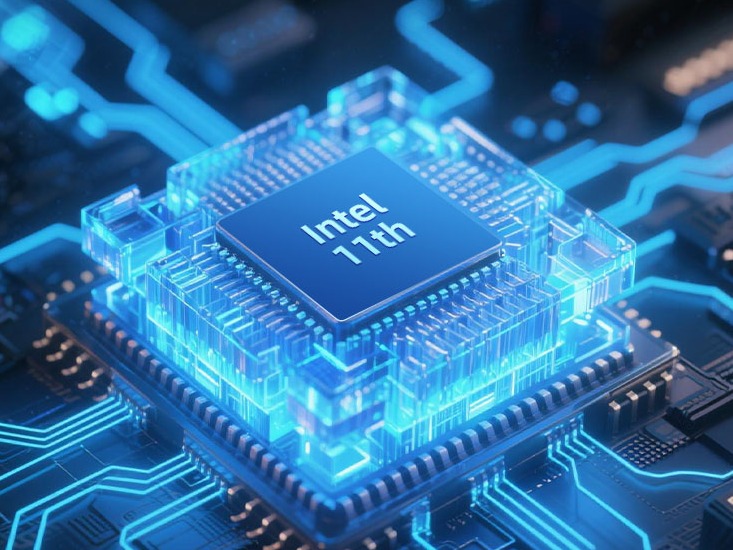
Performance & CPU: This is the brain. From Intel's Core M3/i5 to AMD's Ryzen series, the CPU defines the performance ceiling. For 8-inch devices, pay special attention to Thermal Design Power and sustained performance. Passively cooled models are silent but may throttle under load; models with active fans maintain more stable performance for tasks like running VMs or compiling code.
Display Quality: Small size demands high precision. A resolution of at least 1920x1200 is essential for sharp text. Color gamut coverage 【sRGB, DCI-P3】 is critical for designers and photographers. High brightness and touchscreen capability are significant bonuses, especially for outdoor use.
Keyboard & Input Experience: This is the foundation of productivity. Key travel, layout logic, and backlighting directly impact typing comfort and speed. Read hands-on reviews to gauge the feel. Many models also offer programmable macro keys for efficiency boosts.
Ports & Expandability: The types and number of ports determine connectivity. A full-function USB-C port supporting power, video, and data is standard, but having a legacy USB-A port remains convenient for mice and flash drives. A microSD card reader and HDMI port are essential for some users.
Battery Life & True Portability: Battery capacity in Watt-hours , combined with processor efficiency, determines real-world runtime. Advertised 10-hour battery life often assumes dim screens; real use will be less. The travel weight including the charger is the true measure of portability.
Operating System & Ecosystem: The main choices are Windows and various Linux distributions. Windows offers the broadest software compatibility out-of-the-box. Linux is favored by developers for its lightweight, highly customizable nature.
This ranking considers performance, portability, input experience, and market reputation, categorizing devices for different user needs.
Key Strength: The benchmark in the 8-inch category. Its standout feature is a swappable bottom module, allowing users to choose between a USB 3.0 hub, an RS-232 serial port, or a KVM module, making it a dream tool for IT engineers and industrial technicians.
Specs: Features an Intel i7-1195G7 processor. The 8-inch H-IPS screen boasts a 1920x1200 resolution and supports 4096-level pressure-sensitive stylus input.
Input: Its keyboard, refined over generations, offers top-tier tactile feedback for its size and includes backlighting. The slide-out touchpad saves space.
Best For: Power users who need maximum performance and specialized I/O, like programmers, engineers, and support technicians.
Key Strength: The top choice if you want a device for both work and play. It's essentially a Windows-based handheld gaming PC that doubles as a fully-functional laptop.
Specs: Options include AMD Ryzen 7 5800U or Intel i7-1195G7 processors. The integrated graphics can handle mainstream online games and some AAA titles. The 7-inch or 8.4-inch screen offers a 2.5K resolution with wide color gamut.
Input: Features full gaming controller buttons and supports an optional detachable magnetic keyboard.
Best For: Users who want one device for mobile productivity and portable gaming—the ultimate choice for performance enthusiasts.
Key Strength: This model follows a classic, sleek clamshell design, resembling a scaled-down MacBook. It emphasizes pure typing efficiency and portability.
Specs: Powered by an Intel Core i7-1260P processor for strong performance. The 8-inch 1920x1200 screen is excellent.
Input: Boasts a keyboard with a luxurious layout for an 8-inch device, with optimized key size and spacing that rivals full-sized laptops. The touchpad is also more spacious.
Best For: Writers, journalists, students, and anyone who needs comfortable, extended typing sessions on the go.
4. LattePanda Sigma
Key Strength: This is a single-board computer, not a pre-built laptop. It represents the ultimate in customization freedom for the 8-inch form factor, powered by a robust Intel Core i5-1340P processor with rich I/O.
Unique Appeal: Users must purchase a screen, battery, keyboard, and case separately to build their perfect mini laptop. A thriving community offers countless build guides and mods.
Best For: Geeks, hardware tinkerers, developers, and anyone who loves building their own custom device from the ground up.
For enterprises, creators, or specific industries, off-the-shelf models might not suffice. Partnering with a professional OEM/ODM manufacturer to create a custom 8-inch mini laptop can be a strategic move.
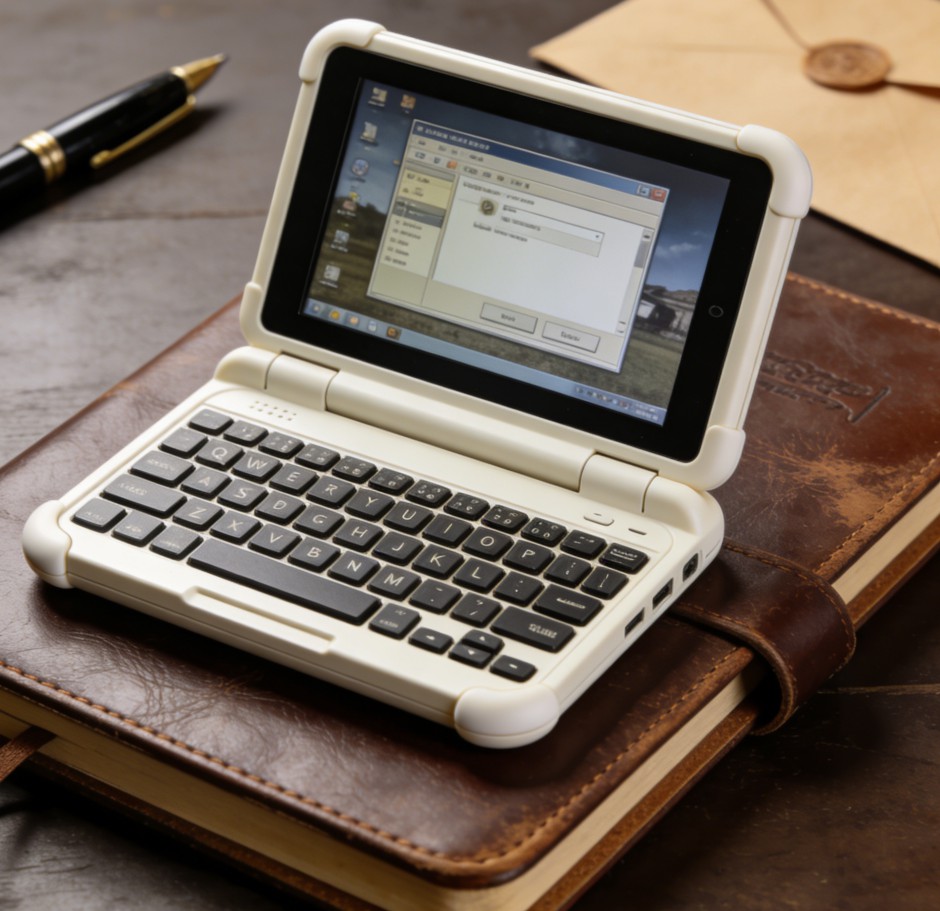
Taking an industry veteran like Adreamer as an example, a qualified partner can provide:
Choosing this path means acquiring not just a consumer gadget, but a specialized tool that enhances operational efficiency and strengthens brand identity.
The 8-inch mini laptop market is a specialized niche full of personality and potential. Whether you choose a top-performing model from our rankings or collaborate with an expert partner like Huayi Technology to create a bespoke solution, the core principle remains: technology should adapt seamlessly to human needs, not the other way around.
We hope this ultimate guide, blending hands-on reviews with industry insights, helps you find the perfect key to unlocking efficient, mobile productivity within the palm of your hand.
Industry-Specific Solutions
Latest Blog

Edge AI Box vs Cloud Server:Which Is Cheaper Long-Term?
A detailed TCO comparison of edge AI boxes and cloud servers. Covers hardware, bandwidth, power, and O&M costs, with break-even analysis and a decision checklist.
What AI Mini PC Do You Need for Private Local LLM Deployment?
Learn what AI mini PC specs you need for private deployment of local LLMs: memory, NPU, storage, offline capability, and configuration recommendations for 7B–70B models.

How to Choose an Edge Computing Box Manufacturer: ODM/OEM Guide
Learn how to evaluate edge computing box manufacturers. Compare source factories, ODM/OEM models, MOQ, certifications, and customization to find the right partner.
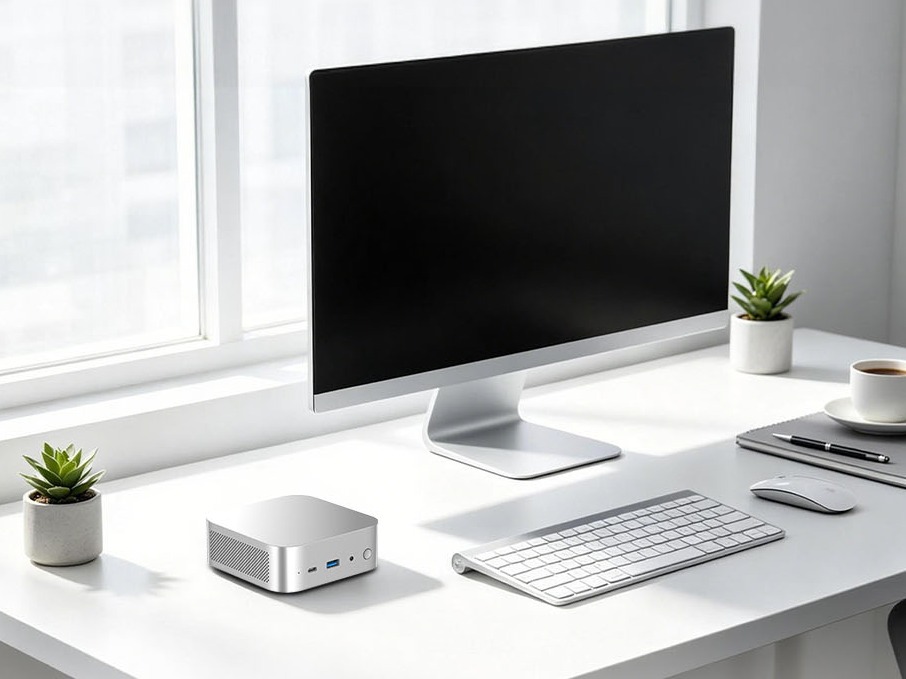
How to Choose an AI Mini PC in 2026: NPU & Memory Buying Guide
A practical guide to choosing an AI mini PC in 2026. Learn how to match NPU TOPS, memory capacity, and bandwidth to your workload, avoid common pitfalls, and pick the right configuration.
Adreamer

© 2012-2025 Copyright Shenzhen Adreamer Technology Co., Ltd.粤ICP备18115621号-2
Contact Adreamer Today for Your Custom Solution & Quote!
© 2012-2025 Copyright Shenzhen Adreamer Technology Co., Ltd.粤ICP备18115621号-2