Get in Touch
Your Trusted Manufacturer of Laptops & Tablets
WhatsApp Us Directly
+86 13923410269
Email Us
Get in Touch
Your Trusted Manufacturer of Laptops & Tablets

You spend tens of thousands on API call credits, plus thousands more every month to cloud providers. But there is a one‑time investment alternative: keep compute local, data never leaves your company, and deployment is as simple as setting up a router.
A retail tech company took on a convenience‑store project in 2025. Each store installed four AI cameras for foot‑traffic analysis and shelf monitoring. Total: 320 stores, with every store’s video stream sent to the cloud for inference.
The CEO went silent when the cloud bill arrived.
Monthly API fees, data transfer charges, and cloud instance costs added up to nearly $20,000 per store per year – over $6 million annually. And every store’s video traversed the public internet to the data centre, causing high latency and, worse, complete AI failure when the store network dropped.
They switched to a different approach: one AI Mini PC per store, with all inference done locally. The cloud only received analysis results.
A one‑time hardware investment replaced ongoing cloud service expenses. They recouped the hardware cost in the first quarter, leaving only electricity and network fees thereafter.
The value of local AI inference is crystal‑clear in this case.
But “local AI inference” isn’t for everyone – not every store can house a server, nor does every branch have dedicated IT staff to manage complex AI systems. Those bulky, expensive, operation‑heavy edge AI solutions are only feasible for large enterprises.
What truly democratises edge AI is a quieter, more flexible, and easier‑to‑deploy hardware form factor: the AI Mini PC.
AI Mini PC is a “small‑form‑factor desktop” – typically one‑tenth to one‑twentieth the size of a traditional desktop, mountable behind a monitor or tucked into a network cabinet.
Traditional Mini PCs handle lightweight tasks like office work, POS, and digital signage. But between 2024 and 2025, the democratisation of AI fundamentally redefined the Mini PC’s role.
The new generation of AI Mini PCs packs AI‑accelerated processors – Intel Core Ultra (with built‑in NPU), AMD Ryzen 8000 series (XDNA NPU), or Qualcomm Snapdragon X Elite ARM chips. These processors deliver ample CPU and GPU performance, but more importantly, they include dedicated AI compute units – NPUs. This enables a 1‑litre PC to run local large language models and complex AI inference tasks.
An AI Mini PC can run 7B‑8B LLMs locally, perform image recognition in milliseconds, and process multiple video streams in real time – all at just 25‑65 watts.
In short: AI Mini PC = compact hardware + mainstream x86/ARM ecosystem + AI acceleration. It compresses what once required high‑end GPU workstations or server clusters into a box that fits in a backpack.
Before diving into AI Mini PCs, understand one fundamental question: why are more AI workloads moving from the cloud to the edge?
Cloud AI inference is pay‑as‑you‑go – per‑million‑tokens charges, per‑API‑call fees, monthly instance costs. Once AI applications scale, cloud expenses climb visibly.
Recall the retail case: 320 stores, $6 million+ annually for cloud inference. After switching to local AI Mini PCs – one‑time hardware + electricity – total annual cost came under $2.8 million.
Sending data to the cloud for inference means user data, trade secrets, and business information pass through third‑party servers.
Healthcare records, financial compliance, manufacturing production data – these cannot leave the premises or the corporate network. Local AI inference is a compliance requirement, not optional.
Cloud AI inference typically sees 200‑500ms latency, stretching to 1‑2 seconds with network jitter. Local AI inference often stays under 50ms.
Smart customer service, real‑time translation, industrial quality inspection, driver assistance – these latency‑sensitive scenarios cannot tolerate round‑trip cloud delays.
Cloud services occasionally fail – AWS, Azure, and Alibaba Cloud have all suffered major outages. When cloud AI is down, AI‑dependent business stops.
Local deployment means AI capability doesn’t rely on the public internet – a stable internal network keeps it running. Can the store POS still use AI for product recognition if the internet drops? Can the factory inspection system still judge defects if the network fails? Local AI inference ensures business continuity.
| Dimension | AI Mini PC (Local Inference) | Cloud AI APIs |
|---|---|---|
| Upfront investment | Hardware purchase (thousands) | None |
| Ongoing cost | Only electricity + maintenance (hundreds/year) | Pay‑per‑use, costly at scale |
| Data privacy | Data stays local, internal only | Data uploaded to cloud, compliance hurdles |
| Inference latency | Milliseconds, network‑independent | Network‑dependent, typically 200ms+ |
| Offline capability | Fully offline, no internet dependency | Stops when network goes down |
| Maintenance complexity | Needs local IT support (but simple) | Fully managed by cloud provider |
| Model update flexibility | Manual or internal OTA updates | Instant cloud‑side updates |
| Dimension | AI Mini PC | GPU Workstation/Server |
|---|---|---|
| Volume | 1‑3L, VESA‑mountable | Tower/rack, space‑heavy |
| Power consumption | 25‑65W, no special cooling | 300‑1000W, needs professional cooling |
| Deployment environment | Ordinary office/store conditions | Dedicated server room, special power & cooling |
| Compute capability | Lightweight inference (7B‑8B models) | Training and large‑scale inference |
| Price | Thousands (USD) | Tens of thousands+ |
| Ease of use | Plug‑and‑play, like a regular PC | Requires AI engineers for setup |
| Dimension | AI Mini PC | Embedded AI Box (e.g., Jetson) |
|---|---|---|
| Compute ceiling | Higher (x86 + GPU/NPU combo) | Limited by ARM architecture and power |
| Software ecosystem | Full x86/Windows/Linux ecosystem | ARM ecosystem, some software porting needed |
| Developer friendliness | Standard dev environment, no cross‑compilation | Requires specific SDKs and cross‑compilation |
| Power consumption | 25‑65W | 5‑15W |
| Use cases | Data‑intensive, complex workloads with full ecosystem | Power‑sensitive, controlled‑compute embedded scenarios |
AI Mini PC isn’t a one‑size‑fits‑all, but it shines in these scenarios:
Geographically dispersed locations with uneven network conditions and limited local IT capability.
AI Mini PC per store handles:
Deployment logic: One AI Mini PC per store, connected to cameras and network – inference done locally. Cloud only receives aggregated analytics.
Latency and stability are paramount – every minute of production downtime waiting for cloud inference costs real money.
AI Mini PC on the production line handles:
Data stays within the workshop – a compliance must. Latency is local, and production continues even with network interruptions.
AI applications in offices are growing, but processing meeting content and employee data outside the company is a red line for many enterprises.
AI Mini PC in meeting rooms or office areas handles:
Devices connect directly to the corporate network – all data stays internal.
Universities and research institutes need flexible AI experimentation environments but often lack budgets for expensive GPU servers.
AI Mini PC provides a low‑cost AI experimentation platform:
Thousands of cameras generate massive video data – uploading everything to the cloud is impractical and uneconomical.
AI Mini PC as edge nodes near cameras handles:
Only anomaly events trigger data upload – normal footage is locally loop‑recorded and processed, drastically reducing cloud storage and transmission costs.
In real‑world deployments, the AI Mini PC typically appears as an edge gateway in the AI workload stack.
Typical architecture:
text
[Endpoint Devices / Sensors] → [AI Mini PC Edge Gateway] → [Cloud Platform]
Benefits of this architecture:
By 2026, the AI Mini PC market is mature. Focus on these core dimensions when selecting:
AI compute comes from three sources: CPU AI instruction sets, GPU parallel compute, and NPU‑dedicated AI acceleration.
Key metrics: NPU TOPS and GPU performance. Mainstream 2026 tiers:
Critical benchmark: Can it run your target model smoothly? A 7B‑8B LLM quantised to INT4 needs ~4‑6GB RAM, and inference speed depends on NPU/GPU collaboration. Always test with your actual model – don’t rely solely on TOPS numbers.
Models need memory to load and run. 2026 recommendations:
Edge gateways connect to many endpoints. Port richness matters:
Edge gateways may sit in tight, poorly ventilated spaces (store network cabinets, production control boxes).
The value of an AI Mini PC lies in its “out‑of‑the‑box” software ecosystem.
After three years of edge AI projects, these five questions must be answered during planning – skipping them almost guarantees rework.
Don’t wait for legal to raise the issue. If your business touches healthcare, finance, government, or cross‑border regions (EU, Southeast Asia) with data‑localisation rules, local inference isn’t a “nice‑to‑have” – it’s a “must‑have.”
Action: Before selecting an AI Mini PC, confirm with legal/compliance which data types absolutely cannot leave the local network. This answer determines whether inference must be edge‑based or can go cloud.
A practical, often underestimated question: after deploying AI Mini PCs to 30 stores, who handles daily maintenance? Store managers can’t reimage systems; regional managers can’t troubleshoot networks.
Action: Assess your IT team size and coverage. For many branches with limited IT staff, prioritise solutions with centralised cloud management and OTA updates – enabling “centralised control, zero‑touch edge operations.”
Many education, retail, and industrial projects have far worse site networks than ideal – weak AP signals in classrooms, heavy Wi‑Fi interference in factories, or just a single consumer broadband line in stores.
Action: Audit the site network before finalising deployment. If the network is unstable, the AI application must cache local inference results and sync later – not stop working when the internet drops.
If your AI model evolves continuously (e.g., monthly accuracy improvements), you need a reliable remote update mechanism. Otherwise, each update requires manual on‑site flashing.
Action: Confirm OTA remote update support, whether updates require reboot, and whether business is interrupted. Some edge devices have unreliable OTA – failures mean field recovery via USB, which is cost‑prohibitive at scale.
Finally, the financial question: how long does the one‑time AI Mini PC hardware investment equate to cloud API costs? This payback period determines your investment decision.
Action: Estimate your average daily API calls, calculate monthly cloud costs, and compare to AI Mini PC purchase price. If payback is under 6 months, the economics are clear – and hardware is an asset, while cloud spend is pure OPEX.
Step 1: Define the business scenario and AI workload type
What problem are you solving – visual recognition, voice interaction, or text generation? Different workloads require different compute and architecture.
Step 2: Choose appropriate hardware configuration
Based on workload and concurrency, determine compute spec, RAM, storage, and ports.
Step 3: Prepare and optimise the inference model
Convert the trained model to edge‑compatible formats (ONNX, OpenVINO IR, TensorRT) and quantise to INT8 or INT4. Quantisation dramatically reduces memory footprint and latency with acceptable accuracy trade‑offs.
Step 4: Develop or integrate the inference application
Build or configure the edge application – data ingestion, preprocessing, inference, post‑processing, and upload.
Step 5: Deploy and configure the gateway
Install the AI Mini PC at the target location, connect endpoints, set up networking, and deploy the inference app.
Step 6: Remote management
Use a cloud management platform for batch monitoring, app updates, and remote operations.
AI Mini PC as a local AI edge gateway doesn’t answer “can it run AI?” – it answers “how do we deploy AI at scale?”
It can’t replace high‑end GPU servers for training, nor the infinite elasticity and massive cluster compute of cloud AI. But where data must be local, latency must be milliseconds, and costs must be controlled, the AI Mini PC offers a practical and economical solution.
Two core decision‑making logics:
Is cloud inference necessary? If data compliance requires local processing, or cloud API costs are unsustainable at scale, or latency is critical – then AI Mini PC local inference is the better choice.
Does the AI Mini PC meet compute demands? If your workload is stable within 7B‑8B model inference, AI Mini PC is fully capable. For large‑scale model training or vastly higher concurrency, consider higher‑compute solutions.
Industry-Specific Solutions
Latest Blog
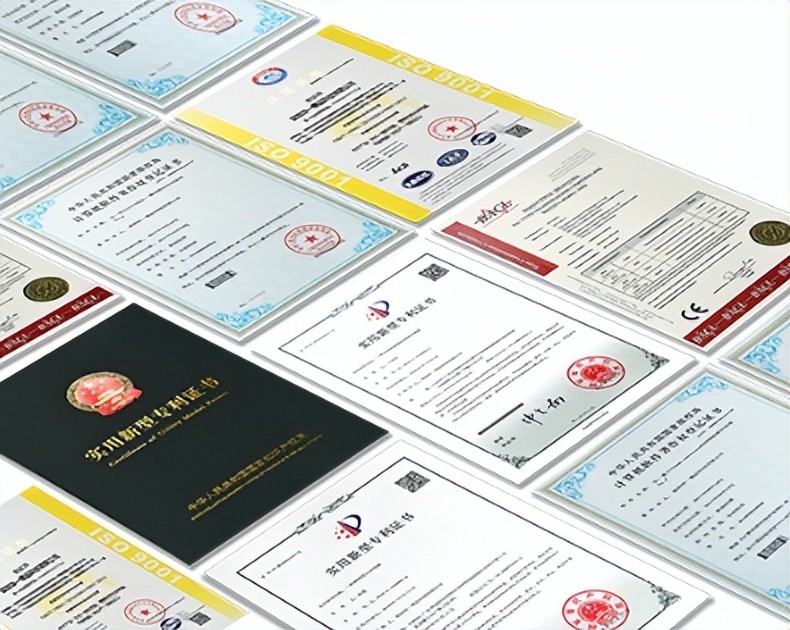
AI Compute Box Bulk Procurement: 3C, CE, FCC Certification Guide
Learn the key certification requirements for bulk buying AI compute boxes. Covers 3C, CE, FCC compliance, common pitfalls, and how to verify certificates to avoid legal risks.

RK3588 vs N100: Which Is Better for Local LLM Deployment?
Compare RK3588 and N100 for running local LLMs. See real-world token speeds, power, memory, software support, and which chip fits your AI workload.
Edge AI Box vs Cloud Server:Which Is Cheaper Long-Term?
A detailed TCO comparison of edge AI boxes and cloud servers. Covers hardware, bandwidth, power, and O&M costs, with break-even analysis and a decision checklist.
What AI Mini PC Do You Need for Private Local LLM Deployment?
Learn what AI mini PC specs you need for private deployment of local LLMs: memory, NPU, storage, offline capability, and configuration recommendations for 7B–70B models.
Adreamer

© 2012-2025 Copyright Shenzhen Adreamer Technology Co., Ltd.粤ICP备18115621号-2
Contact Adreamer Today for Your Custom Solution & Quote!
© 2012-2025 Copyright Shenzhen Adreamer Technology Co., Ltd.粤ICP备18115621号-2